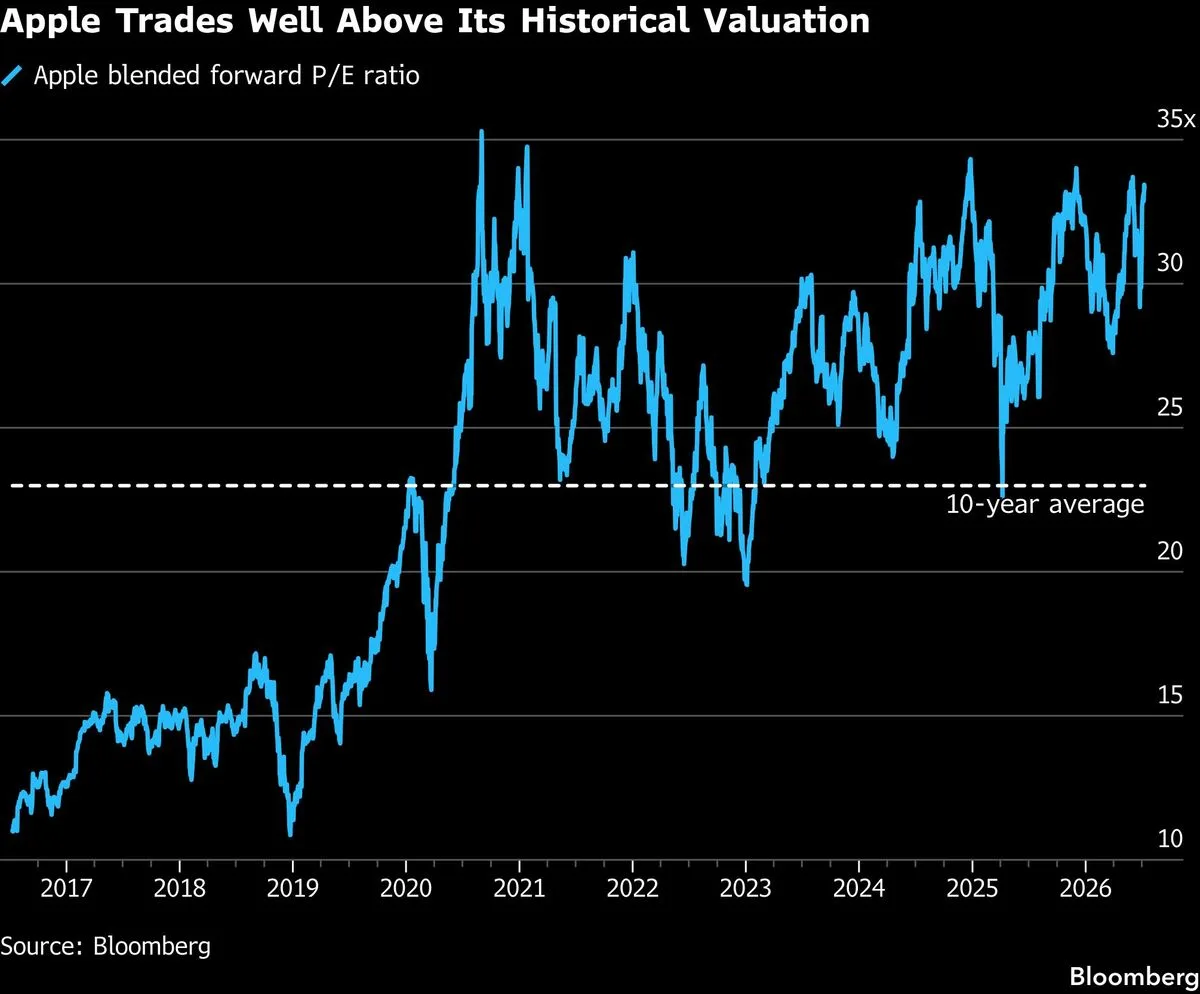
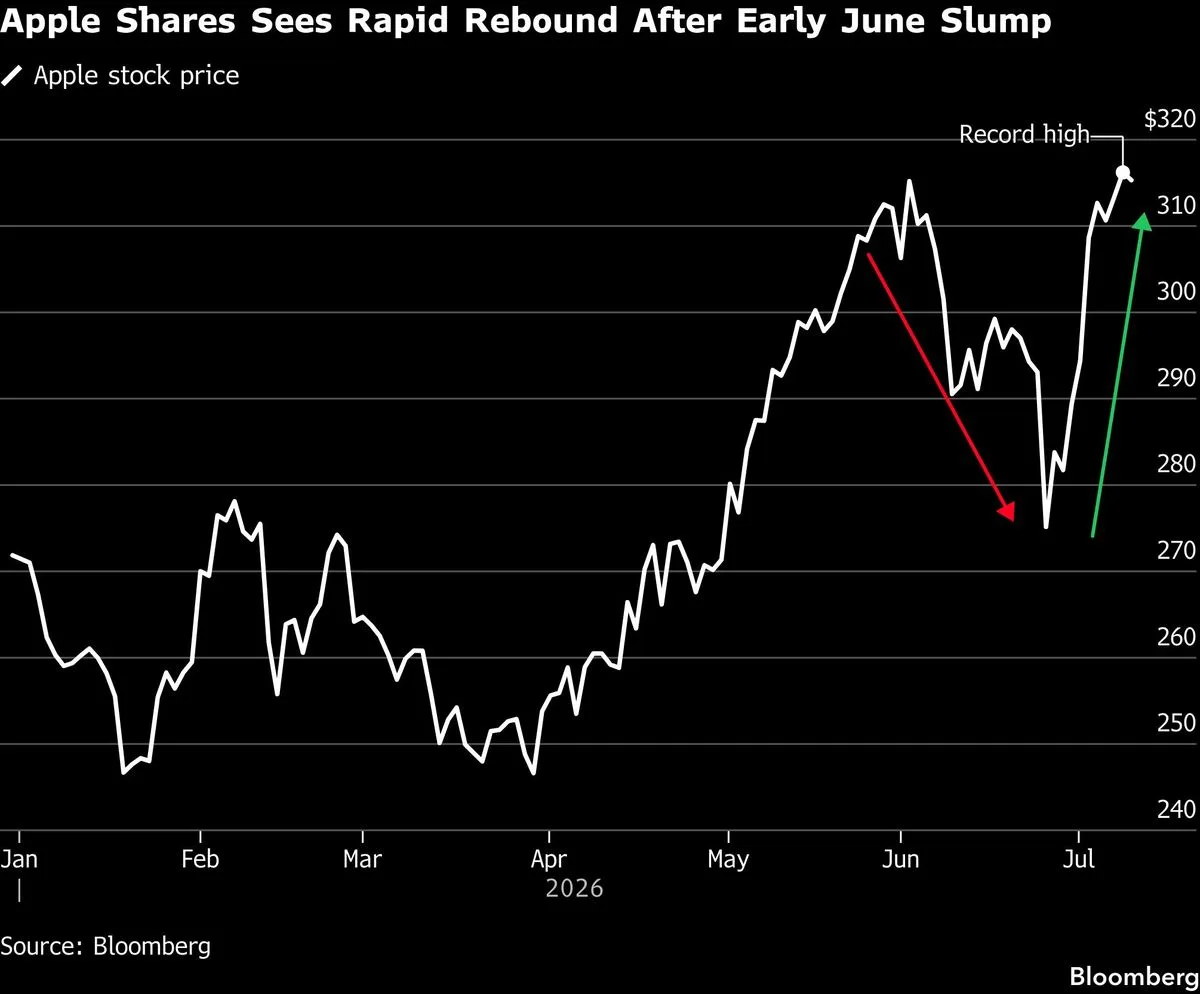
Apple’s stock has risen 15-17% since June 25, adding roughly $600-650 billion in market value and reaching a record high by early August 2026 [1, 2, 3]. This rally contrasts sharply with declines in AI-related chipmakers. The Philadelphia Stock Exchange Semiconductor Index fell about 7-10% since late June as investors fretted over returns from AI infrastructure spending [1, 2, 3].
Investors are reallocating funds away from AI-focused chip and cloud-computing stocks due to uncertainty about the profitability of hyperscalers’ AI investments. Mark Bronzo, chief strategist of Rye Strategic Partners, said, "There’s a battle in the market, and right now Apple is benefitting because it isn’t in the storm that the rest of the AI trade is in... investors have gravitated back to Apple as a steady-eddy name without those risks" [1].
Apple has avoided competing in AI data center infrastructure, a stance increasingly seen as an advantage amid market volatility in the AI sector [1, 2, 3]. Unlike many peers, Apple raised prices in late June for Macs, iPads, and home devices to offset rising memory chip costs but held iPhone prices steady at that time [1, 2, 3].
Citigroup reiterated a ‘buy’ rating on Apple and raised its price target to $365, citing Apple’s strong competitive position and potential for future iPhone price increases [2, 3]. While Apple’s AI features have yet to drive significant upgrade demand, improvements in Siri and related services could boost revenue over the long term [2, 3].
By mid-2026, Apple’s roughly 17% stock gain made it the best performer among the "Magnificent Seven" tech giants, outpacing Nvidia, Alphabet, Microsoft, Amazon, Meta, and Tesla [1, 2, 3].
The rally began after Apple’s stock hit a low on June 25, the same day it announced price increases for some products to counter memory chip cost inflation [1, 2, 3].