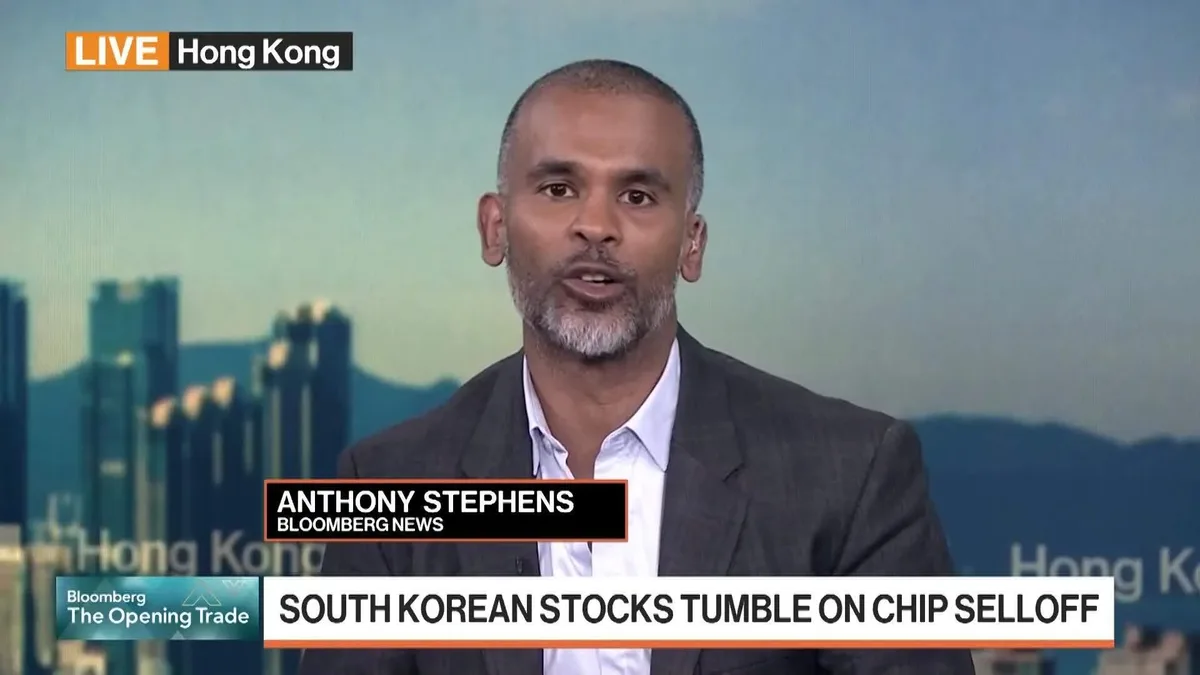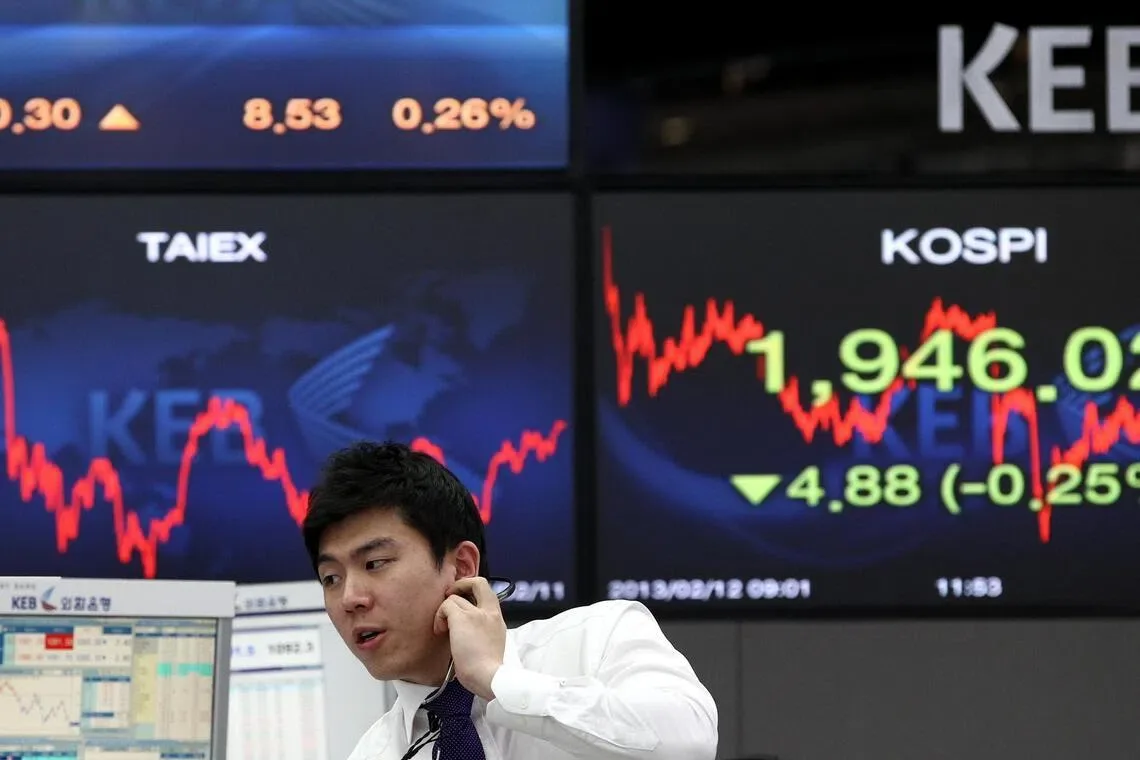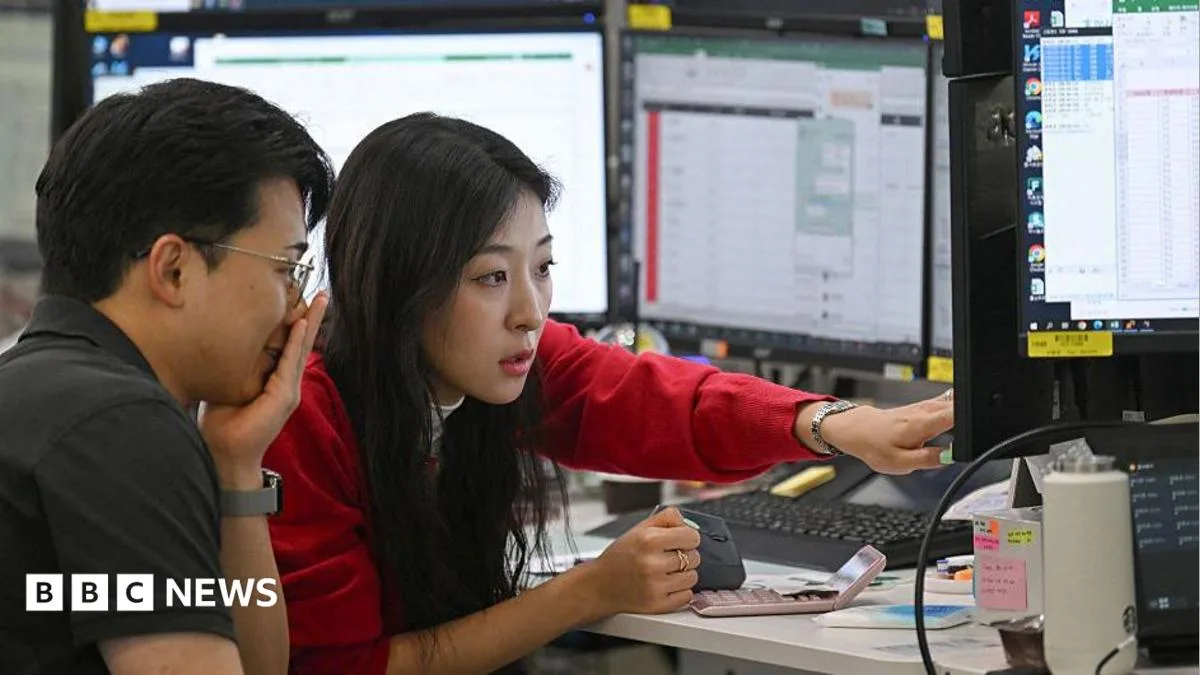
Asian stock markets fell sharply on June 26, 2026, as investors sold off technology stocks amid concerns over high valuations and rising AI infrastructure costs [1, 2, 3, 4]. South Korea's Kospi index dropped by 5.8% at close, with intraday falls reaching between 8% and 9%, triggering a 20-minute circuit breaker—the second this week and fifth this year [1, 2, 3, 4]. This volatility reflects the market's close link to the AI trade and semiconductor sector [1, 2, 3].
Japan's Nikkei index fell between 4% and 4.7% on the day, with shares of SoftBank plunging by 12.5% to 14% amid investor caution related to its backing of AI-focused ventures [1, 2]. The Hang Seng Index in Hong Kong fell 2.3%, heading toward a 5.8% weekly loss, its worst in over a year [4]. Major Chinese mainland indices including the CSI 300, Star Market 50, and ChiNext declined between 2.6% and 4.2% [4].
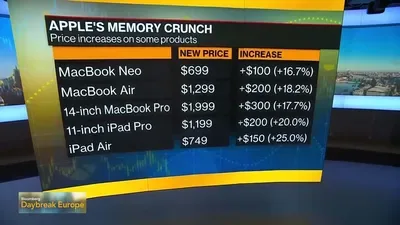
South Korean chipmakers SK Hynix, Samsung Electronics, and Kioxia Holdings weighed on the markets after surging the previous day [2]. Concerns about rising memory chip prices driven by AI demand have affected global tech stocks. Apple's shares dropped 6% to 6.1% in U.S. trading June 25-26 after it raised prices on iPads, Macs, and other devices due to soaring memory chip costs [1, 2]. Microsoft also announced plans to increase Xbox console prices citing higher component costs [1].
Fabien Yip of IG International said, "Asia tech is hit by two storms this morning. Apple has been forced to raise Mac and iPad prices, citing an unprecedented memory chip shortage driven by AI data centre demand. The fact that one of the world’s largest component buyers cannot absorb the cost surge raises real questions about demand elasticity and the durability of memory chip margins." He added, "OpenAI’s potential IPO delay reflects the impact of recent tech stock volatility on retail enthusiasm" [2]. OpenAI’s reported possible IPO postponement until 2027 has added to investor caution, especially hurting SoftBank [2].
David Makaryan from Alpha Pacific Group commented, "The long term investment case for AI remains compelling, but investors are becoming far more selective about which companies can justify the valuations the market has assigned to them" [1]. Raymond Woo of Kyoto University Innovation Capital noted, "The high cost of commercialising AI tools is gradually being passed on to consumers. That naturally raises questions about how quickly demand for such tools will match the investment into AI, and whether the valuations of tech stocks today are realistic" [1].
In Hong Kong, Alibaba and Tencent shares fell at least 2%, while AI model developers MiniMax Group and Knowledge Atlas Technology dropped 8.8% and 6.7% respectively on June 26 [4].
The Kospi circuit breaker triggered on June 26 was the second this week, highlighting ongoing market stress linked to the semiconductor and AI sectors [1, 2, 3, 4]. Trading and investor reactions will be closely watched as OpenAI's IPO plans continue to unfold.