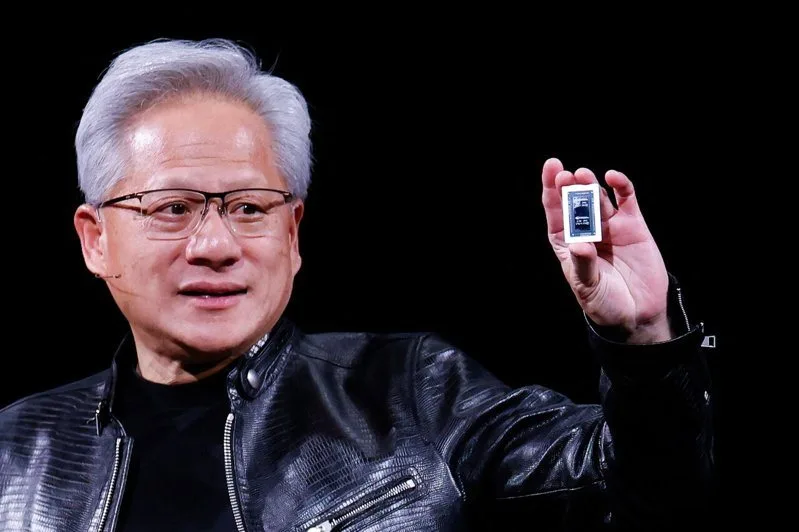
At least seven Chinese universities supporting the military and defense sector have sought Nvidia's H200 AI chips, the most advanced AI processor the US allows for sale to China, according to multiple sources [1, 2, 3, 4, 5, 6].
Among these are Beijing Aerospace University and Northwestern Polytechnic University, both members of the so-called "National Defense Seven Sons" group, which the US Commerce Department blacklisted for collaborating with the military [1, 2, 3, 4, 5, 6]. These universities have attempted to rent or remotely access Nvidia chips from overseas data centers to get around US export controls [1, 2, 4, 6].
Since 2011, more than 25 Chinese military-linked universities and labs have used or sought older-generation Nvidia AI chips including the A100, A800, H100, and H20 models [1, 2, 3, 4, 6]. Procurement records show over 500 requests from various People’s Liberation Army units for Nvidia chips between 2019 and 2025 to support activities like nuclear explosion simulation, cyber attacks, and war gaming [7, 8, 9, 5, 10, 11]. It is unclear if all these requests resulted in fulfilled orders; records mostly show intents or agreements but not confirmed deliveries [7, 8, 9, 3, 4, 5, 10, 11].
Chinese authorities restrict domestic AI companies from buying the latest H200 chips to protect local semiconductor development. Yet, military-related units continue seeking Nvidia chips through intermediaries and proxy methods [1, 2, 3, 5, 10]. Analysts say Chinese military and enterprises have adapted to tighter US export controls by lowering tech requirements, using third-party intermediaries, and renting commercial computing capacity abroad to obtain these chips [7, 9, 11].
Nvidia has consistently denied that the Chinese military relies on its chips. A company spokesperson said, "Modern advanced AI systems usually operate with networks of 100,000 or more chips. The number of chips sought by the Chinese military is far below that standard, indicating they rely on domestic chipmakers like Huawei. The notion that the Chinese military depends on a small number of Nvidia chips is ‘absurd’ and ‘not true.’ China has enough domestic chips for all military uses, with millions to spare" [7]. Another spokesperson called it "ridiculous to think the Chinese military would depend on a few dozen secondhand GPUs" [1].
Chinese military units have used Nvidia AI servers to run password cracking software such as hashcat, signaling potential cyber attack uses [7, 9]. U.S. lawmakers have expressed concerns that Nvidia technology could aid the Chinese military’s AI weaponization efforts. Congressman John Moolenaar said, "This report shows China is trying to smuggle and steal US technology for military use, which is why we need export controls to protect our lead in the AI race and ensure we don't arm China" [9]. Senator Jim Banks called the chip acquisitions a "national security crisis" [9].
The US government approved Nvidia’s sale of the H200 chip to China in early 2025, but with explicit restrictions barring military applications [2, 9, 3, 4]. Despite this, Chinese military and related enterprises appear to use a range of tactics to obtain Nvidia chips, including renting computing power from overseas facilities [7, 9, 11].
According to records, Beijing University of Posts and Telecommunications operates 144 Nvidia A800 GPUs, while the University of Science and Technology of China runs 200 Nvidia A100 chips in its supercomputing system [3].
A timeline shows Chinese military-linked universities have been using or seeking Nvidia AI chips since 2011 [1, 2, 3, 5]. The military began publicly pursuing specific Nvidia models in 2019 [7, 8, 9, 5, 10]. The US increased export controls on AI chip sales to China in 2022 and 2023 [7, 9], followed by official approval for Nvidia to sell H200 chips with conditions in January 2025 [2, 9, 4].
A Chinese embassy spokesperson in the US said, "China's position on US chip exports to China is consistent: we advocate for US-China cooperation to achieve mutual benefit, and oppose politicizing, weaponizing or instrumentalizing tech and economic issues" [1].
The latest public data shows Chinese military and affiliated universities continue acquisition efforts amid tightening export rules, with the next US export review expected later this year.