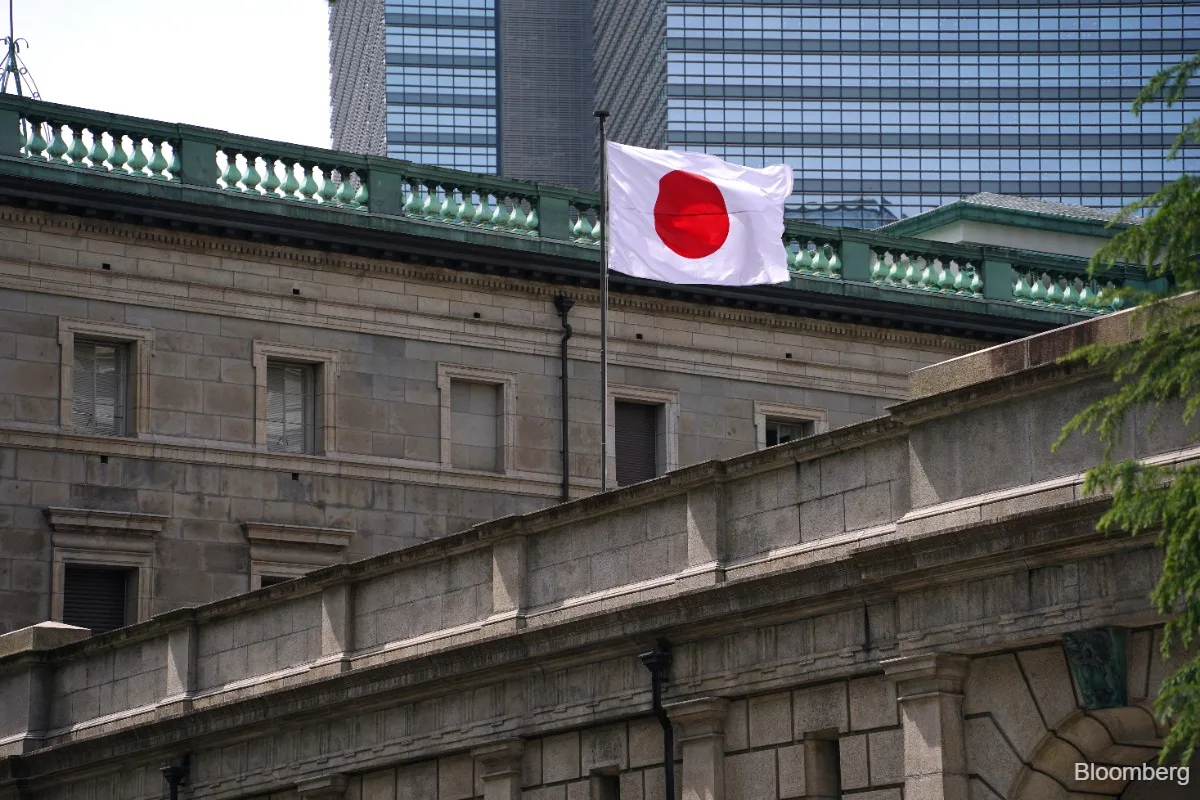
The Bank of Japan (BOJ) maintained its benchmark interest rate at 1% during its July 31, 2026 policy meeting, with the policy board voting 8-1 to hold steady. Board member Hajime Takata dissented, calling for a rate hike to 1.25% to address upward inflation risks, saying, "I call for a rate hike to prepare for upward inflation risks" [1, 2, 3, 4, 5, 6, 7, 8].
The BOJ revised its inflation forecast downward to about 2.5% for the current fiscal year, from a prior 2.8%, but modestly upgraded its GDP growth projection to roughly 0.6% [1, 2, 7, 8]. Despite the downward inflation revision, the BOJ warned that underlying inflation may exceed its 2% target and pledged to raise borrowing costs if economic and price conditions warrant it [2, 3, 7]. Board member Naoki Tamura reaffirmed inflation risks, stating, "There is a high risk that price developments will deviate upward from the Bank's baseline scenario" and noted inflation excluding government subsidies has remained above 2% [3].
The yen neared 40-year lows against the US dollar in recent weeks, reaching around 164 yen per dollar before recent relief. On July 30, the Japanese government intervened in the forex market by buying yen and selling dollars in New York, aiming to prop up the currency amid weakening pressures [9, 10, 3, 4, 6, 7, 11]. This intervention caused the yen to appreciate about 3.3% intraday to roughly 158 yen per dollar but the gains were short-lived as the rate later retreated above 160 [9, 7, 11]. Japanese Finance Minister Satsuki Katayama said the government will "continue to maintain high vigilance and take appropriate measures when necessary" [11]. Jun Mimura, Japan’s top forex official, noted close US cooperation, saying, "We have received more than just moral support from the US; we maintain close communication with US authorities" [11].
US Treasury Secretary Scott Bessent publicly supported Japan’s measures, describing the yen as "very undervalued" [10, 6, 11]. US authorities reportedly conducted "rate checks" around the intervention, signaling tacit coordination with Japan [10, 3, 11].
Markets now speculate the BOJ could raise interest rates again by October 2026 given persistent yen weakness and inflation concerns [2, 4, 7, 8]. Governor Kazuo Ueda held a press conference after the July 31 meeting with stakeholders watching closely for signs of forthcoming policy shifts [2, 3, 4, 5, 7].