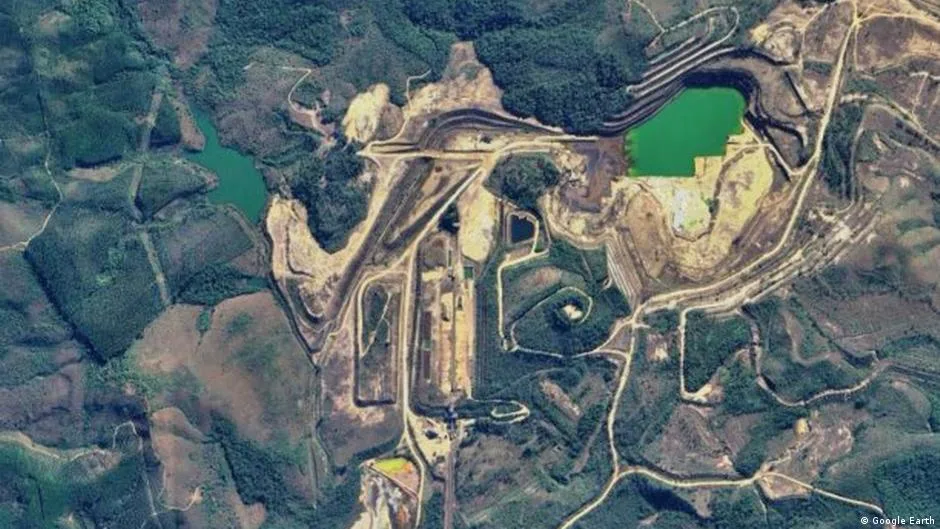
Brazil holds the world's second-largest rare earth reserves, estimated at around 21 million tons, behind only China’s 44 million tons [1, 2, 3, 4]. Demand for rare earth magnet elements like neodymium and dysprosium has doubled globally since 2015 and is forecast to grow another 30% by 2030 amid rising electrification and new energy technologies [1, 2, 3, 4].
Australia’s Meteoric Resources is heavily investing in Brazil rare earth mining, focusing on the Caldeira project in Minas Gerais—believed to be the world's largest ionic clay deposit. Ionic clay deposits in Brazil contain medium and heavy rare earths critical for high-performance magnets used in wind turbines and electric vehicles [1, 2, 3, 4]. Andrew Tunks, CEO of Meteoric Resources, said, "The next big, rare earth projects in the world will be in Brazil. I don't know how long it will take, but I think in time [Brazil] will compete with China" [1]. He also noted Brazil could quickly boost mining competitiveness but cautioned rare earth material production would take longer [2].
Brazil’s National Mining Agency has seen a sharp rise in rare earth mining applications, currently considering 2,758 projects—up from about 250 between 1975 and 2020 [1, 2, 3, 4]. The Minaçu mine, acquired in April by USA Rare Earths for 2.8 billion euros from Serra Verde, is Brazil’s only active rare earth mine. It is the only site outside Asia able to supply all four magnetic rare earths at scale and holds a 15-year off-take agreement with multiple US government agencies. Barbara Humpton, CEO of USA Rare Earths, described it as "the only mine outside Asia able to supply all four magnetic rare earths at scale" [2, 3, 4].
Unlike China, which dominates global rare earth refining with over 90% market share, Brazil has historically exported mostly ores with limited local processing [2, 3, 4]. Processing is energy and water intensive, but Brazil benefits from low-cost renewable electricity at its mines. Tunks highlighted, "Our mines in Brazil run entirely on renewable energy, and power prices are very low. Such conditions don’t exist in Australia, where it’s extremely dry and electricity is expensive" [2]. Francisco Valdir Silveira, former head of Brazil's Geological Survey, noted that some natural processing has occurred in Brazil’s deposits. He said, "Nature has already done part of the processing — specifically, they are formed from granite alteration or decomposition, making them easier to extract" [2].
US-China trade tensions and Chinese export controls on rare earths have prompted countries including Brazil, India, Vietnam, Sweden, and Norway to develop their rare earth industries [2, 3, 4]. Brazil’s expanding projects and strategic acquisitions signal growing competition to China’s longstanding dominance.
The rare earth sector in Brazil is expected to develop rapidly in the coming years, with the Minaçu mine playing a central role under USA Rare Earths’ ownership since April 2026 [2, 3, 4].