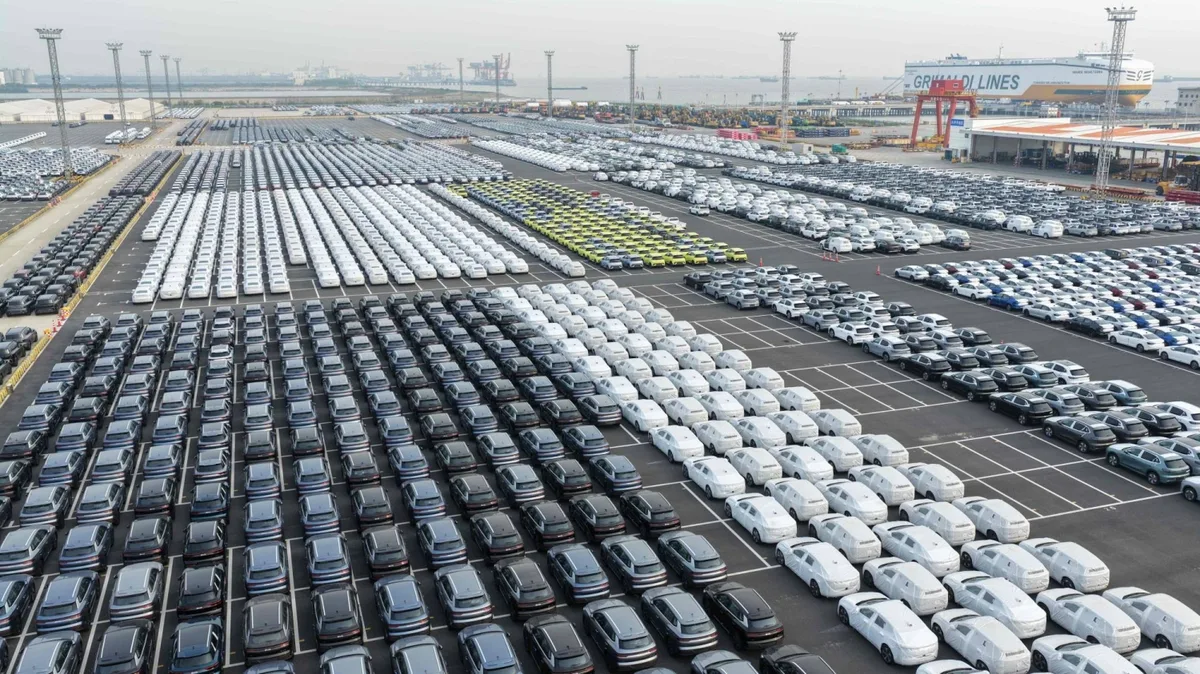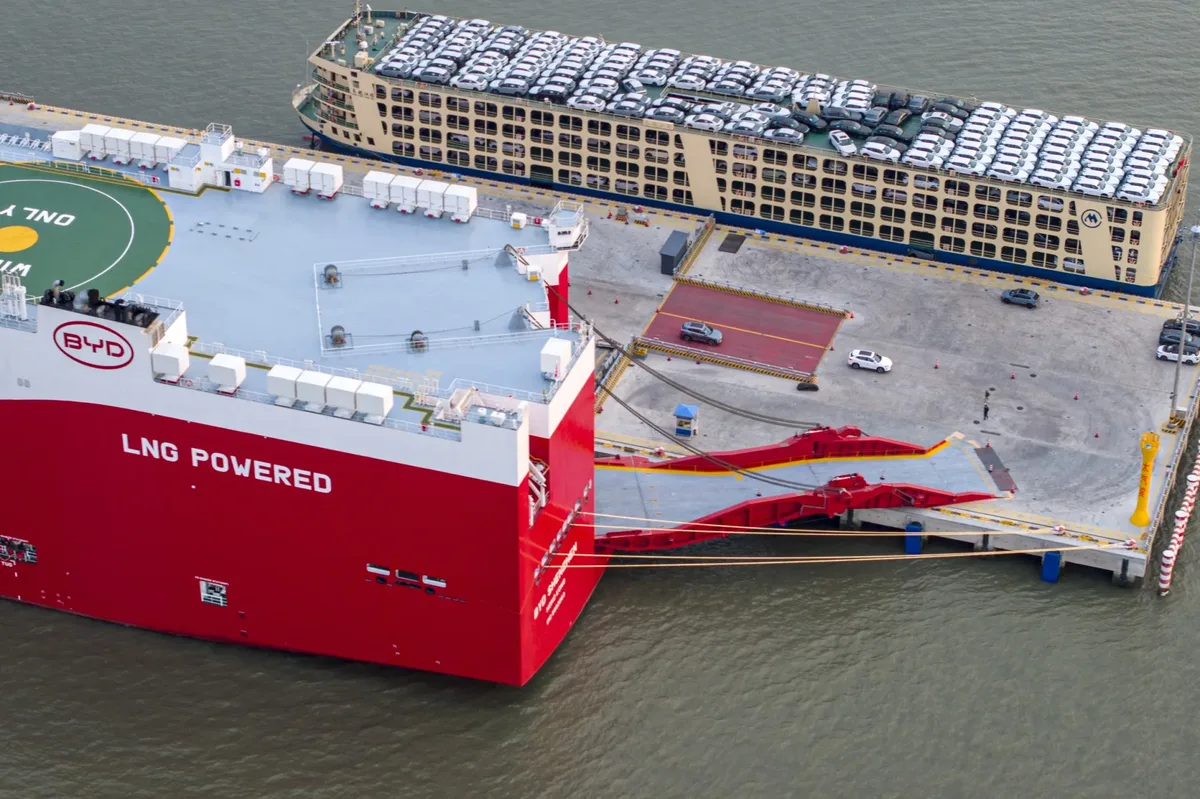
The BYD Shenzhen freighter left Xiamen in late November 2025 carrying 1,768 new electric vehicles bound for Mexico [1, 2]. It arrived at the Lázaro Cárdenas seaport on December 21, 2025, before new tariffs on Chinese imports took effect on January 1, 2026 [1, 2].
BYD has built and operated its own shipping fleet since 2022. This step followed COVID-19 disruptions that reduced the availability of cargo ships for hire [2]. The company now manages eight carriers that ferry about 300,000 cars annually to markets in Africa, Europe, Latin America, and the Middle East, with billions of dollars in value moved each year [2].
The private fleet gives BYD an advantage over competitors, particularly as freight markets face turbulence. The ongoing Iran conflict has disrupted freight routes and driven up shipping rates throughout 2025 and early 2026 [2]. War and storms have added to the challenges in global logistics [1, 2].
By shipping its electric vehicles on owned carriers, BYD has maintained reliable delivery schedules despite these pressures. The timely arrival of the Shenzhen freighter in Mexico ahead of new tariffs helped avoid additional costs for the exported vehicles [1, 2].
BYD's integration of vehicle production with maritime logistics demonstrates a strategic move to shield itself from external shipping risks and market volatility. The company is expected to continue leveraging its fleet to support global exports in the coming months [1, 2].