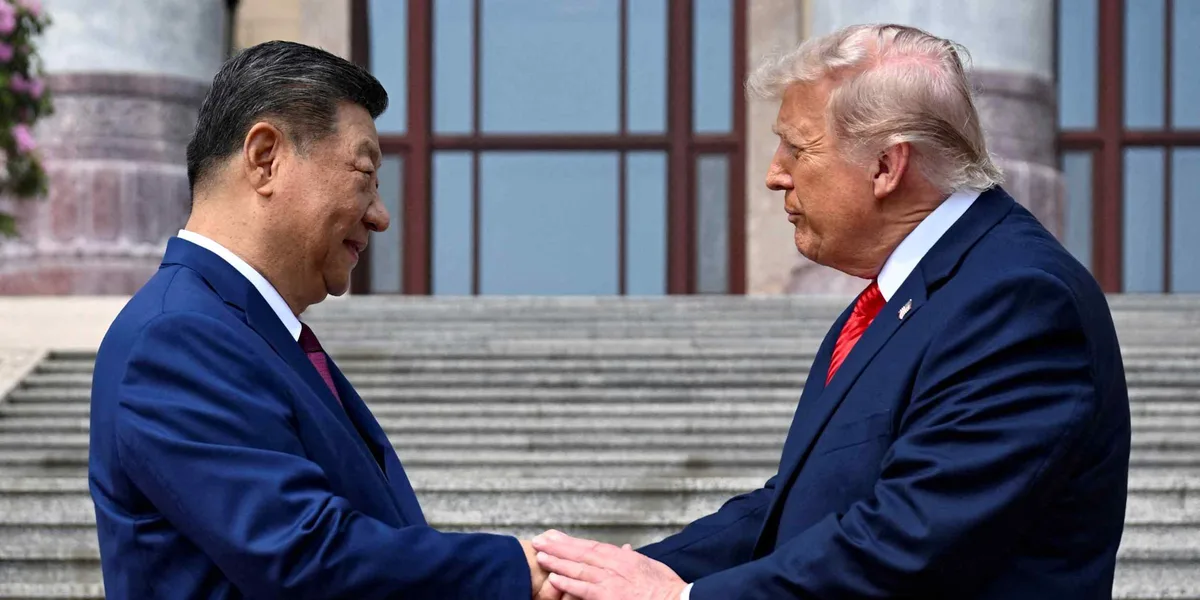
China and the United States agreed to lower tariffs on certain products, including agricultural goods, to boost bilateral trade, officials said today following a summit in Beijing between Presidents Donald Trump and Xi Jinping [1, 2, 3, 4, 5, 6, 7]. The two countries will establish trade and investment councils to discuss tariff reductions, investment, and resolve trade concerns [2, 8, 9, 7].
China confirmed plans to purchase at least 200 Boeing planes and up to 750 depending on conditions, as well as up to 450 General Electric aircraft engines, with the US agreeing to ensure supplies of engines and parts [1, 2, 3, 8, 9, 5, 6, 7]. Trump told reporters, “We didn’t discuss tariffs. They’re paying substantial tariffs, but we didn’t discuss,” despite the agreement to reduce levies [1, 2, 5, 6].
The tariff reductions cover products of equal scale that mutually concern both sides, but specific products and new rates were not disclosed as negotiations continue [1, 2, 8, 7]. Both governments also agreed on measures to tackle non-tariff barriers, such as import licenses for beef, poultry, dairy, aquatic products, and plants [2, 8, 9].
Ahead of the summit, trade teams from both countries held preparatory talks in South Korea on May 13 [8, 5, 6]. The two-day summit took place May 14-15 in Beijing [1, 2, 3, 4, 5, 6]. On May 15, Trump reiterated that tariff discussions were not part of the summit meetings [1, 2, 5, 6].
China’s Ministry of Commerce issued an official statement today confirming the agreements on tariff cuts, trade councils, aircraft procurement, and improvements in agricultural trade [1, 2, 8, 9, 4, 5, 6, 7]. The Trade Council will continue discussions to implement tariff reductions on relevant products as agreed in principle, a ministry spokesperson said [7].