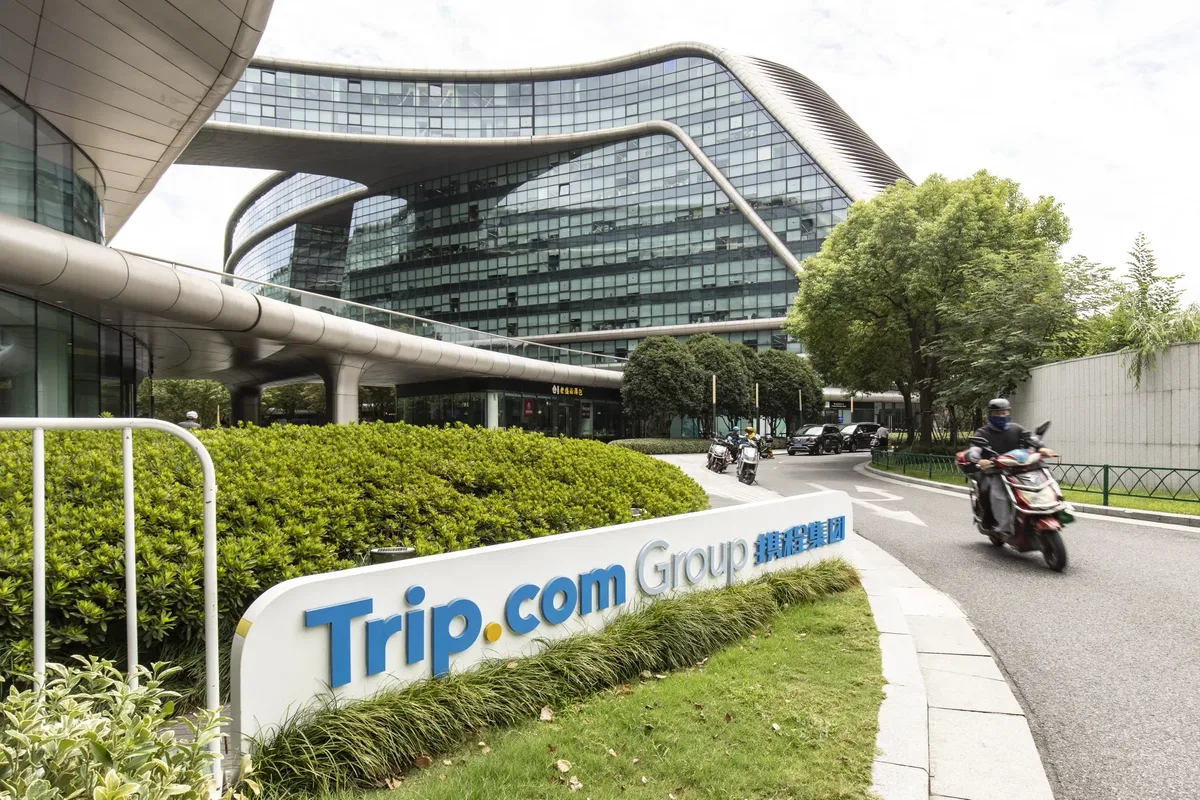
China's State Administration for Market Regulation (SAMR) imposed a 5.18 billion yuan (about US$765 million) penalty on Trip.com Group for abusing its dominant position in the country's online hotel booking market, announcing the fine on July 25, 2026 [1, 2, 3, 4, 5, 6].
The total penalty includes a 3.52 billion yuan fine, confiscation of 1.66 billion yuan in illegal gains, and an order to refund 122 million yuan withheld deposits to hotel operators [1, 2, 4, 7]. The 3.52 billion yuan fine represents roughly 7.5% of Trip.com’s estimated 2025 China revenue of 46.958 billion yuan [7, 8].
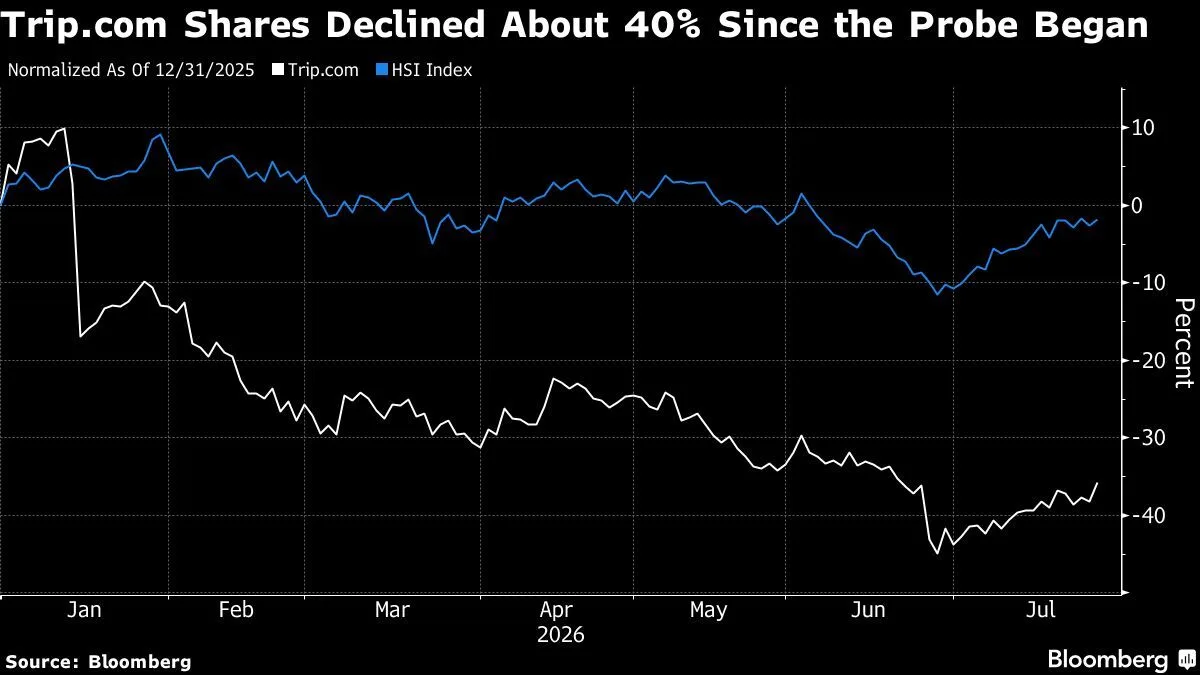
The investigation began in January 2026 after complaints that Trip.com imposed unfair terms on hotels and manipulated pricing [1, 5]. SAMR found Trip.com abused its market power through traffic-allocation mechanisms, platform rules, and technical measures to strike exclusive deals with certain hotels. This restricted hotels’ ability to operate across platforms or set their own prices [1, 3, 4]. Trip.com owns other travel-booking brands, including Ctrip, Skyscanner, and Qunar, and controls about 56% of China’s online travel market [1, 5].
According to Trip.com, "We sincerely accept and will fully comply with [the penalty], and will strictly follow the regulator’s requirements to systematically implement each rectification measure, ensuring that all measures are carried out effectively" [1]. The company added it will "use this penalty as an opportunity for deep reflection and self-transformation" and "resolutely abandon inefficient, cutthroat competition" [6].
Trip.com’s Hong Kong-listed shares first fell modestly prior to the announcement but then rose by as much as 7.7%, reflecting easing regulatory uncertainty [7, 8]. Analysts note that despite the large fine, pricing dynamics for hotel operators may not materially change amid ongoing soft consumer spending and intense market competition [7, 9].
The fine exceeds previous penalties on major internet platforms, surpassing Alibaba's 4% revenue fine and Meituan's 3% imposed in 2021 [7, 9]. Experts say the penalty fits Beijing’s broader plan to curb unfair competition and deflationary price wars that hurt businesses and the economy. Subramania Bhatt, CEO of China Trading Desk, said, "The timing fits China’s broader effort to reduce destructive ‘involution’ and encourage competition based on service, quality and innovation" [7].
The SAMR investigation that led to the penalty began in January 2026 and concluded with the July 25 announcement [1, 5]. Trip.com is now required to carry out rectification measures as mandated by regulators [1].