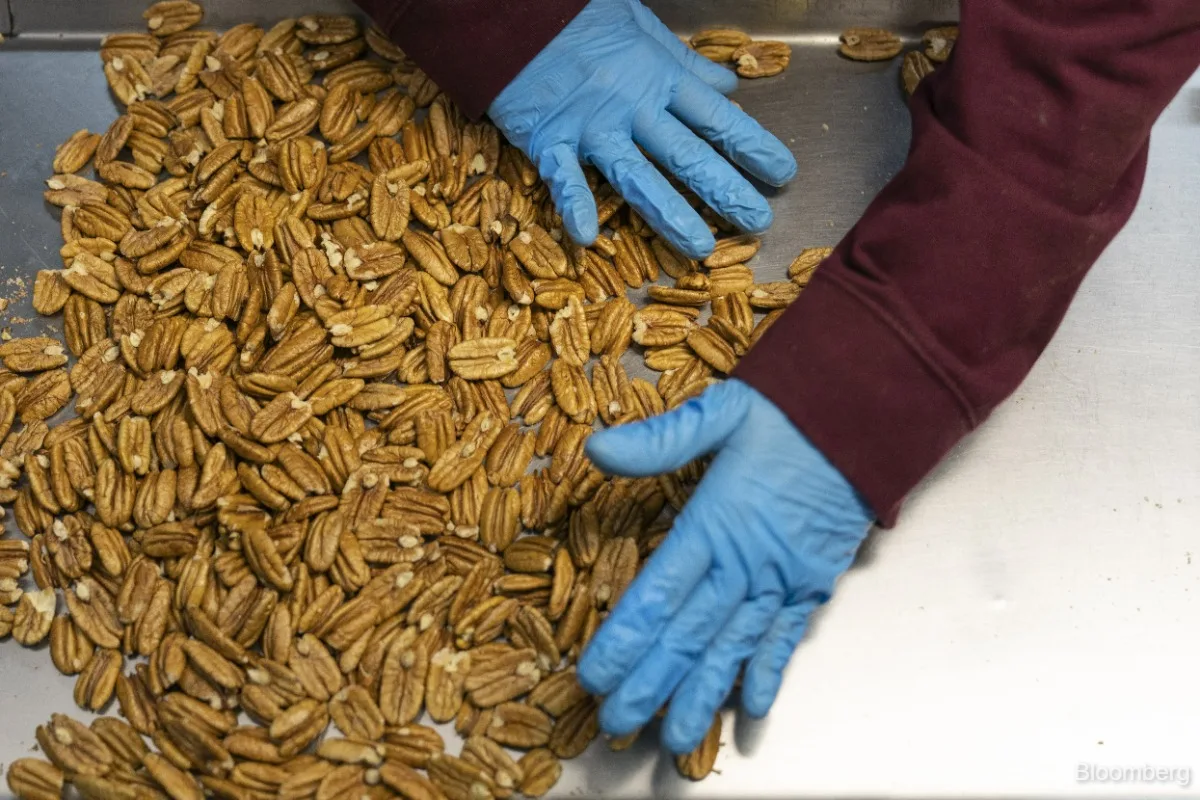
China’s Ministry of Commerce announced preliminary anti-dumping deposits of 54.3% on pecans from the United States and between 17.8% to 51.6% on pecans from Mexico, effective August 11, 2026 [1, 2, 3]. The move follows an investigation launched in September 2025 under China’s Anti-Dumping Regulations [1, 2, 3].
No US pecan companies took part in the probe, so China applied the 54.3% duty rate uniformly to all US pecan imports [1, 2, 3]. Six Mexican companies cooperating with the investigation received lower deposits ranging from 17.8% to 23%, while others faced rates near 51.6% [2, 3].
China cited a sharp increase in dumped imports, stating that over the injury investigation period, the volume of dumped pecan imports rose by a cumulative 104.56%, while their share of the Chinese domestic market increased by 9.69 percentage points [3]. The import price of these dumped pecans fell by 9.15% and remained below domestic prices throughout the period [3].
Imports of US pecans by China have declined significantly after spiking in 2024. The value of US pecans imported in the first four months of 2026 was about $6.9 million, down from $77.2 million in the same period two years earlier [1, 2]. Mexican pecan exports to China followed a similar pattern, falling to $2.6 million in the first four months of 2026 from $53.2 million in the same period of 2024 [2].
China imposed earlier tariffs of 10% on US pecans in March 2025, part of retaliatory measures against US trade levies [1, 2]. The ministry said it has "consistently exercised prudence and restraint in its use of trade-remedy measures" [1, 2].
Along with the pecan duties, China has intensified other countermeasures against US entities and tightened export controls on drone technologies, reflecting ongoing trade tensions [1, 2]. Meanwhile, China has been increasing pecan imports from South Africa in recent years [1, 2].
The anti-dumping deposits took effect on August 11, 2026 [1, 2, 3]. China's Ministry of Commerce pledged to protect the rights of interested parties and issue a final ruling objectively based on the full investigation [1, 2, 3]. The measures come ahead of Chinese President Xi Jinping's planned visit to the US in September 2026 amid strained trade relations [1, 2].