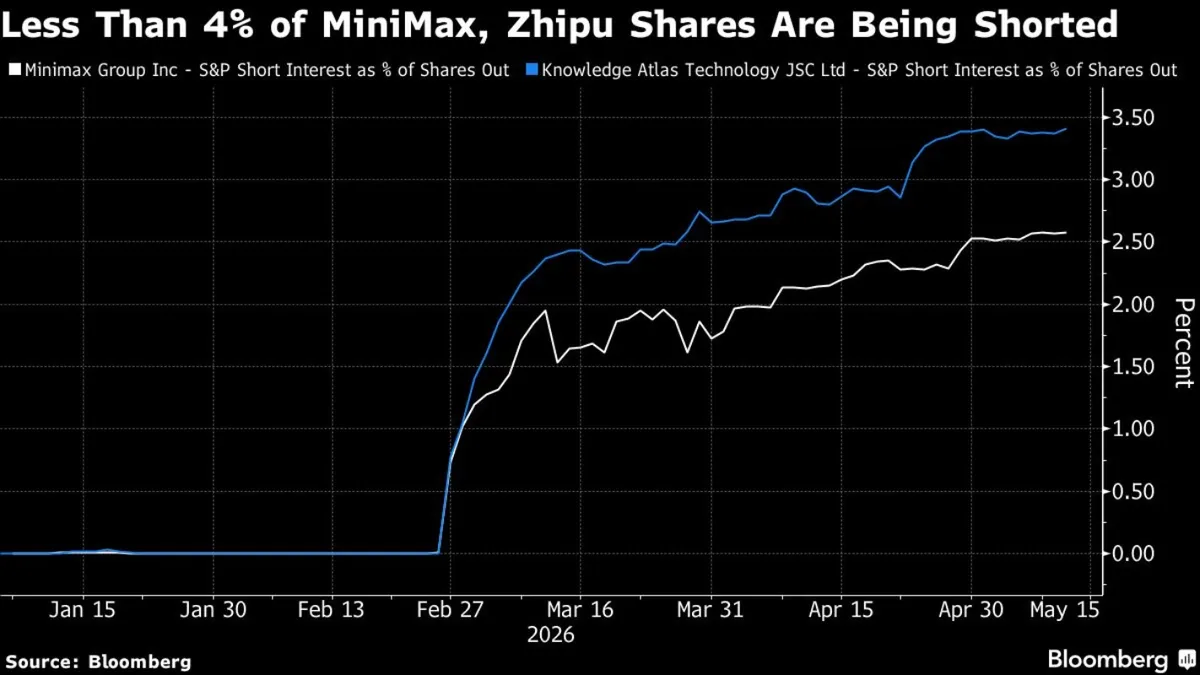
Shares of China’s AI startups MiniMax Group Inc. and Knowledge Atlas Technology have soared since their January IPOs, rising about 400% and between 860% to nearly 900% respectively [1, 2]. MiniMax has a free float of just 5%, with 65% of shares held by cornerstone investors and employees locked until July 8, 2026, and executives locked until January 2027 [2]. Knowledge Atlas has an even smaller free float around 4%, with a 6% cornerstone stake locked until July 7, and an additional 40% held by employees locked until next January [2].
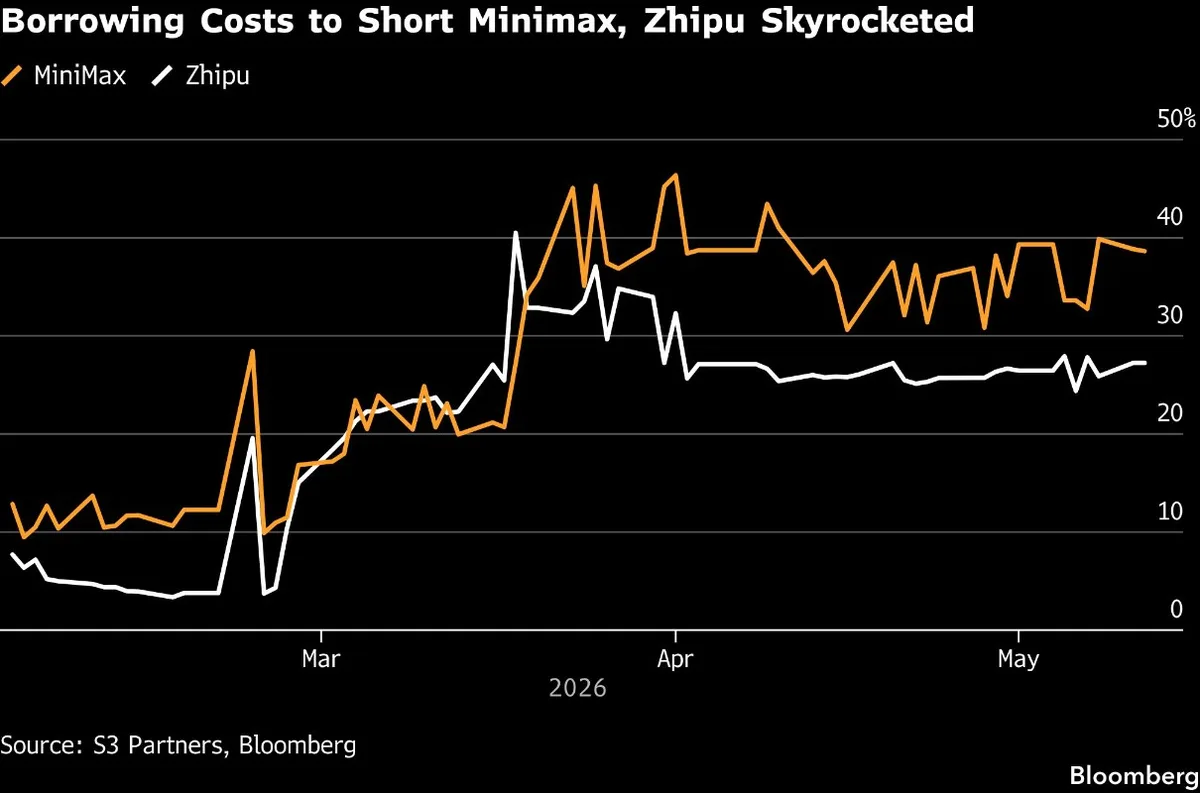
The tight supply of shares has made it difficult for short sellers to borrow stock, restricting short-selling activity until the lockup periods end [1, 2]. MiniMax trades at a price-to-sales ratio slightly over 600 times, while Knowledge Atlas’s ratio is about 410 times—far above the Hang Seng Tech Index average of 1.2 times [2].
Chinese AI startups benefit from cost advantages such as cheap electricity and government support but remain unprofitable [2]. Recently, shares surged again on speculation that Nvidia CEO Jensen Huang’s involvement in a Beijing visit with former US President Donald Trump could ease chip access for Chinese AI firms [2].
Bush Chu of Aberdeen Investments said, "Valuation expectations for a handful of language model players are running ahead of fundamentals. It’s a common thing that happens to some IPO stocks, where a large portion of shares are still locked up, limiting short-selling activities and delaying the reflection of some bearish views" [2].
The lockups for cornerstone investors in both companies expire between July 7 and July 8, 2026, which may increase share supply and enable more short selling, adding pressure to current valuations [2]. Additional lockups for employees and executives end in January 2027 [2].