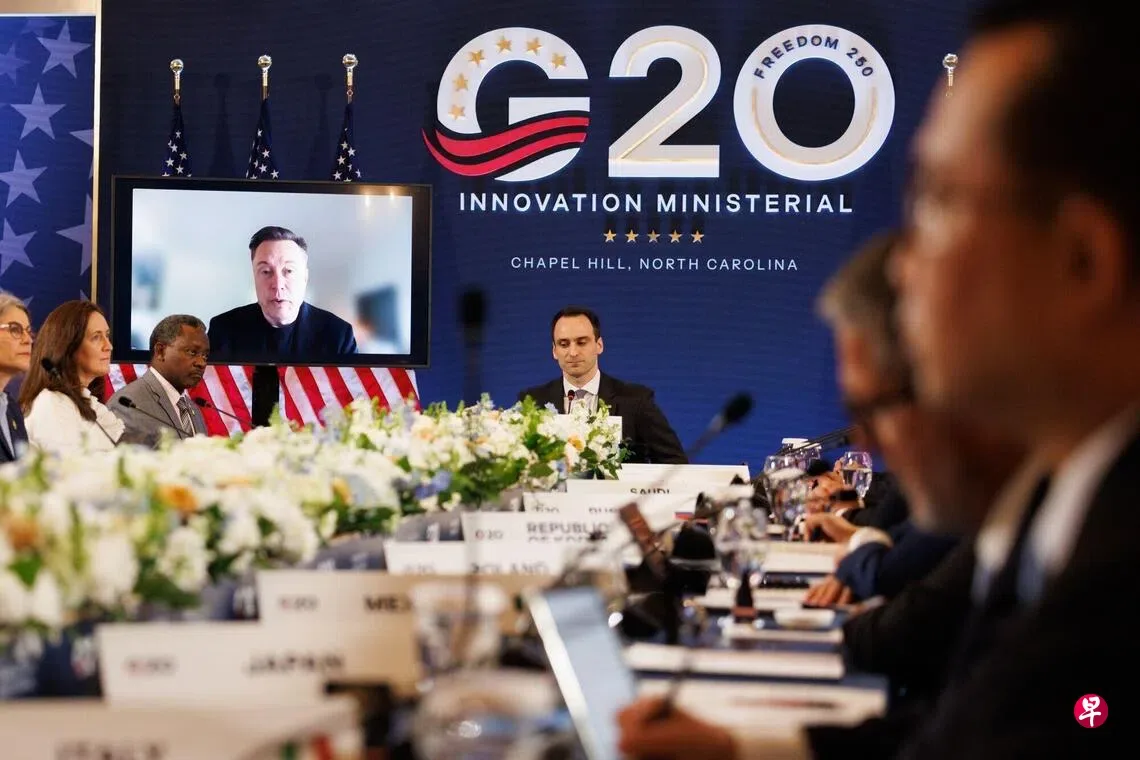
Elon Musk forecast that artificial intelligence could increase global economic output by 20% to 30%, adding $20 trillion to $30 trillion annually, at the G20 meetings in North Carolina on September 1-2 [1, 2, 3, 4, 5, 6, 7, 8]. He said AI is "already incredibly good at software" and nearing a point where it will surpass traditional capabilities [2].
Musk cautioned of an impending power supply bottleneck due to skyrocketing demand from AI data centers and chip production. He predicted at least a 15 gigawatt shortfall by 2027 as the industry expands rapidly [1, 3, 6, 7]. "We are facing a very serious power supply shortage that is not a distant problem anymore," he said [6]. He warned this energy crisis may favor China competitively and called on governments to accelerate power infrastructure rollout while avoiding heavy regulation [1, 7].
The necessity for skilled technical workers was another challenge raised. Meta reportedly struggles to recruit enough staff for its AI data centers [1]. Domestic opposition to new data centers in the US has risen over concerns about electricity costs and noise [1].
Musk also criticized Europe’s strict tech rules, saying they slow innovation. He said new AI and robotics technologies should be considered "default legal" rather than "default illegal" to encourage development [1, 5, 7].
He forecast that by the end of 2027, AI systems will be able to perform virtually all digital tasks without human intervention [3, 4, 5, 7]. Over the next decade, the global humanoid robot population may exceed 1 billion units, each with productivity at least five times that of a human [3, 4, 7, 8]. This could multiply the global economy by a factor of 10 long term [7, 8].
SpaceX is building its own power generation facilities to support AI data centers and rents computing power to companies like Google and Anthropic [1, 6]. Nvidia plans to invest about $3 billion to secure power supply for its AI data center workloads [6].
Taiwan’s industry is well positioned to benefit from AI and humanoid robot supply chains, with many firms active in sensors, control systems, and integration components [8].
The G20 gathering brought together technology and finance ministers alongside AI industry leaders to discuss infrastructure challenges and growth opportunities in AI [1, 2, 3, 4, 5, 6]. The next major forecast milestone is 2027, when Musk expects AI to handle all digital work autonomously and power shortfalls to peak.