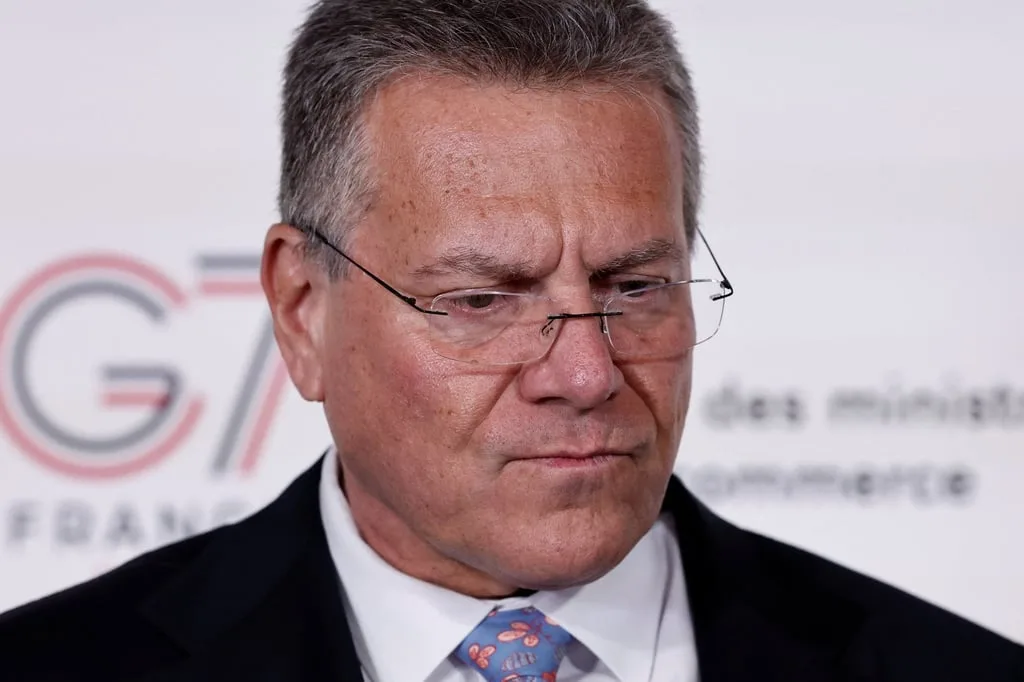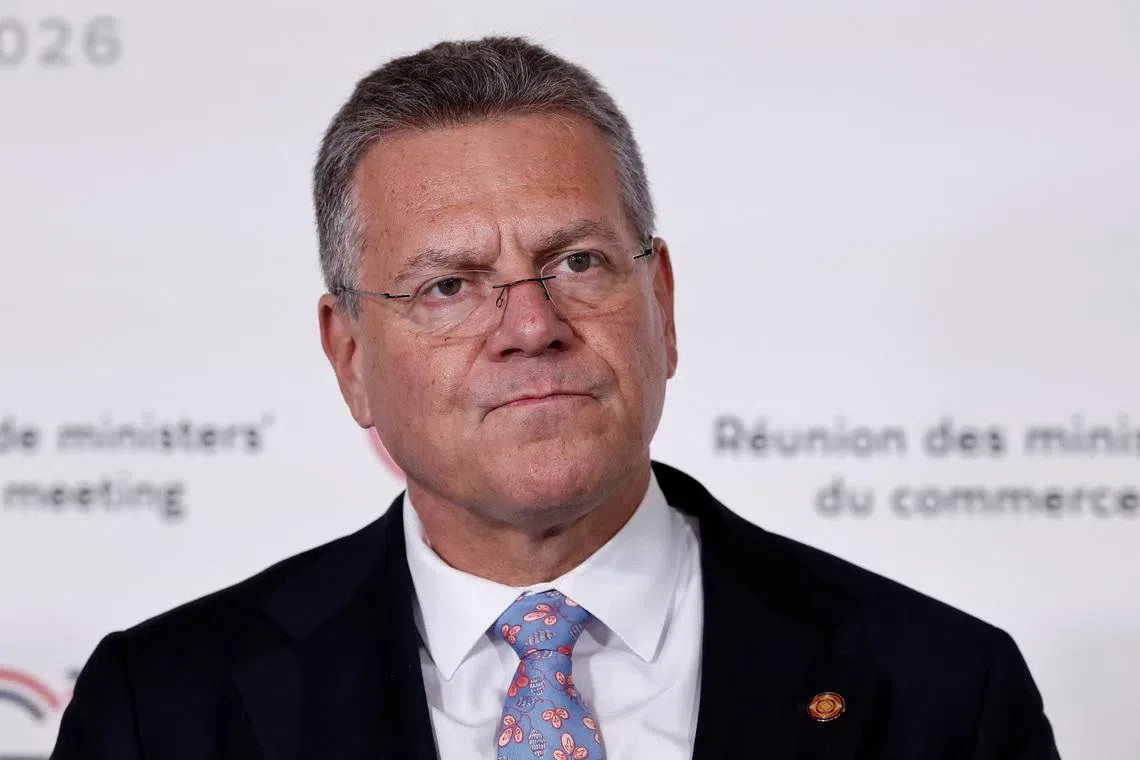
The European Commission is preparing legislation that would require companies operating in sensitive sectors to diversify their suppliers and reduce dependence on single sources, especially those linked to China [1, 2, 3, 4]. The proposed rules could mandate sourcing critical supplies from at least three different suppliers to lower supply chain risks [2, 3].
Trade Commissioner Maros Sefcovic said the issue will be discussed by EU leaders at their summit in Brussels on June 18-19, 2026, where political guidance will be given on concrete tools to enforce these measures [1, 2, 3, 4]. Sefcovic noted, "Diversification now requires a dedicated instrument. We understand the urgency for critical minerals, but every high-risk sector must be weaned off single supplier dependence" [2].
Currently, the EU encourages companies to diversify suppliers when dependence on one source exceeds 40%, but stronger enforcement is under consideration [2, 3, 4]. The effort targets sectors heavily reliant on China, including critical minerals, rare earths, semiconductors, and other high-risk industries where China is a dominant or sole supplier [1, 3, 4].
The EU runs a trade deficit with China of around €360 billion and faces challenges due to China’s control over key raw materials [3, 4]. Officials hope the new rules will strengthen Europe’s leverage in stalled market access and overcapacity talks with China [3, 4]. However, the bloc seeks to avoid triggering a full trade war, as China has warned of retaliation if measures proceed [3, 4].
In early June, Sefcovic met Chinese trade officials, including Vice Minister Li Chenggang, and invited Commerce Minister Wang Wentao to Brussels to accelerate diplomatic dialogue [3, 4]. He said the EU is studying how to improve diplomatic communication and dialogue mechanisms with Chinese partners [3].
There is not yet a public list of which sectors or suppliers will be officially designated as high-risk or critical [2, 3]. The next key event will be the EU summit on June 18-19, when leaders will debate and provide political direction on the proposed supply chain diversification legislation [1, 2, 3, 4].