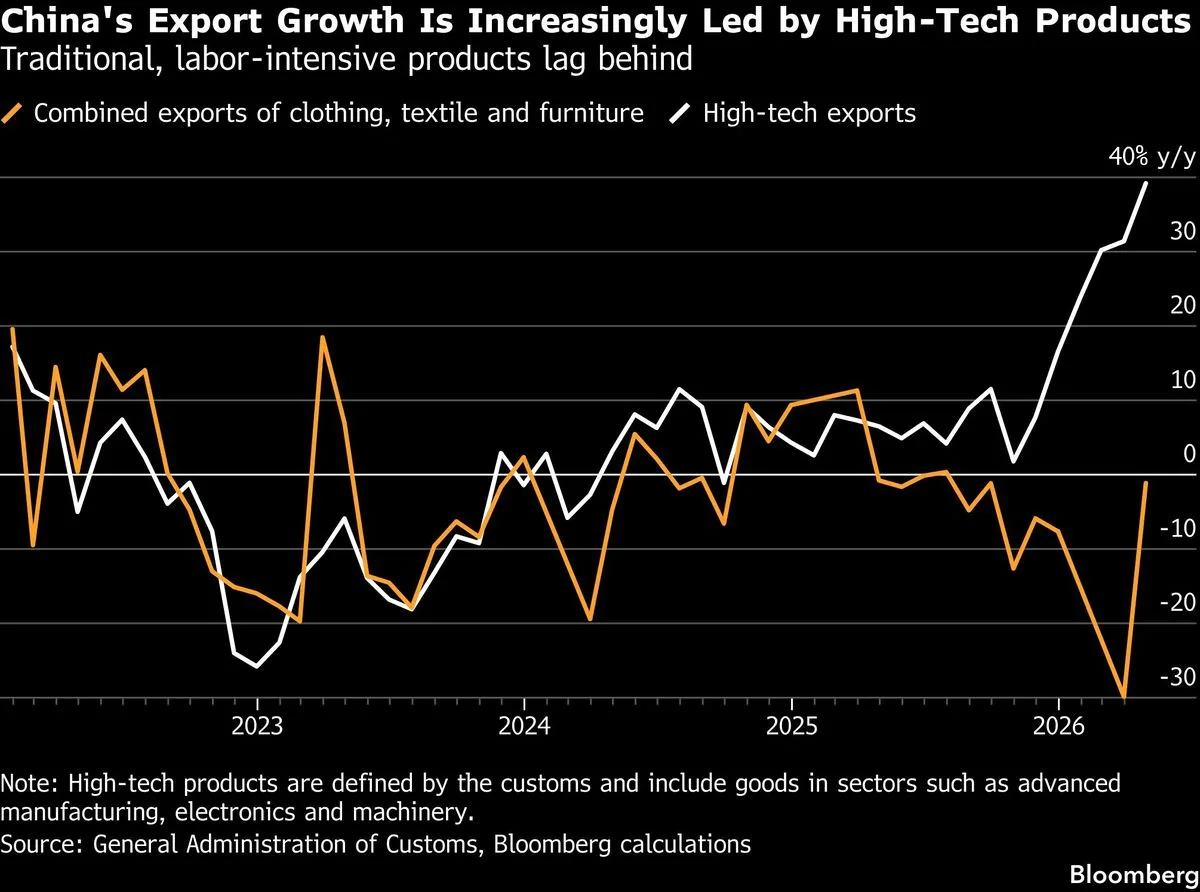
The global surge in artificial intelligence (AI) investment is powering a new wave of Chinese exports and making Beijing more comfortable with a stronger yuan, according to recent analysis [1, 2].
China’s tightly managed onshore yuan is on track for its sixth consecutive quarter of gains against the U.S. dollar, a streak not seen since 2013 [1, 2]. The yuan climbed to its strongest level since 2023 despite signs of a fragile Chinese economy, yet policymakers have shown little urgency to intervene or weaken the currency [1, 2].
In prior years, a stronger yuan would have triggered a forceful response from Beijing due to concerns that it might hurt exports and slow economic growth [1, 2]. However, China’s trade structure has shifted. Exports are now driven by high-value AI-related hardware such as semiconductors and servers, rather than low-cost manufacturing reliant on thin margins [1]. This change makes exports less sensitive to currency movements.
Duncan Wrigley, chief China economist of Pantheon Macroeconomics, said, "What has changed is exports appear less sensitive to currency moves than previously thought, meaning the benefits of currency appreciation carry more weight in exchange rate policy" [1].
China’s surge in imports this year, led by chips and semiconductor equipment, has outpaced export growth, matching earlier periods when the yuan strengthened against the dollar, Deutsche Bank noted [1]. A stronger yuan makes imports cheaper, benefiting companies purchasing advanced technology for production [1].
Between 2013 and 2025, China’s trade surplus widened from about US$260 billion to nearly US$1.2 trillion, a period when the yuan weakened from around 6 per dollar to beyond 7 [1]. During times of economic strain, such as the 2015 yuan devaluation and the 2018-20 US trade war, Beijing tolerated or encouraged yuan weakness to support exports [1].
Now, with the rise of AI-driven, high-margin exports, China appears less concerned about a strong yuan. The currency’s ongoing appreciation suggests policymakers are prioritizing the benefits of cheaper imports in a changing trade landscape [1, 2].
The yuan’s sixth straight quarter of gains is expected to conclude with the end of the second quarter in 2026, maintaining one of the longest strengthening runs in recent memory [1, 2].