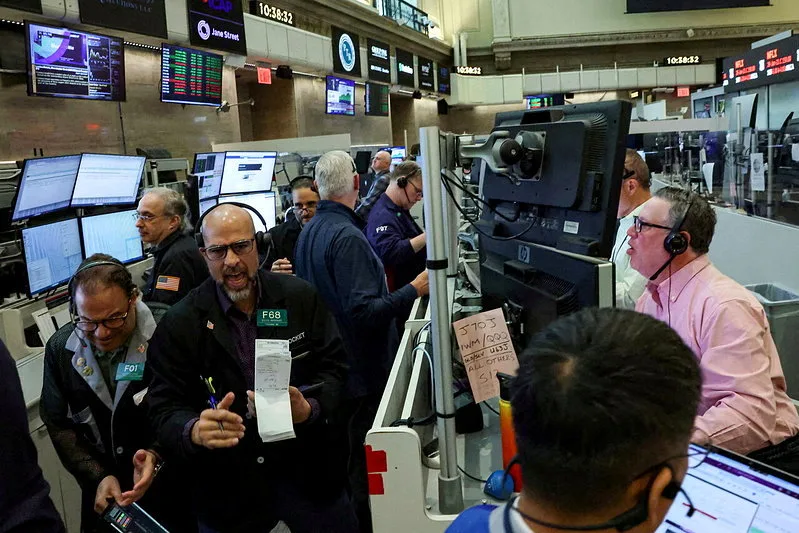
On July 28, 2026, the Taiwan stock market plunged 2,030 points, marking the third largest historical drop, driven mainly by a severe selloff in semiconductor stocks. The Taiwan weighted index dropped 4.65%, with major chip stocks like TSMC declining nearly 3%, while Delta Electronics, MediaTek, UMC, and Novatek hit their limit down levels [1]. The market also recorded intraday declines exceeding 1,800 points, the sixth largest intraday drop on record [2].
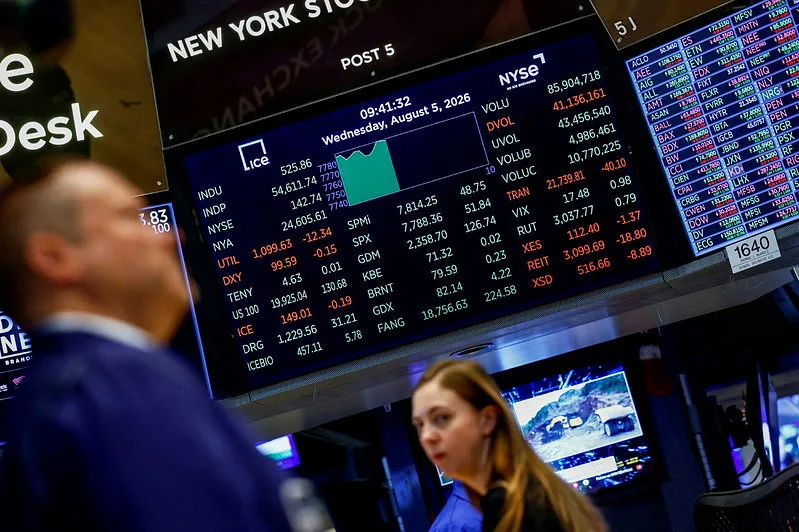
The selloff extended to the US market, where the Philadelphia Semiconductor Index (SOX) dropped between 4.5% and 5% on July 28, indicating heavy pressure on chip stocks amid ongoing concerns [3, 4]. Some discrepancies exist on the exact SOX decline, with estimates between 4.49% and 5% [3, 4]. Broader US indices showed mixed performance that day: the Dow Jones rose 0.5-1%, the S&P 500 was flat to slightly down around 0.2%, and the Nasdaq declined between 0.2-1% [3, 4].
Investors cited multiple factors driving the selloff. There is skepticism about Nvidia's cyclic financing arrangements possibly distorting true demand for chips. At the same time, Chinese companies have begun producing their own deep ultraviolet (DUV) lithography equipment, increasing competition and uncertainty in chip manufacturing. Proactive Investors analyst Angela Harmantas said, "DUV, though slower and costlier than EUV, is proving sufficient to produce nearly leading-edge chips, unsettling policymakers and investors who thought China faced greater restrictions" [5].
Concerns also focus on an overheating AI investment cycle, with doubts about when the massive capital spending on AI infrastructure will translate into profits. SPI Asset Management's Stephen Innes noted that "the first wave of AI growth was supported by cash and strong US corporate finances, but now capital expenditures and internal cash accumulation are narrowing even as AI business expansion steepens" [5]. Another market watcher, Dakota Wealth manager Pavik, said, "The market is extremely worried about large cloud providers’ spending, which feels irresponsible right now" [3].
Following the selloff, investors rotated toward defensive or non-tech sectors such as healthcare, consumer staples, materials, real estate, and utilities amid worries about tech capital spending risks [3, 4]. Energy stocks ExxonMobil and Chevron surged after reporting strong Q2 profits driven by rising oil prices amid Middle East tensions affecting shipping through the Strait of Hormuz [6].
On July 29, Taiwanese chipmaker UMC reported strong Q2 revenue of NT$687.3 billion (approx. US$21.8 billion), up 17% year-over-year, and net profit of NT$422.6 billion (approx. US$13.4 billion) [7].
The US market rebounded on July 30 and 31, supported by strong earnings from major tech firms. The Philadelphia Semiconductor Index surged about 6%, Microsoft shares jumped 15% after reporting strong cloud growth, Amazon’s stock surged 14-15% following strong results and raised capital spending guidance, while Meta dropped 8% on weak revenue forecasts. Apple’s stock declined about 9% despite solid earnings due to warnings about memory and chip supply constraints affecting future products [8, 9, 6, 10].
By August 6, 2026, US markets were nearly flat with small gains in the Nasdaq and semiconductor index, although some memory stocks like SanDisk and Western Digital slipped due to mixed earnings and guidance [11].