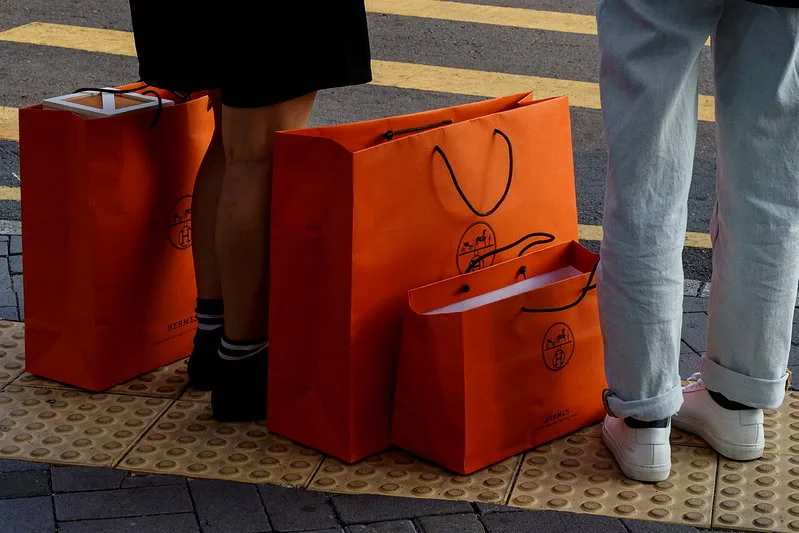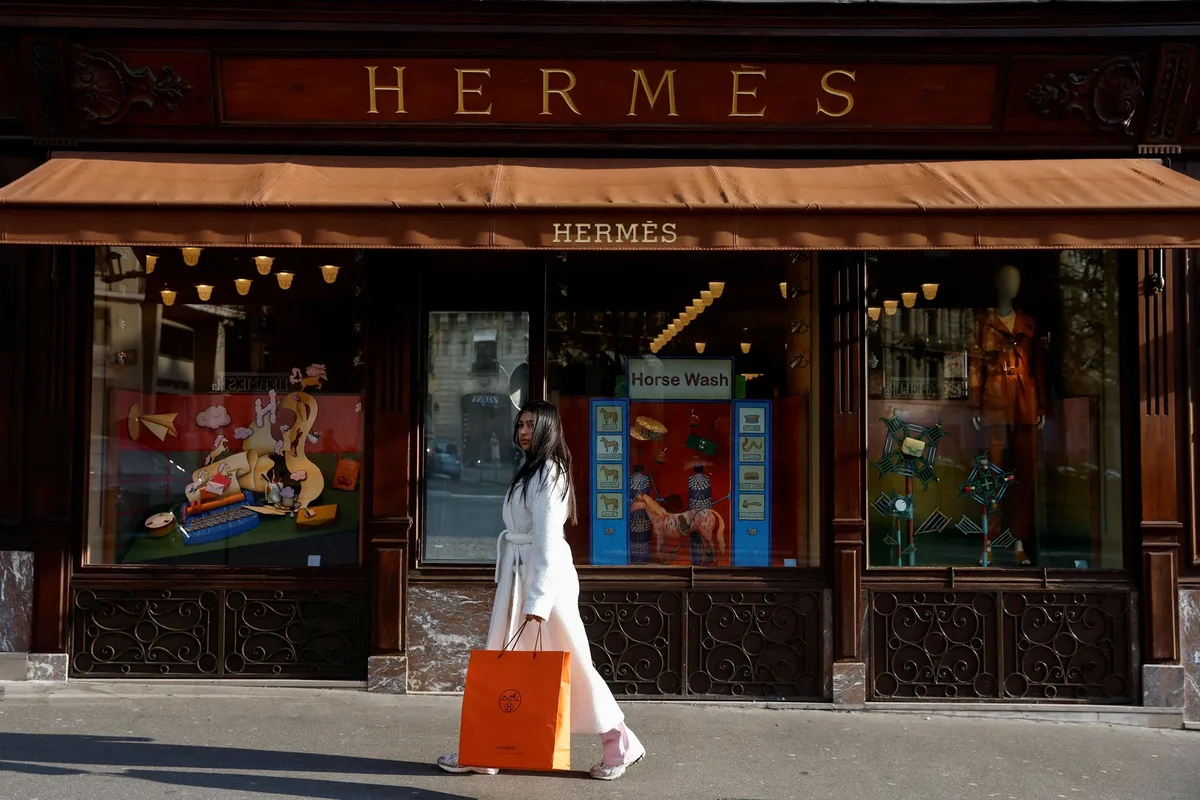
Hermès posted second-quarter revenue growth of about 6.7% at constant currency to approximately 4.1 billion euros, or roughly 4.7 billion USD, beating market expectations of 6.5-7% growth despite a downturn in the global luxury market [1, 2, 3]. The company’s sales increase was led by a 13.7% rise in the Americas and a 6.2% gain in France, while Middle East sales improved but remained negative [1].
Hermès continues to benefit from its managed scarcity strategy and long waiting lists for its iconic Birkin and Kelly bags, which helped the brand show resilience amid broader sector weaknesses [1]. However, the group remains more exposed to China than many peers, with Greater China accounting for about 43% of total revenue as of June 2026 [4].
The Chinese luxury market has not fully recovered, contributing to weak Q2 leather goods sales in the region and sparking concerns that led to a drop of up to 11.5% in Hermès shares on July 29 [4]. At the end of Q2, Chinese pork wholesale prices fell to a 16-year low, which Hermès CEO Axel Dumas uses as an unusual but telling indicator of consumer optimism and market revival potential. Dumas noted, “In China, pork is common at banquets and restaurants, so pork prices are a good measure of celebrations. A rebound in pork prices may reflect increased optimism and a desire for joyful events.” [4]
For the first half of 2026, Hermès reported revenue of about 81.6 billion euros, up 1.6% year-on-year, surpassing market predictions [2, 3]. Operating profit rose 0.7% to roughly 33.5 billion euros with a healthy operating margin of 41.1% [2, 3]. Net profit slipped slightly by 0.4% to 22.4 billion euros but still exceeded expectations [2, 3]. Foreign exchange fluctuations weighed on the reported revenue gains compared to constant currency results [2, 3].
Other luxury brands such as LVMH, Burberry, and Moncler experienced weaker results during the same period, underscoring Hermès’ relative strength in a challenging environment [1].
Hermès next faces market attention toward its third-quarter performance and how the Chinese market will recover, with all eyes on consumer confidence indicators such as local spending trends and unconventional signals like pork prices [4].