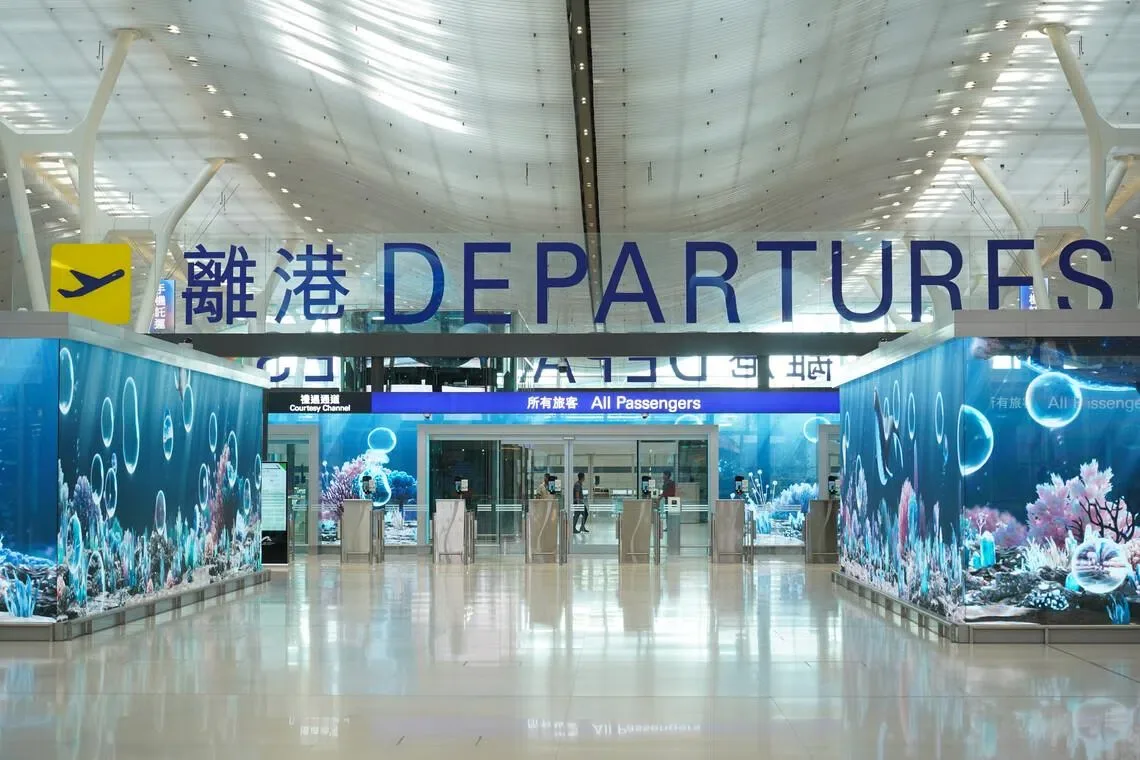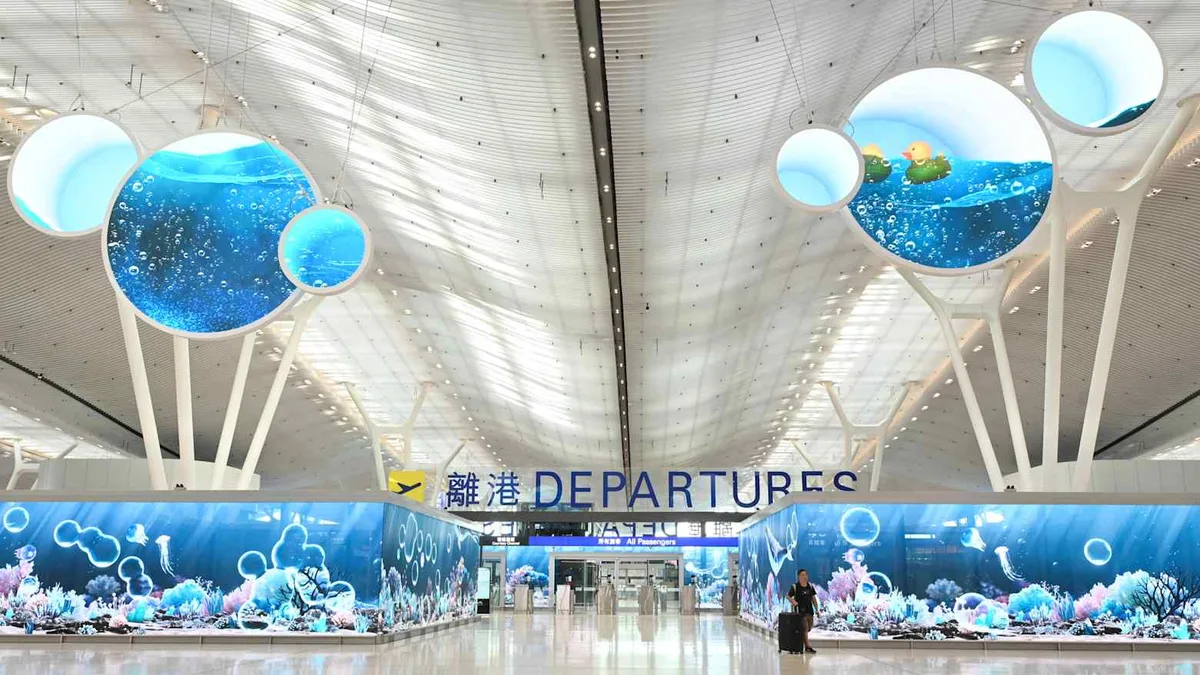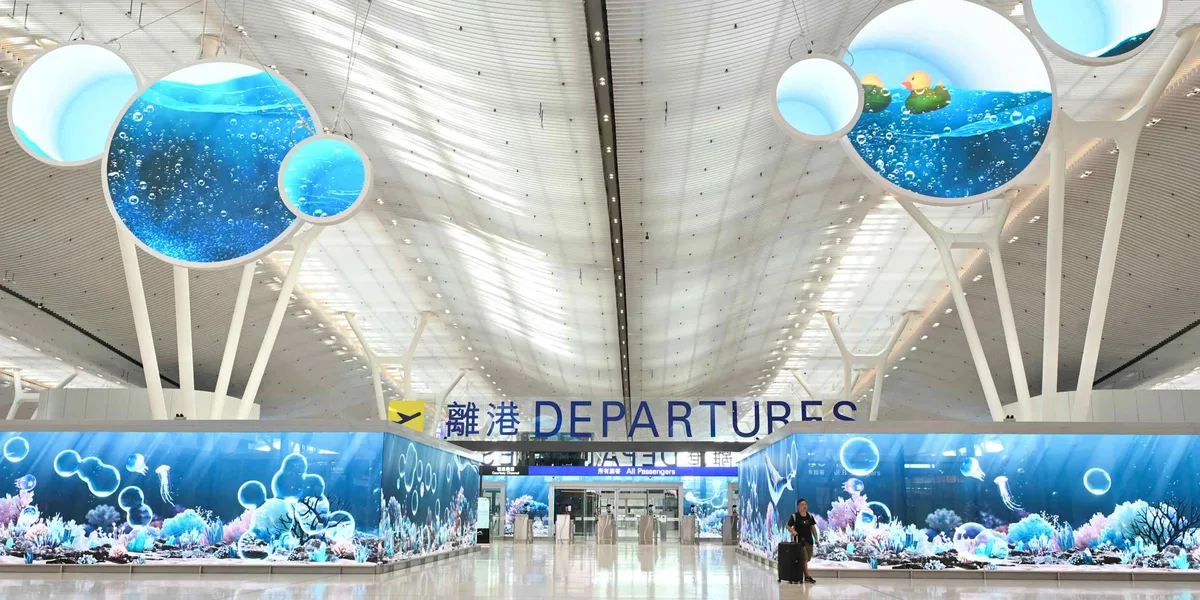
Hong Kong International Airport officially opened its second passenger terminal, Terminal 2, on May 27, 2026, with the first flight departing at around 5 a.m. local time to Shanghai via Hong Kong Airlines [1] [2] [3].
Terminal 2 is part of a US$14.5 billion (S$18.52 billion) expansion project designed to increase the airport's total capacity to 100 million passengers annually from the 2025 capacity of 38.7 million seats [2] [3]. The new terminal alone can handle up to 30 million passengers each year, primarily serving 15 mostly budget carriers including AirAsia, Hainan Airlines, Cambodia Airways, IndiGo, Bangkok Airways, and Cebu Pacific [2] [3].
The terminal features advanced digital technology, including 58 self check-in kiosks, 68 bag-drop facilities powered by facial recognition and AI, and 108 manual check-in counters to streamline passenger processing [2] [3]. This setup aims to free up capacity at the original Terminal 1 for mainline carriers such as Cathay Pacific Airways Ltd. [2] [3].
Hong Kong ranked as the world’s eighth-busiest international airport in 2025, behind Dubai and Singapore, with 38.7 million seats compared to Dubai’s 62.4 million and Singapore’s 42.6 million [2] [3]. The airport’s expansion also includes a now-operational third runway [2] [3].
Steven Yiu, HKIA’s executive director of airport operations, said Terminal 2 is "really important for HKIA because it provides extra capacity for us to grow," reflecting the airport's goal to compete more effectively with regional hubs like Singapore and Dubai, especially amid disruptions to Middle East travel routes due to the war in Iran [2] [3].