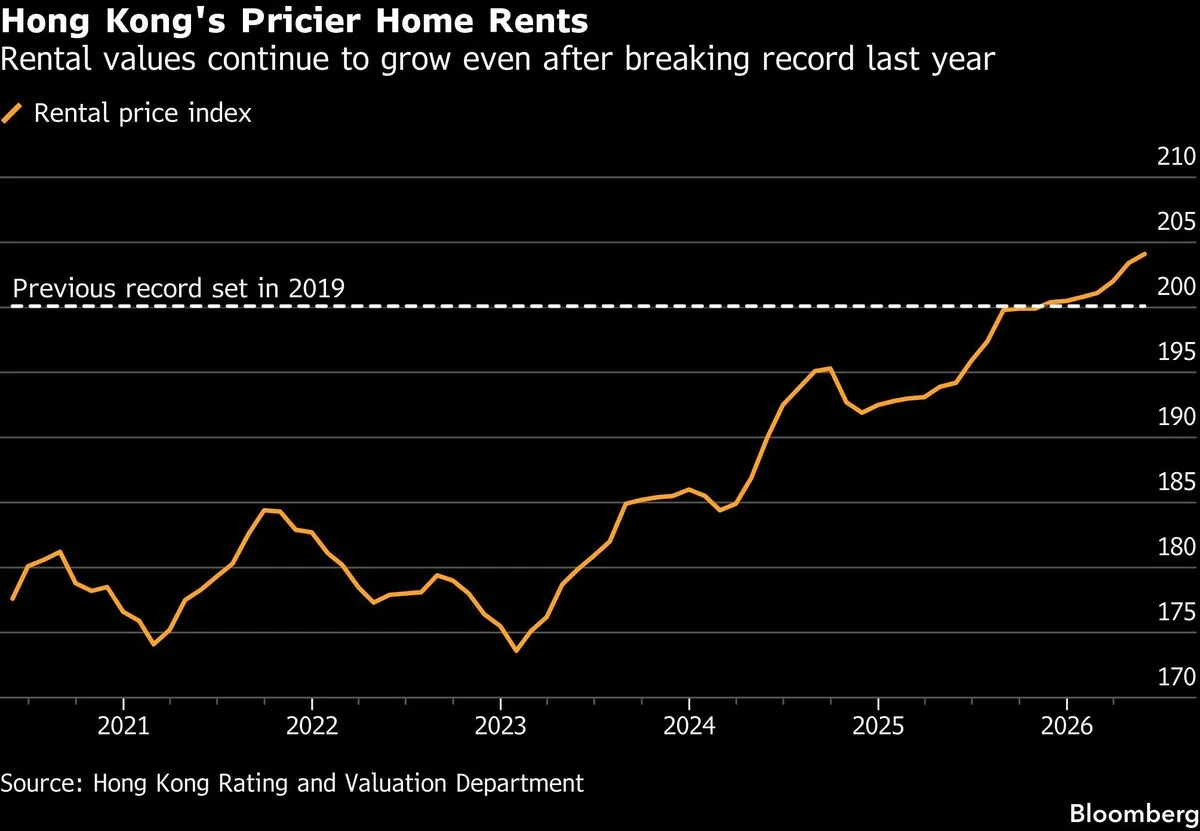
Hong Kong’s residential rental market saw rents increase by almost 4% during the first half of 2026 compared to the prior six months, marking the strongest summer rent growth since 2016 [1, 2, 3]. The surge in rental prices has been fueled largely by mainland Chinese professionals and students, as well as expatriates. James Fisher, COO at Spacious.hk, said, "Students and mainlanders are still helping to drive the hot rental market. The primary difference between this year and the last couple years' seasonal summer rent growth is definitely the strength of the expat market" [1].
Typical rental rates illustrate the high cost of living in Hong Kong. A two-bedroom, 500-square-foot apartment in Sheung Wan rents for about HK$34,000 (US$4,340) monthly, levels comparable to similar-sized units in Manhattan [1, 2, 3]. Neighborhoods popular with expats, such as the Peak, Clear Water Bay, SoHo, and Repulse Bay, have experienced above-average rental increases [1, 2, 3]. While Hong Kong condos tend to be smaller and more expensive than those in other global financial centers, recent rent rises in New York have narrowed that gap [1, 2, 3].
On the home sales front, prices have risen consecutively for 12 months as of May 2026, the longest streak since 2018 [1, 2, 3]. Analysts forecast that home prices will increase approximately 11% in 2026, the largest yearly gain in nearly a decade, and continue to rise a total of 19% through 2027 [4]. Limited supply of new homes and strong demand from mainland Chinese buyers are key factors supporting the price gains [4]. New home completions are expected to fall to a 12-year low by 2027, with residential vacancy rates dropping to 3.5%, the lowest since 1990 [4].
The robust rental market has translated into attractive yields for investors. Rental yields for smaller apartments reached 3.5% in April 2026, surpassing mortgage rates of 3.25%, creating a positive yield spread [4].
Hong Kong’s rental and housing markets remain tightly balanced with strong demand and constrained supply. The city will closely watch new home completions and vacancy rates through 2027 to gauge how price trends evolve [4].