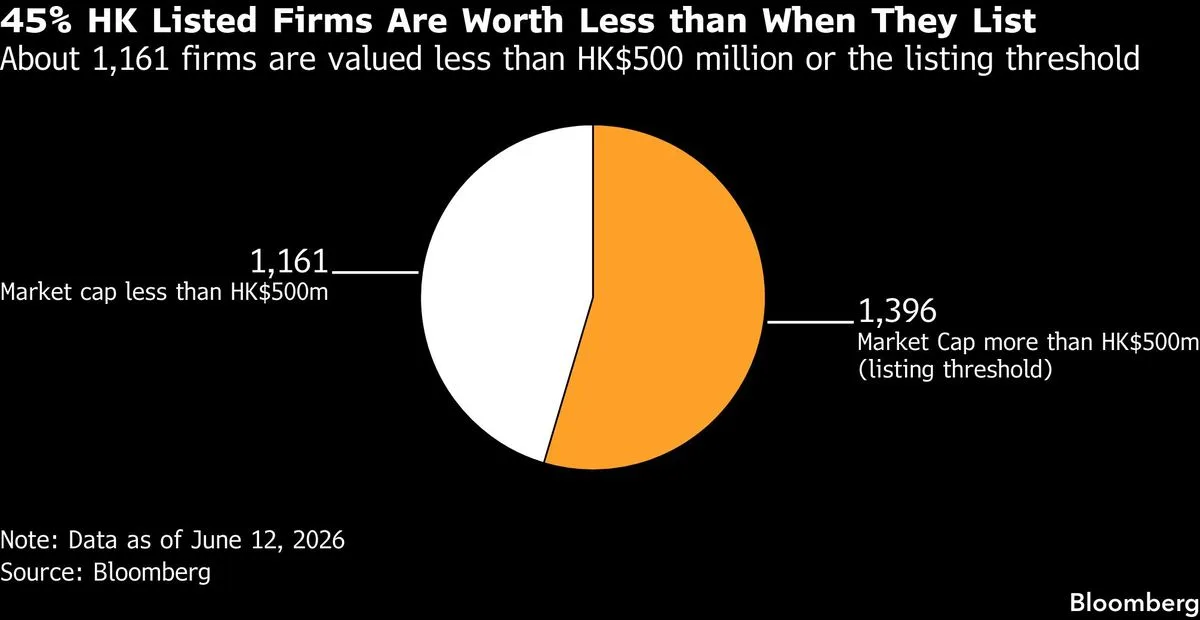
Hong Kong stock issuers are focusing on more than 1,000 companies with market values below HK$500 million to boost trading volume and investor coverage on the exchange [1, 2]. Among approximately 2,500 listed firms on the Hong Kong Stock Exchange (HKEX), these smaller companies typically trade less than HK$100,000 per day, limiting their visibility and financing opportunities [1, 2].
A new group of specialists has been formed within the Chamber of Hong Kong Listed Companies to advise and support smaller regional firms seeking to raise capital. The group will offer free advice aimed at improving market recognition and funding access. KC Chan, head of the chamber, noted on June 12 that “while large companies have an army of professional parties, many more firms from abroad would welcome some help when exploring Hong Kong as a market place” [2].
The Hong Kong stock market remains buoyant in 2026, largely driven by companies involved in the artificial intelligence supply chain. Some 400 firms are currently in the initial public offering (IPO) pipeline, with maiden share sales expected to exceed US$43 billion this year—a six-year high [1, 2]. Most prospective issuers come from mainland China, with other hopefuls from across Asia and the Middle East also lining up [1, 2].
However, companies outside the hottest sectors like AI and robotics face significant challenges. Alan Fung highlighted that such firms “often suffer from a lack of market attention, restricting their possibility of getting investment bank coverage, financing options and raises compliance costs” [2]. These difficulties can hamper their ability to grow and raise capital efficiently.
To support fundraising and attract innovative firms, HKEX has proposed lowering the market capitalization threshold for dual-class listings, with a requirement that companies demonstrate a "novelty characteristic". The aim is to make Hong Kong a more appealing hub for capital raising [2].
In mid-March, HKEX also released a consultation proposing greater transparency by naming all lawyers, auditors, and consultants involved when listing applications are returned due to substandard work [1].
Efforts by market bodies and regulators to assist smaller companies and increase transparency are expected to continue amid strong IPO activity this year.