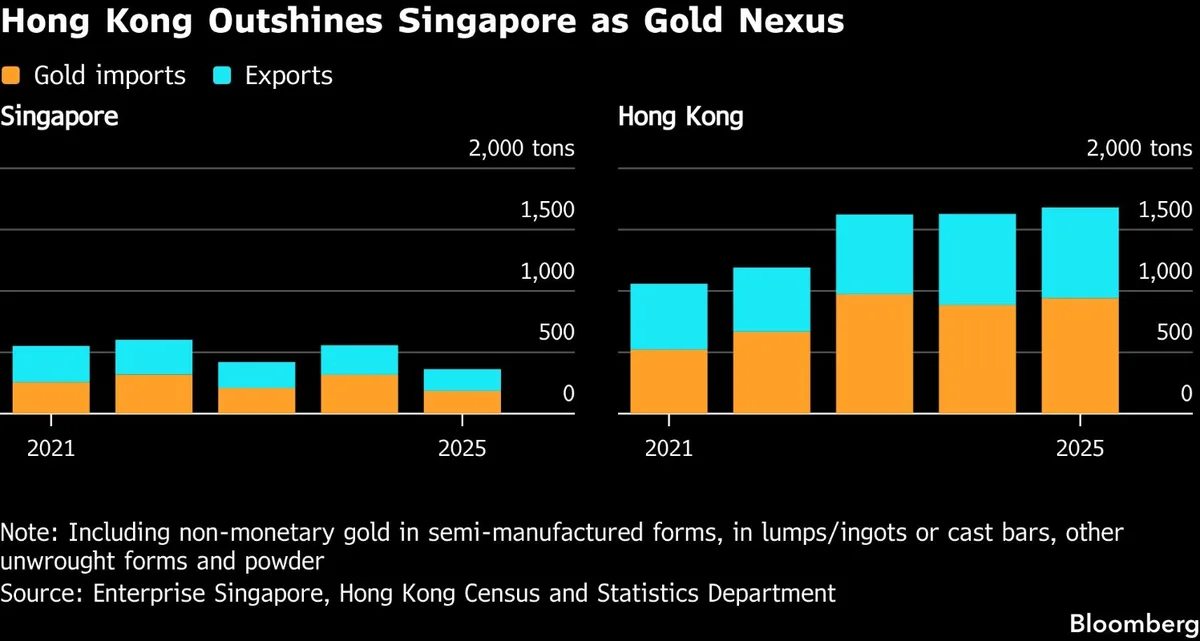
Hong Kong plans to launch a gold-clearing system by July 2026 aimed at boosting liquidity and influencing regional gold pricing. The government-owned mechanism seeks to enhance Hong Kong’s role as Asia’s primary bullion trading hub [1, 2, 3, 4].
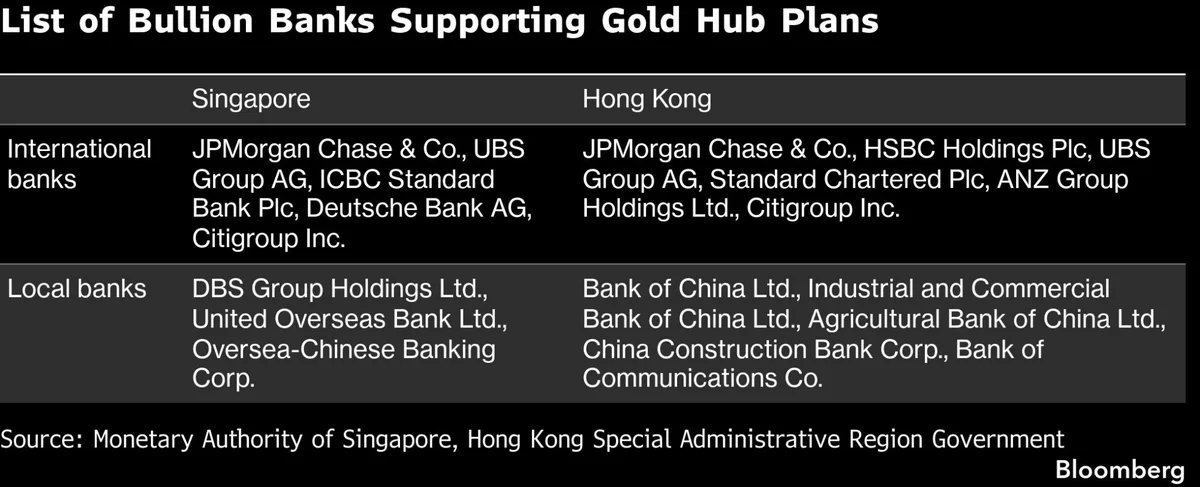
This launch gives Hong Kong a first-mover advantage over rival Singapore. While Singapore has announced similar plans to expand its gold-clearing capabilities, it has not set a public timeline, according to market sources [1, 2, 3, 4]. Adrian Ash, head of research at BullionVault, said he sees "Hong Kong authorities very eager to win" the race to build clearing infrastructure [1].
Hong Kong offers extensive infrastructure supporting trading, refining, and storage growth. China’s express-delivery firm SF Holding plans to open a vault near Hong Kong airport in 2026, expanding secure bullion storage capacity [1, 2, 3]. Meanwhile, Point Gold International, a major Chinese refiner, is investing US$150 million to expand its Hong Kong offices and start production at a new facility this year [1]. Other refiners active in Hong Kong include Heraeus and Metalor Precious Metals Hong Kong [1, 2, 3, 4].
In comparison, Singapore hosts only one refinery accredited with London Good Delivery standards, limiting its refining scale [1, 3, 4]. Precious metals traders in Hong Kong have seen rising wages due to competition with fintech and securities firms, signaling stronger market demand for expertise [1, 2, 3, 4].
Gold prices have stalled since the recent Middle East war outbreak, but banks remain optimistic about gold’s role as a long-term store of wealth [1, 2, 3, 4]. Analysts note the July 2026 launch timing is well chosen to coincide with a seasonal lull in demand, allowing Hong Kong market participants to build stockpiles efficiently [1, 2, 3, 4].
The first phase of Hong Kong’s gold-clearing system is expected this summer. Around the same time, SF Holding’s vault will open and Point Gold International will begin production at its new refinery, marking a concentrated push in the city's bullion infrastructure development [1, 2, 3].