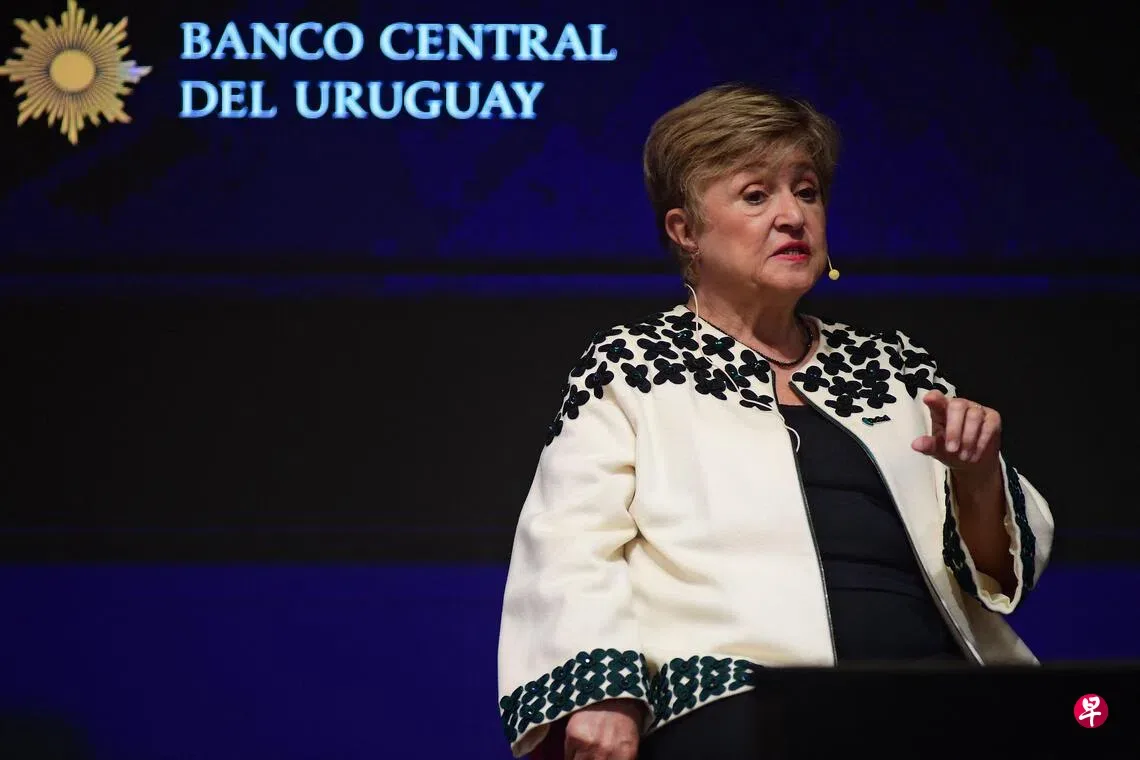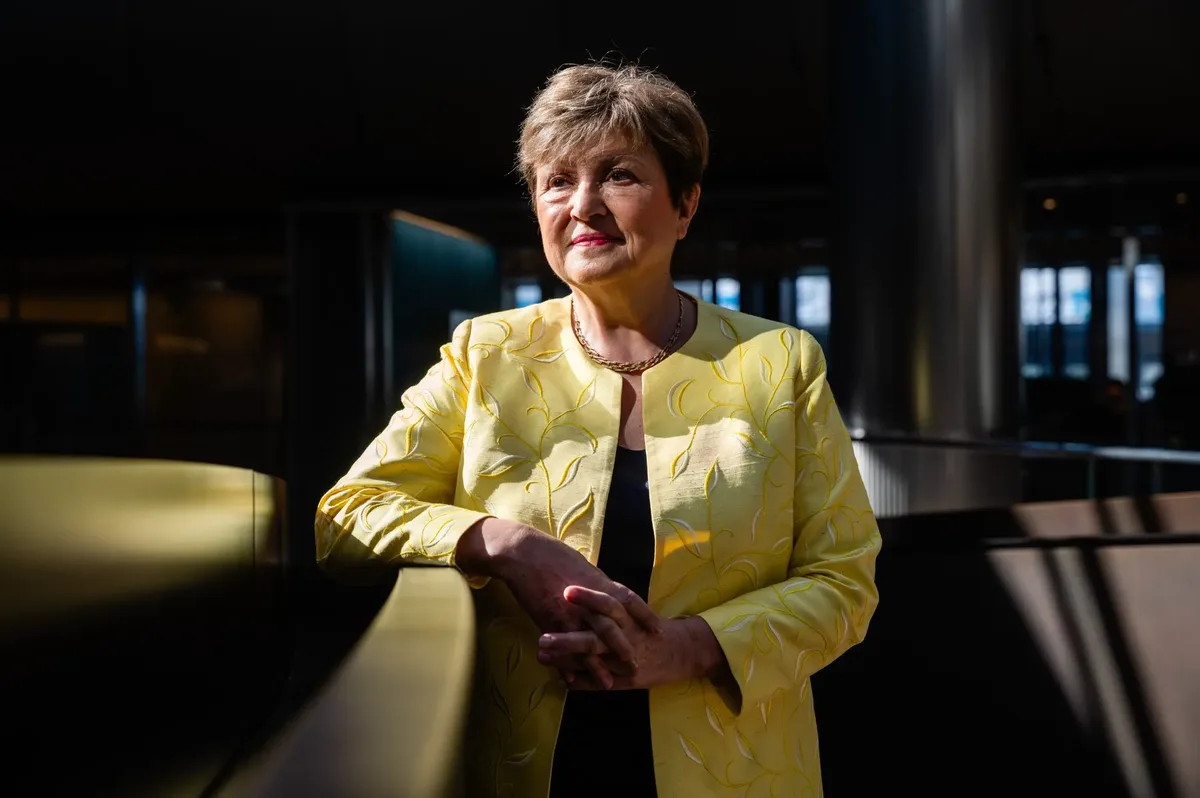
IMF Managing Director Kristalina Georgieva warned governments on August 25 in Washington D.C. to address rising fiscal risks by presenting credible plans to keep debt and deficits sustainable. [1, 2, 3, 4] She emphasized that no country can afford complacency despite the global economy's resilience to the recent energy shock caused by the conflict in the Middle East. [5]
Georgieva called on central banks to remain "laser focused on their price stability mandates" and continue efforts to reduce persistent inflation. [2] The IMF chief described the current global economy as being caught in a "tug of war between the negative supply shock from the Middle East and the positive demand shock from AI," noting how artificial intelligence investments are spreading beyond the United States, supporting corporate profits and consumer spending worldwide. [2, 3, 4]
The global economy has proven more resilient than feared despite the war in Iran and the closure of the Strait of Hormuz disrupting energy supplies. [2, 3, 6] This resilience is supported by countries releasing oil and gas reserves, expanded energy production outside the Gulf region, reduced energy demand, growth in renewable capacity, and some increased coal power generation. [3, 6, 4]
However, Georgieva warned the energy crisis remains unresolved, with looming risks of higher oil prices as the Northern Hemisphere’s winter approaches. "If oil prices rise again, it could push up inflation and force central banks to keep tight policy, increasing debt servicing costs and hurting economic activity," she said. [4]
Despite AI’s economic benefits, she cautioned about financial risks from potential asset bubbles, capital concentration, and uneven AI adoption that may particularly harm developing countries. [4, 7, 8, 9] "AI still poses significant unknowns and the risk of falling behind is most severe for developing countries," Georgieva added. [9]
The IMF has left its global growth forecast for 2026 mostly unchanged at around 3.0%, a slight downgrade from 3.1% in April, attributing risks to the Middle East conflict and trade tensions. [2, 3, 5, 8] The projection for global consumer prices was raised given higher energy and food costs. [7, 8]
Georgieva concluded by underscoring that risks to the global economic outlook remain tilted to the downside. She urged nations to address fiscal imbalances and central banks to maintain tight monetary policies, saying, "All countries need to tackle their fiscal problems and formulate and present credible plans to ensure their debt and deficits are on sustainable path." [1, 2, 4, 5]
The IMF’s annual meetings are scheduled for October 2026 in Bangkok, where the fund is expected to release an updated global economic assessment and growth forecasts. [2, 3, 6]