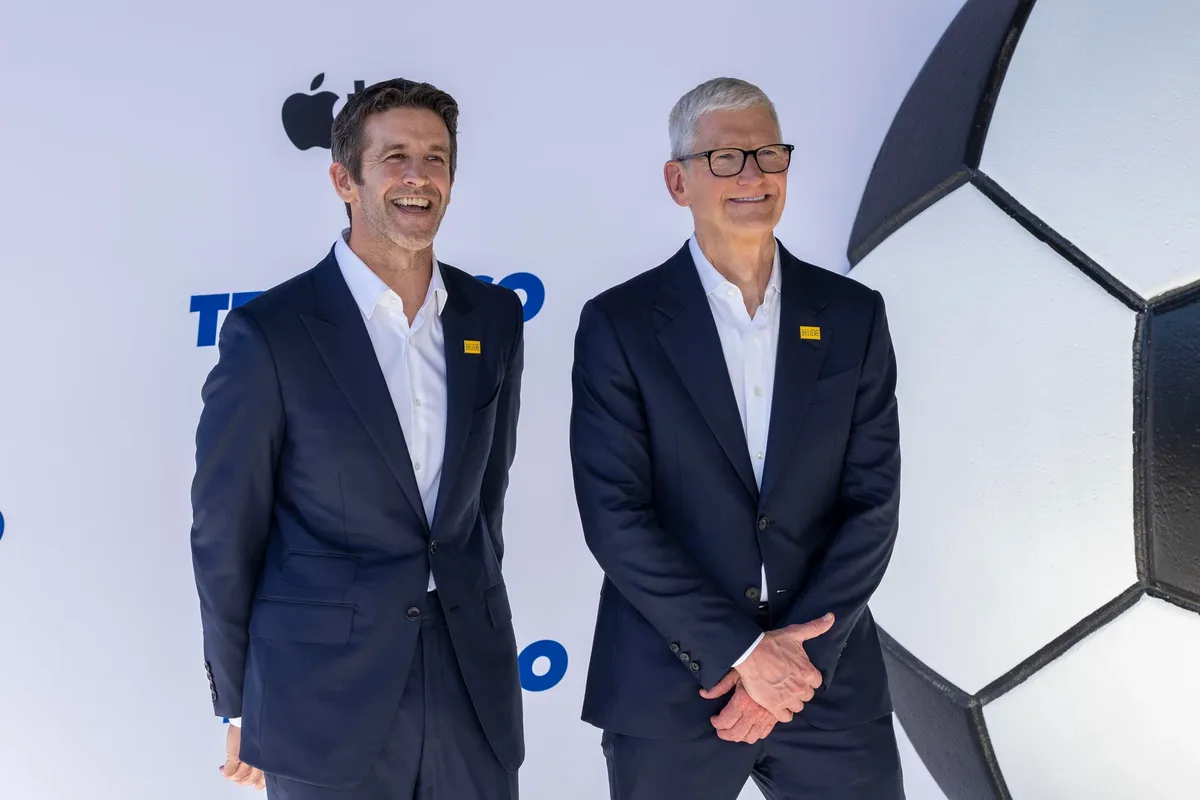
John Ternus, Apple’s incoming CEO and current hardware chief, said he plans to continue building on the momentum in Apple TV’s entertainment business when he takes over leadership in September 2026 [1, 2, 3, 4]. Speaking at the July 27 red carpet premiere of Ted Lasso Season 4 alongside Tim Cook, Ternus said, “I think we have such tremendous momentum right now in Apple TV. There’s so many amazing shows, so many amazing characters and stories, and so we’re just going to keep building on the momentum” [1].
Apple began offering original movies and TV series through its streaming platform Apple TV+ in 2019, featuring award-winning content like Oscar-winning CODA, the box-office F1 film, and Emmy-winning shows such as The Studio and Ted Lasso [1, 2, 3, 4]. The company rebranded Apple TV+ to Apple TV in 2025 to unify its entertainment offerings under one brand [1, 2, 3, 4].
Current CEO Tim Cook emphasized Apple’s focus on quality over quantity in entertainment. He said, "Our role is to be the best. That’s our lane. We’re not about the most. There are ... other companies that do that. But we’re about the best, and I feel like we really hit our stride in providing that" [1]. Cook is sharing insights with Ternus as part of the leadership transition [1, 2, 3, 4].
Apple is open to partnerships that bring unique expertise, as shown by its collaboration with Formula 1. For the F1 movie, Apple developed custom cameras to immerse viewers inside the race car, and F1 races are exclusively streamed on Apple TV in the U.S., with additional coverage on Apple News and other apps [1, 2, 3, 4]. Cook noted, "We’ll do things that we can bring something unique to, where we can innovate in a way that others might not be able to. I feel like we’re really doing that with F1" [1].
Senior Apple executive Eddy Cue said the company aims to deliver "better and more" TV shows and movies on streaming and in cinemas [1].
Ternus will officially become Apple CEO on September 1, 2026, marking the start of his leadership of Apple's broader entertainment and hardware strategies [1, 2, 3, 4].