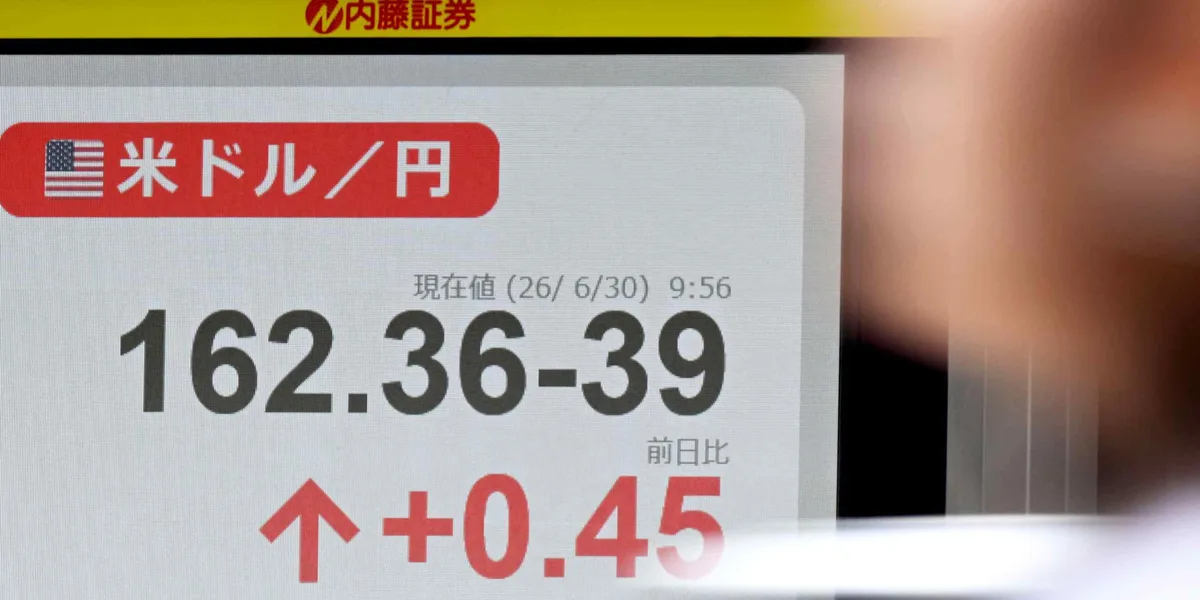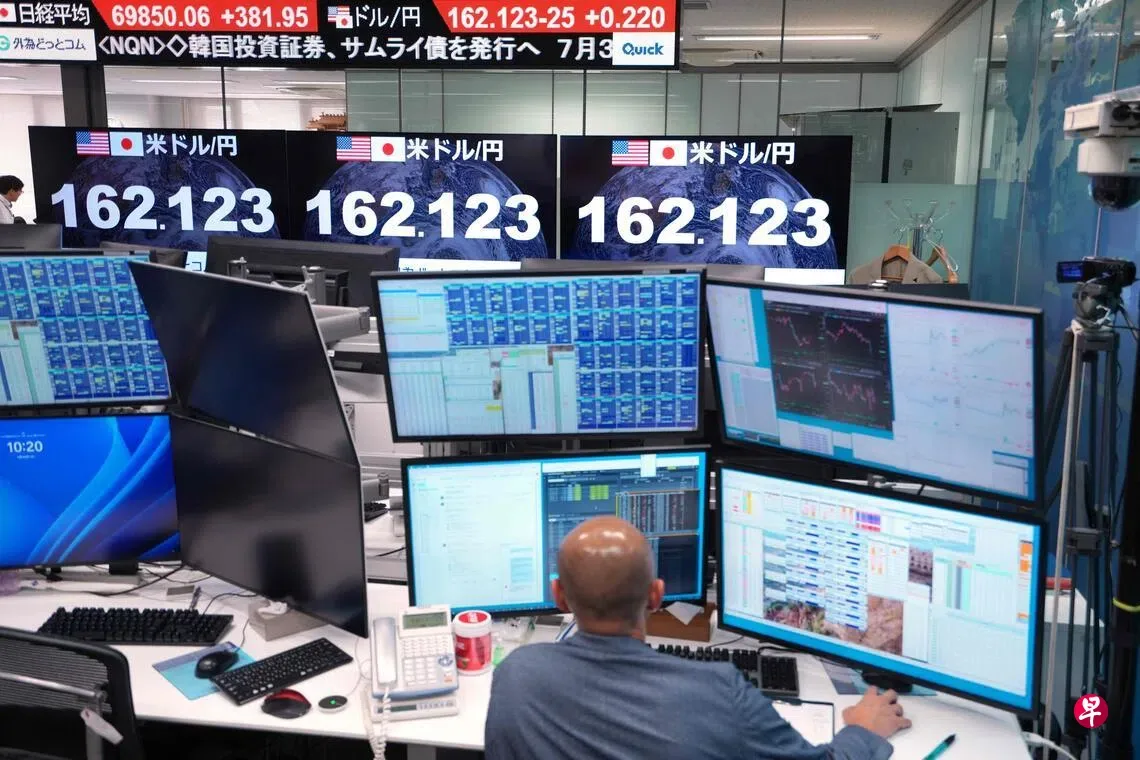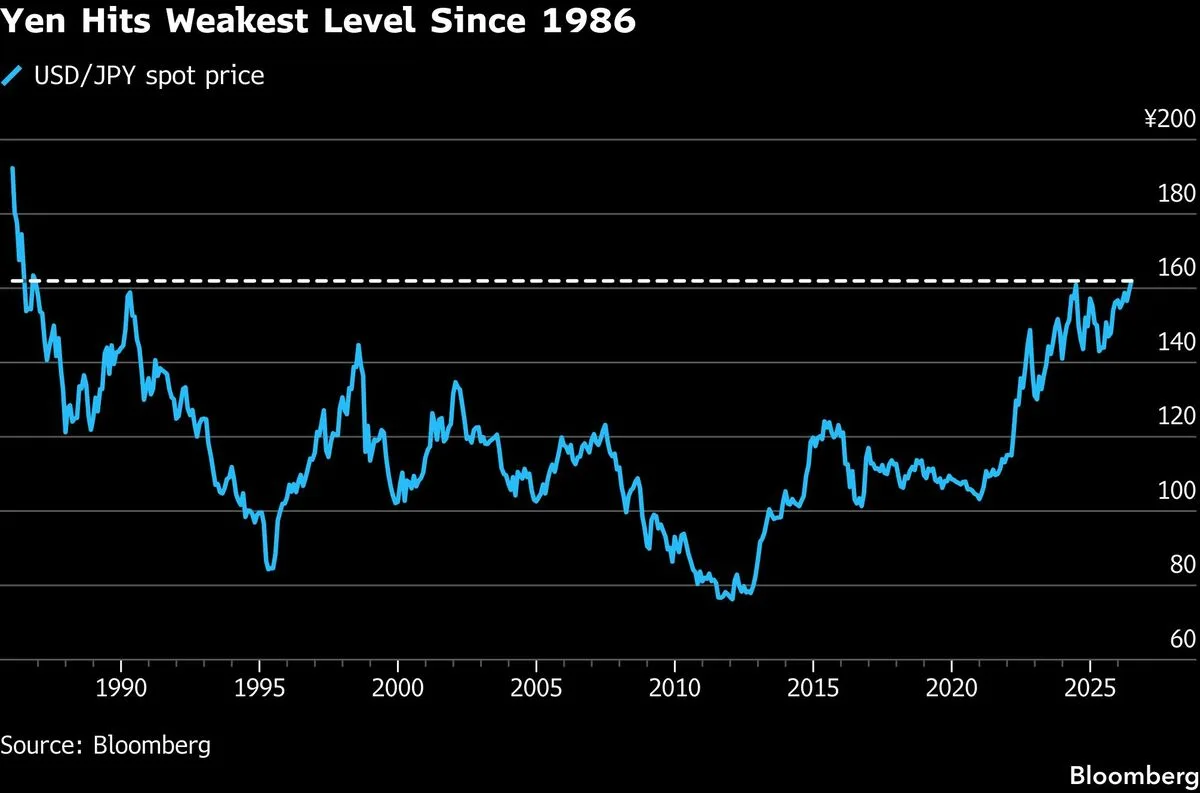
The Japanese yen slid to its weakest point against the US dollar since 1986, breaching 161.95 and reaching levels of roughly 162 to 162.40 yen per dollar in late June and early July 2026 [1, 2, 3, 4, 5, 6, 7, 8, 9, 10, 11, 12]. On June 16, 2026, the Bank of Japan raised its benchmark interest rate to 1%, the highest level since 1995, but the move failed to strengthen the yen significantly [1, 2, 3, 5, 8, 9, 12]. The yen briefly dipped below 162.80 yen per dollar during Tokyo trading on July 1 [6].
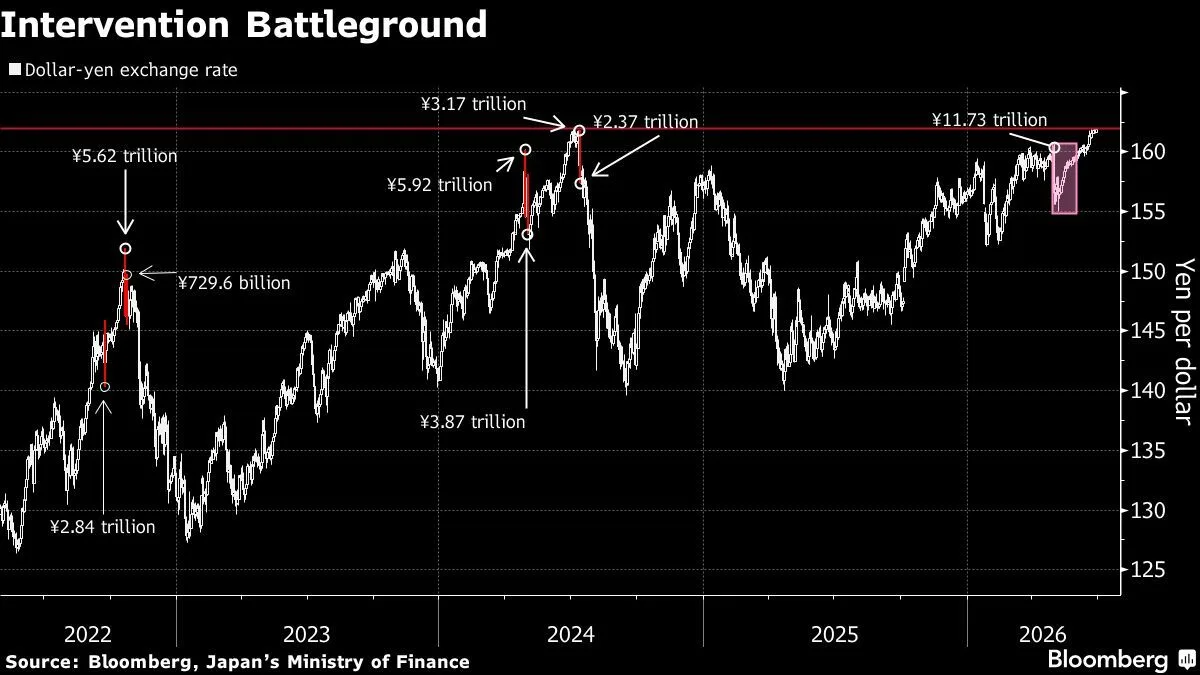
Japan’s government has intervened multiple times in the foreign exchange market to support the yen. In 2024 and again from April to May 2026, authorities spent a record 11.73 trillion yen (about S$93.6 billion) aiming to curb the yen’s slide, but these efforts only provided temporary relief [1, 5, 11]. Finance Minister Satsuki Katayama and Chief Cabinet Secretary Minoru Kihara emphasized the government’s readiness to take decisive action if currency moves became excessive, with Katayama stating, "The government was ready to take appropriate action against excessive currency moves. That includes taking decisive action, as confirmed between Japan and the U.S." [2, 7, 8, 9, 11]. Kihara added the government is committed to building an economy less vulnerable to foreign-exchange volatility while staying prepared to intervene when necessary [9].
Market participants expect the wide interest-rate gap between Japan and the US, combined with anticipated ongoing Federal Reserve hawkishness, to keep pressure on the yen [1, 2, 3, 6, 9, 12]. The yen’s decline has been partly attributed to carry trades, where investors borrow cheaply in yen to invest in higher-yielding overseas assets, as Japan’s rates remain lower than other economies [2]. Analysts warn that intervention offers only a temporary fix unless Japan addresses the underlying interest rate differentials. Andrew Hazlett, a foreign-exchange trader at Monex, said, "Intervention is right around the corner if we don’t see a quick correction. Still, intervention is only a temporary fix if they do not address the interest-rate differential" [1].
The yen’s depreciation has boosted profits for Japanese exporters and helped drive the stock market to record highs in 2026 [1, 2, 3, 5, 10, 12]. However, rising import costs for oil and natural gas, priced in US dollars, have pushed up inflation and increased living costs for Japanese consumers. This has hurt popularity for Prime Minister Sanae Takaichi’s government amid higher prices for food, electricity, and essentials [1, 2, 3, 5, 9, 10, 12].
The yen also declined about 2.8% against the Singapore dollar in 2026, with the exchange rate hitting a new record high of 1 SGD = 125.41 JPY on June 30, 2026 [3, 10, 11].
The Bank of Japan’s next policy review and updates on government intervention readiness will be closely watched. Officials remain poised to act should the yen’s slide accelerate or threaten economic stability [2, 7, 8, 9, 11].