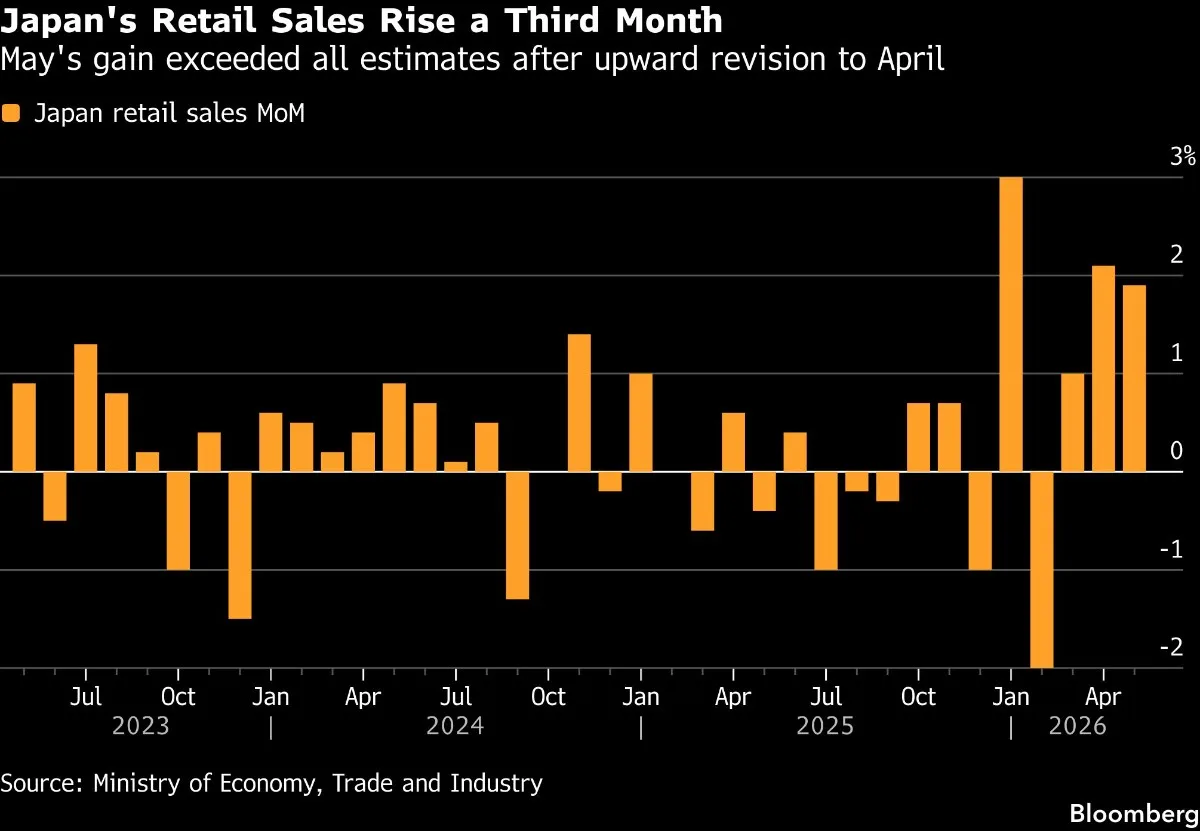
Japan’s retail sales rose 1.9% month-on-month in May 2026, continuing a three-month streak of growth, the Ministry of Economy, Trade and Industry reported today [1, 2, 3]. Year-on-year sales jumped 5.3%, well above analysts’ forecasts of about 3% [1, 4, 2, 3].
The growth was driven by strong wage gains and targeted government subsidies aimed at easing the cost of living, supporting consumer spending despite inflationary pressures [1, 2, 3]. Sales gains were led by vehicles, pharmaceuticals, cosmetics, and department stores. Seasonal appliance sales, particularly air conditioners, nearly doubled compared to May 2025 [1, 2].
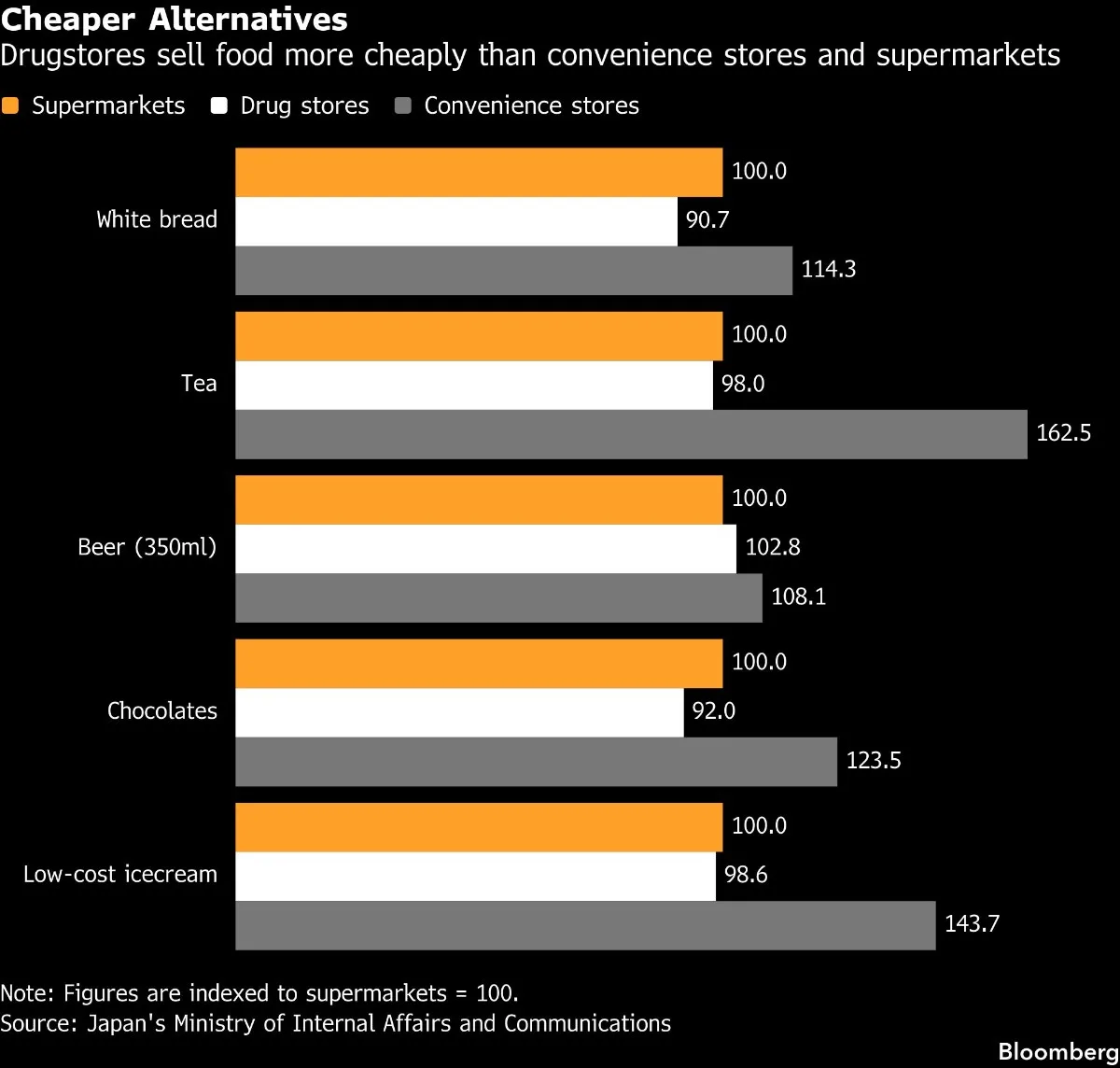
Drugstore sales increased more than 7% year-on-year, while convenience store growth slowed, suggesting a shift by consumers toward lower-priced options [1]. Retail sales statistics are reported without inflation adjustments [1, 2].
April’s retail sales figures were revised upward to show 2.1% month-on-month and 2.8% year-on-year gains, stronger than initially reported [3].
The rising retail sales help the Bank of Japan’s efforts to normalize interest rates amid concerns about inflation and the sustainability of consumer demand [1, 2]. BOJ Governor Kazuo Ueda reiterated last week that rates will continue to rise if economic, inflation, and financial conditions develop as expected [1].
Masato Koike, senior economist at Sompo Institute Plus, said consumer spending remains resilient but warned of downside risks. He noted, "The basic view is that consumer spending has held up so far, but if the data begin to show a clear deterioration, the government and the BOJ will have little choice but to factor that into their policy decisions. Consumer spending will be a key indicator going forward, and I believe the risks are skewed to the downside" [1].
The next key data release will be watched closely for signs of whether consumer demand can maintain its recent momentum.