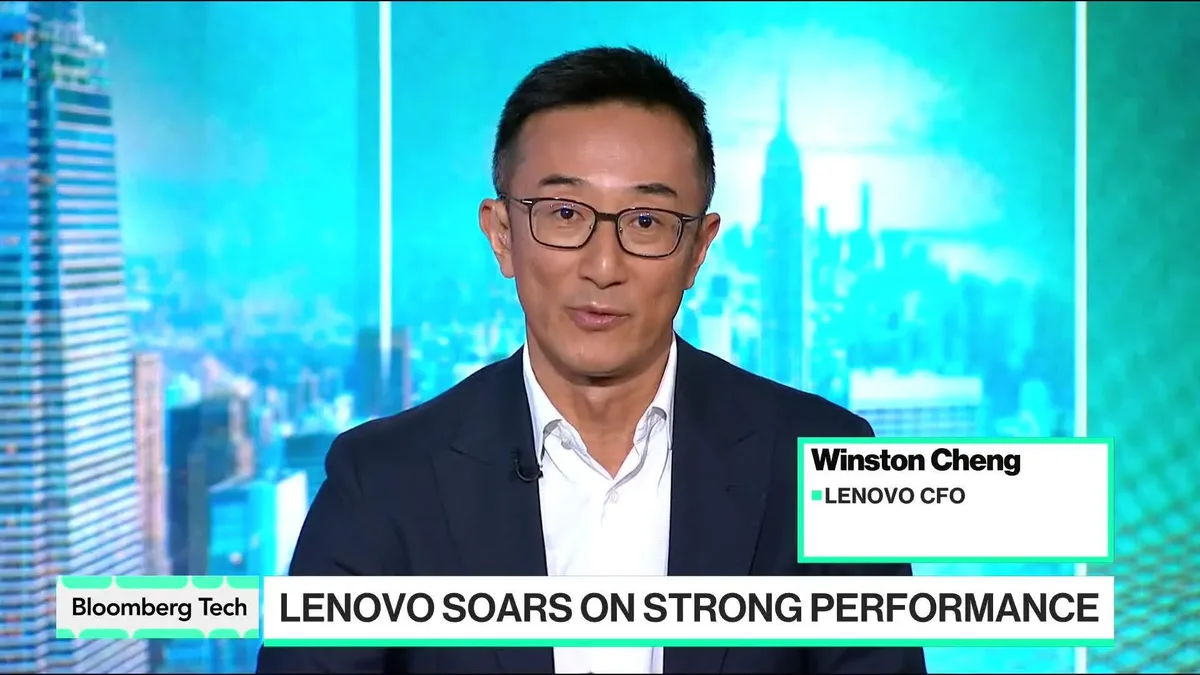
Lenovo reported a 38% increase in profit for the fiscal year ended March 31, 2026, beating analyst expectations with revenue growth of around 20% year-on-year [1, 2, 3]. The company’s March quarter revenue reached $21.6 billion, marking its fastest growth in five years, while net income surged nearly sixfold to $521 million [4].
AI-related sales were a key driver, growing 84% year-on-year last quarter and accounting for roughly one-third of total revenue [1, 4, 2, 3]. Lenovo’s CEO Yang Yuanqing said, "Our hybrid AI vision puts us at the forefront of AI inferencing and AI democratization, so I’m fully confident that we will achieve our goal to become a US$100 billion company in two years" [1]. He added that "inferencing demand will grow even faster and even stronger" [2].
Lenovo’s AI server pipeline is valued at $21 billion, as it plans to deliver Nvidia Rubin-based platforms in the second half of 2026 [1, 2]. Despite rising component costs, Lenovo maintained gross margins, supported by growth in its AI, data center, and storage businesses [1, 2].
The company also marked a historic milestone by selling 1.1 billion personal computers cumulatively [3]. Lenovo raised its full-year dividend by over 8% to 42.2 Hong Kong cents per share [3].
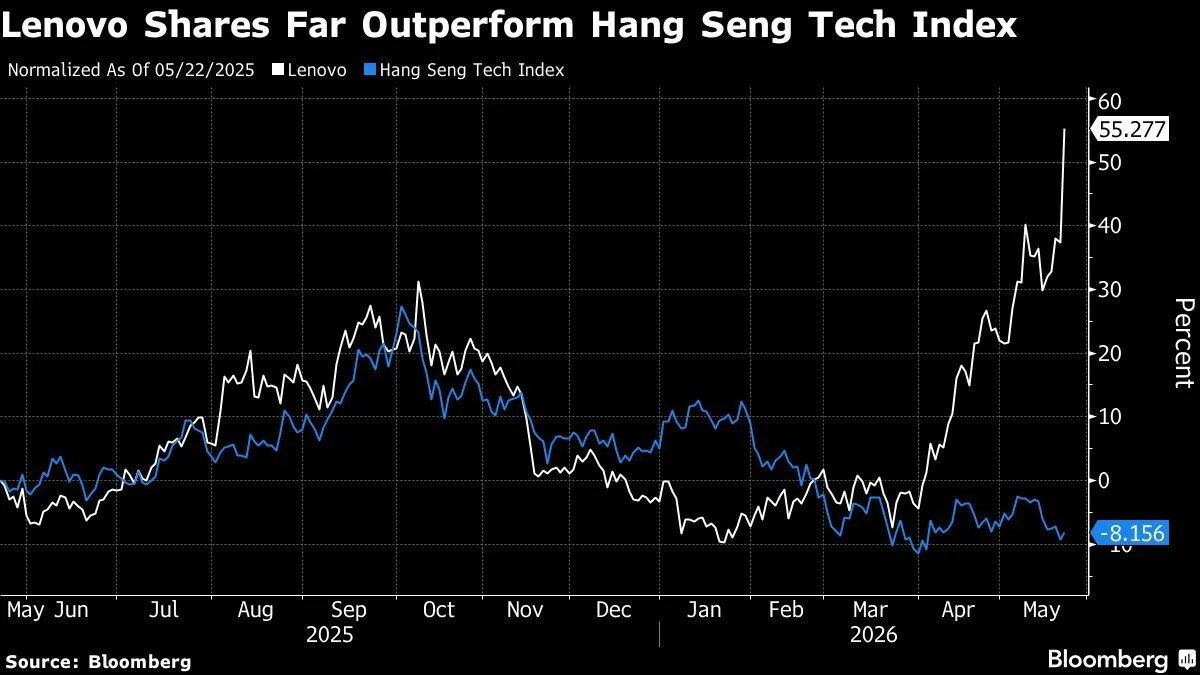
Shares in Lenovo surged as much as 17% in Hong Kong trading on May 22, reaching near all-time highs following the strong earnings report and AI revenue growth [1, 2, 4, 5].