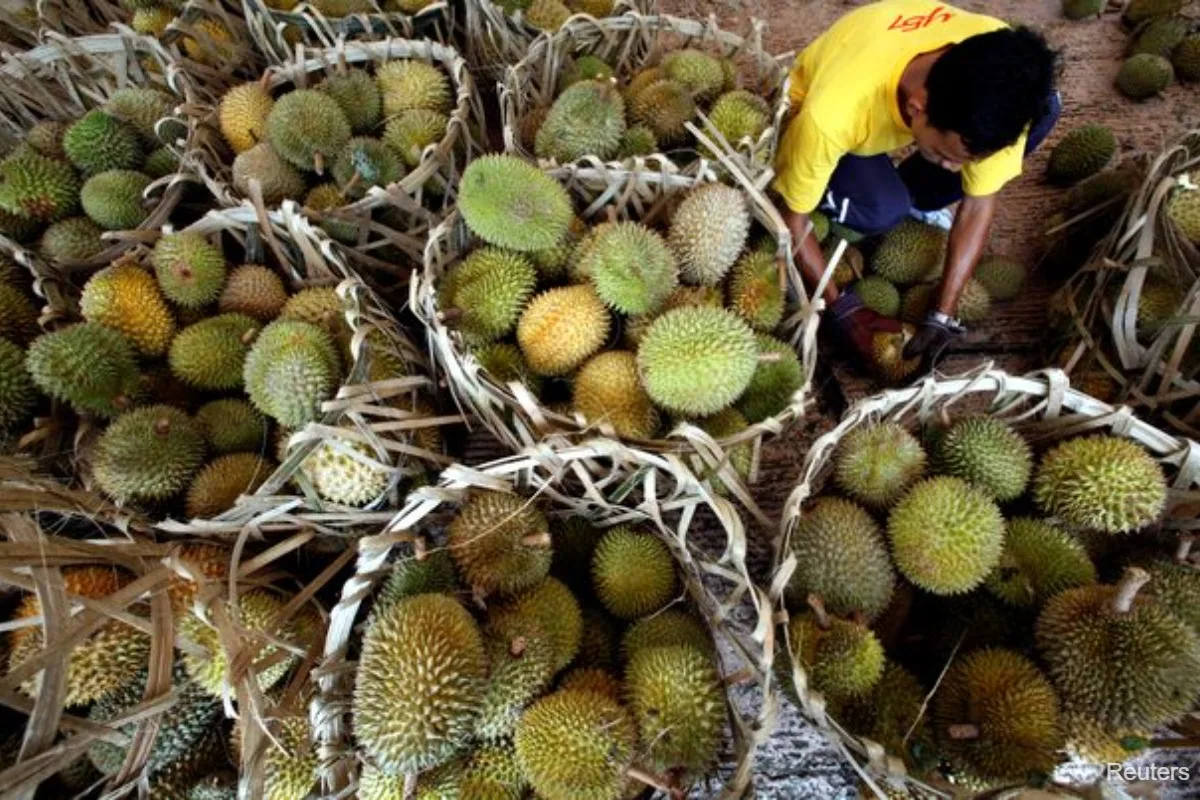
Malaysia aims to grow its durian exports to China to US$229 million (RM932.3 million) by 2030 amid rising demand for fresh and frozen durians [1, 2]. The country secured market access for fresh durians to China in August 2024, allowing exports to increase rapidly [1, 2].
Fresh durian exports surged over 500% in 2025, climbing from about US$5 million (RM20.4 million) to US$37 million (RM150.6 million) that year. Meanwhile, frozen durian exports reached nearly US$202 million (RM822.3 million) in 2025, showing strong momentum in both product forms [1, 2, 3]. Matrade Trade Commissioner Niqman Rafaee M Sahar said, "Fresh durian exports grew by more than 500 per cent, from about US$5 million (RM20.4 million) to US$37 million (RM150.6 million) in 2025 alone. Frozen durian exports reached nearly US$202 million (RM822.3 million) in 2025, and the positive momentum continued in the first quarter of 2026" [1].
Malaysia’s durian exports to China topped US$77 million (RM313.5 million) in the first quarter of 2026, maintaining strong growth at the start of this year [1, 2, 3]. Currently, Malaysia holds about 4% to 5% of China's annual durian market, which imports around US$7 billion (RM28.5 billion) worth of durians, mainly from ASEAN countries. The government aims to increase its share to 8% to 10% within five years, depending on supply [1, 2].
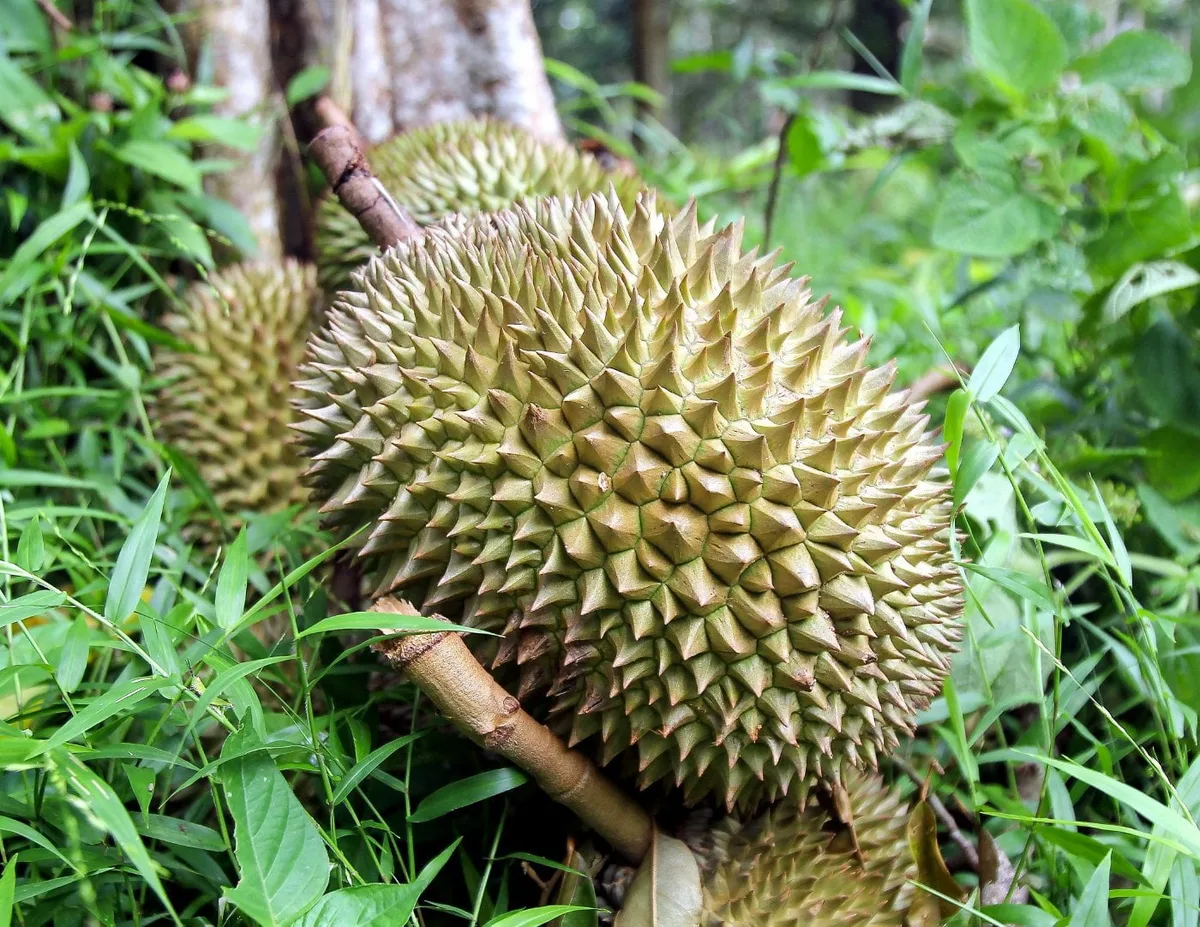
Popular Malaysian varieties in China include premium Black Thorn and Musang King, which focus on quality over price competition. Niqman Rafaee added, "Our Black Thorn and Musang King are very popular in the market here. We are not competing on price. What is important is to offer the best product to the market. Our durians are allowed to ripen naturally and fall from the tree before they are exported to China within 48 hours" [2].
Apart from fresh and frozen durians, demand is growing for Malaysian downstream durian products in China such as pastries, chocolates, snacks, mochi, and frozen desserts. Malaysia cultivates over 100 durian varieties, with more than 30 exported to the Chinese market [1, 2].
Malaysia’s durian exports to China account for roughly 60% of its total annual durian export value of US$368 million [3]. However, growers in Johor have expressed concerns over falling durian prices caused by market oversupply. Prime Minister Anwar Ibrahim said he plans to visit China in September 2026 to meet Premier Li Qiang and discuss measures to support durian farmers. He aims to negotiate increased demand, stating, "I promise one thing. Li Qiang, the Chinese prime minister, is a good friend. I will be going to China next month and I want to bring up durian because I see prices are falling. China’s standards are very high, but I will try to negotiate. I will ask him to buy a bit more, then the price will go up" [3].
Anwar also pledged to encourage Johor growers to improve packing standards to better appeal to Chinese buyers [3].
Malaysia’s durian trade with China is set to remain a key focus as the government seeks to boost export values and stabilize prices, with a follow-up discussion scheduled during the Prime Minister's China visit next month.