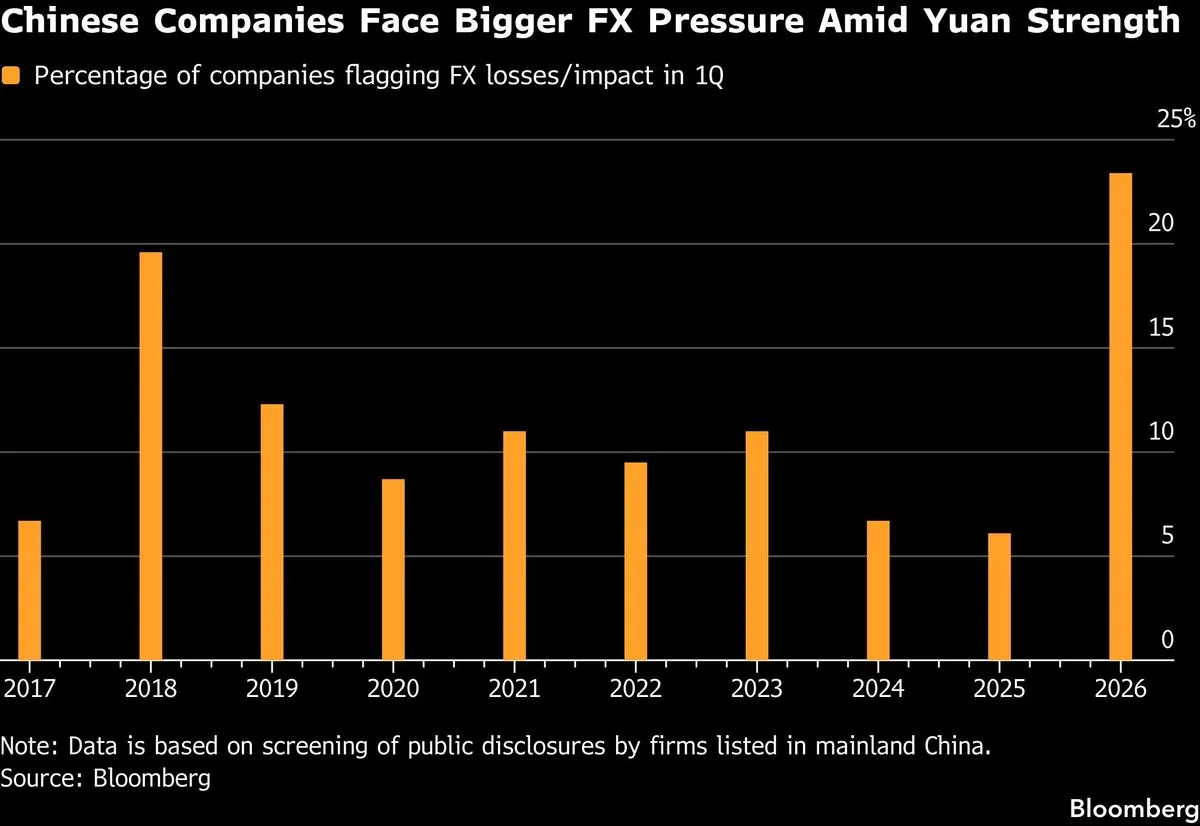
Nearly 25% of approximately 5,500 Chinese onshore listed firms reported foreign-exchange losses or currency fluctuations as a key factor increasing financial costs and impacting profits in the first quarter of 2026. This share is the highest in at least a decade and more than double the roughly 10% average seen over the same period during the prior nine years [1, 2].
The yuan continued to strengthen throughout early 2026, rising in eight of the previous nine months leading up to May, when it appreciated again. This persistent gain heightened pressures on exporters by eroding profit margins and elevating risks related to foreign-exchange losses [2].
Some firms hold significant amounts of U.S. dollars but maintain low hedge ratios against currency fluctuations, which increases their vulnerability to rising yuan values [2]. Zhang Zhiqing, founder of Beijing-based FX advisory firm Nalan Rongke Information Technology, said, "The more they convert, the more they lose — and the more they lose, the more they feel compelled to convert" [2].
Despite exporters facing margin pressure, export revenues and foreign payments to China reached record levels in April 2026, reflecting strong external demand amid the currency shifts [2].
Current data illustrate how intense yuan appreciation is straining exporters and currency risk management practices. Firms now face the challenge of balancing foreign currency holdings with effective hedging to mitigate losses.
The latest quarterly earnings reports covering January through March 2026 provided the clearest picture yet of these foreign-exchange impacts, which are shaping corporate profit dynamics more than at any time in recent memory [1, 2].