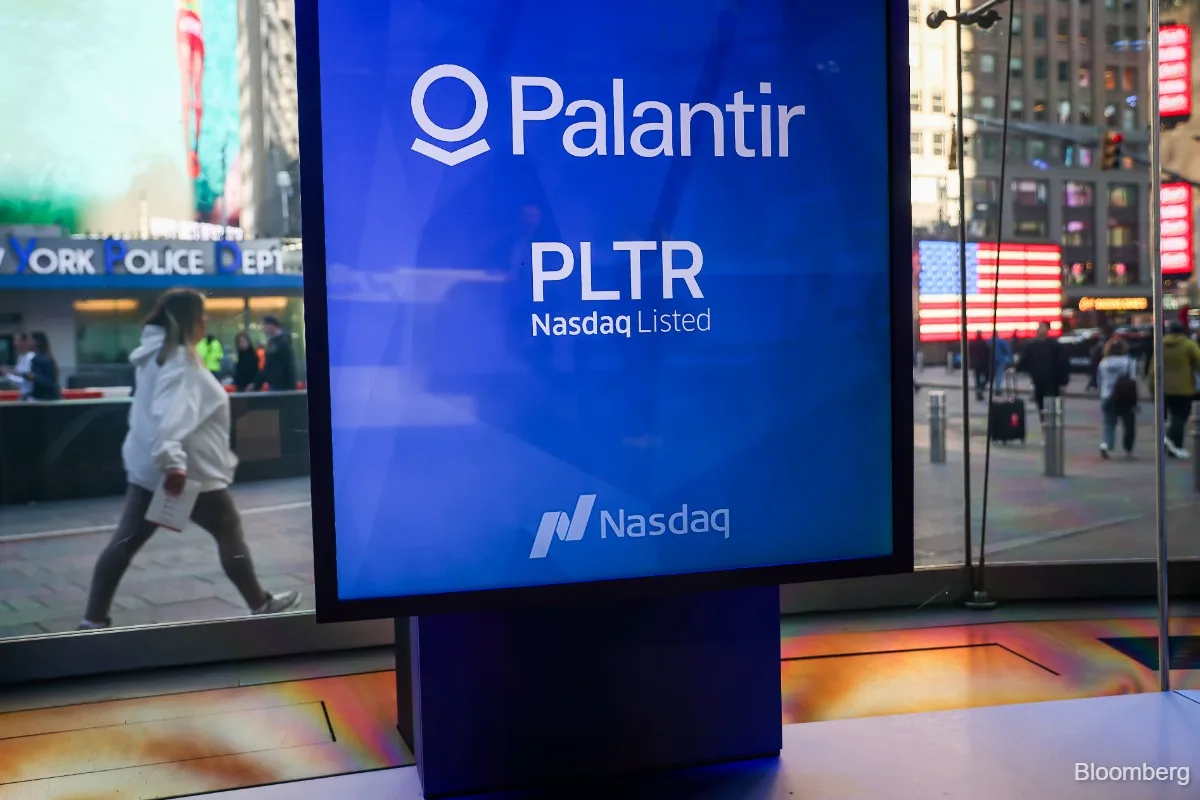
Palantir Technologies reported a 93% year-over-year revenue increase in the second quarter of 2026, reaching about $1.94 billion, surpassing Wall Street expectations of roughly $1.8 billion [1, 2, 3, 4, 5]. The company posted net income of approximately $1.06 billion or $0.41 per share, up from about $329 million or $0.13 per share a year earlier [2, 3, 5].
U.S. commercial revenue surged 149% to $764 million, far exceeding analyst estimates, while revenue from U.S. government contracts grew 90% to $809 million in the quarter[s1–s12]. CEO Alex Karp called the quarter "otherworldly" and noted the company's strong performance: "Such an achievement would be cause for astonishment in any business; for one of our size, scale, and consequence, it is simply staggering" [1, 6]. Karp also underscored Palantir's unique ability to convert data tokens into economic value and provide customers with control over data and operations [3].
The company’s remaining U.S. commercial contract value more than doubled year-over-year, reaching $6.24 billion [2]. Palantir signed 220 contracts worth $1 million or more during the quarter, including 73 contracts valued at $10 million or greater [5]. Adjusted operating margins declined slightly, partly due to cloud hosting expenses tied to a government customer [7].
Palantir raised its full-year 2026 revenue guidance to $8.15 billion–$8.16 billion, up from the previous estimate of about $7.65 billion [1, 8, 6, 3, 4, 5]. It also lifted its adjusted operating income forecast for the year to between $4.89 billion and $4.91 billion, from around $4.45 billion [8, 6, 9, 3]. The company expects U.S. commercial revenue for the full year to exceed $3.42 billion, up from prior guidance of $3.22 billion [2, 5, 10, 11].
Karp criticized large language models reliant on token systems and said customers now demand "AI sovereignty," which he defined as maximal control over AI and data decisions[s1–s3,s8,s11,s12]. Geopolitical tensions and rising defense spending have fueled demand for Palantir’s AI and battlefield analytics software across U.S. and allied militaries [7, 4, 5, 11]. The company also expanded ties with Israel’s military campaign in Gaza and the West Bank, recruiting former cyberintelligence operatives from Israeli Unit 8200 [4, 5].
Meanwhile, Palantir is facing mounting opposition in Europe. French and U.K. governments are moving to end contracts with Palantir in favor of domestic technology providers; France’s DGSI switched to a local competitor in June 2026 [6, 7, 11]. Palantir partnered with Anduril Industries on software development for the former U.S. President Trump’s "Golden Dome" missile defense project, according to reports [7, 11].
Following the earnings announcement, Palantir’s stock price jumped 10–15% in after-hours trading, reflecting investor enthusiasm for the stronger-than-expected results and raised outlook[s1,s2,s4,s5,s7–s11].
Palantir announced its Q2 2026 quarterly results on July 31, 2026, setting the stage for the company’s next earnings report scheduled for the end of 2026 [1, 2, 3, 5].