Private banks are postponing events and discouraging staff travel to mainland China amid a regulatory crackdown on cross-border investment flows involving Chinese and Hong Kong authorities [1, 2, 3, 4]. UBS Group AG has postponed its mid-year wealth outlook event originally scheduled in mainland China for June 2026, although other UBS events will continue as planned [1, 2, 3, 4]. HSBC Holdings Plc plans to proceed with a China-based event but is discouraging non-essential mainland travel for its Hong Kong private bankers, with some attendees cancelling trips. An HSBC spokesperson said, "We are looking forward to hosting our biannual investment outlook events next week for clients in China and related travel plans will proceed as usual" [1].
Standard Chartered Plc is reviewing its policies and compliance procedures in light of the mounting regulatory pressures [1, 2, 3, 4]. The regulatory crackdown comes after the China Securities Regulatory Commission fined three major online brokerages over US$330 million combined for offering offshore trading services to mainland clients without proper approval. The regulator ordered non-compliant retail accounts to be liquidated over a two-year wind-down period [1, 2, 3, 4].
China resident capital outflows reached a record estimated US$807 billion in 2025, driven by a weaker domestic economic outlook and demand for global asset diversification, according to Institute of International Finance data [1, 2, 3, 4]. Regulators in China and Hong Kong have stepped up scrutiny, requiring new clients in Hong Kong banks to declare explicitly that their investment funds originate outside mainland China. Banks fear that regulators may demand proof of offshore fund origins in the future [1, 2, 3, 4]. Chinese tax authorities have also increased enforcement efforts to collect taxes on offshore income [1, 2, 3, 4].
China Securities Regulatory Commission officials recently met with Hong Kong brokerage leaders in Shenzhen to stress compliance demands. These include suspending online brokerage account openings from the mainland, banning mainland IP-based trading, and requiring remediation of non-compliant mainland client accounts within two years [2].
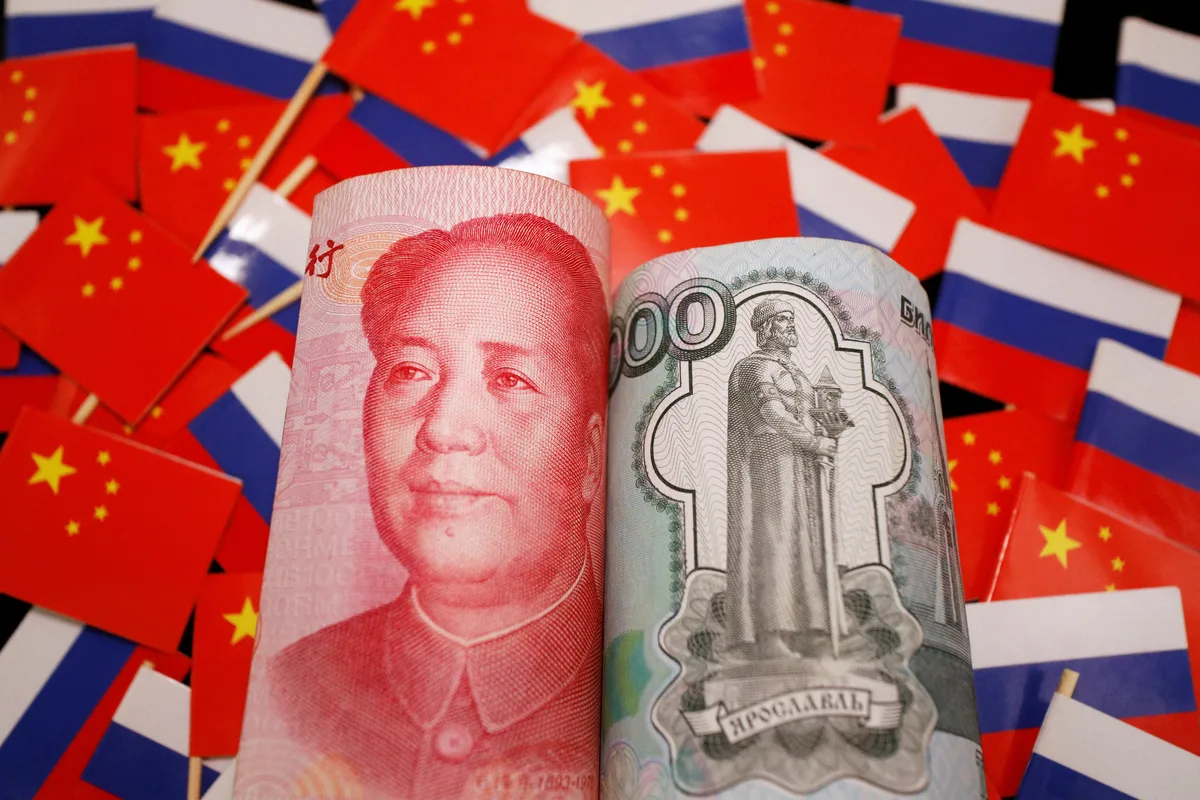
In related developments, China and Russia have largely moved away from the US dollar in bilateral trade settlements, but face ongoing cross-border payment challenges due to sanctions compliance and the use of intermediary banks. Alexander Vedyakhin, first deputy chairman of Russia's Sberbank, said, "In practice, we are seeing constantly occurring gaps within the payment infrastructure. Payment routes are becoming many times more complex, requiring the inclusion of additional intermediary banks, which often reject payments without providing a detailed explanation" [5].
Hong Kong authorities recently instructed local banks to ensure that all new clients sign declarations confirming that funds in investment accounts come from outside mainland China [2, 3, 4].
UBS’s postponed mid-year mainland China event and HSBC’s travel curbs highlight immediate industry impacts. The fines and compliance deadlines set by Chinese regulators, including the two-year wind-down for non-compliant brokerage accounts, set concrete deadlines for banks to adjust their practices and client onboarding processes [1, 2, 3, 4].