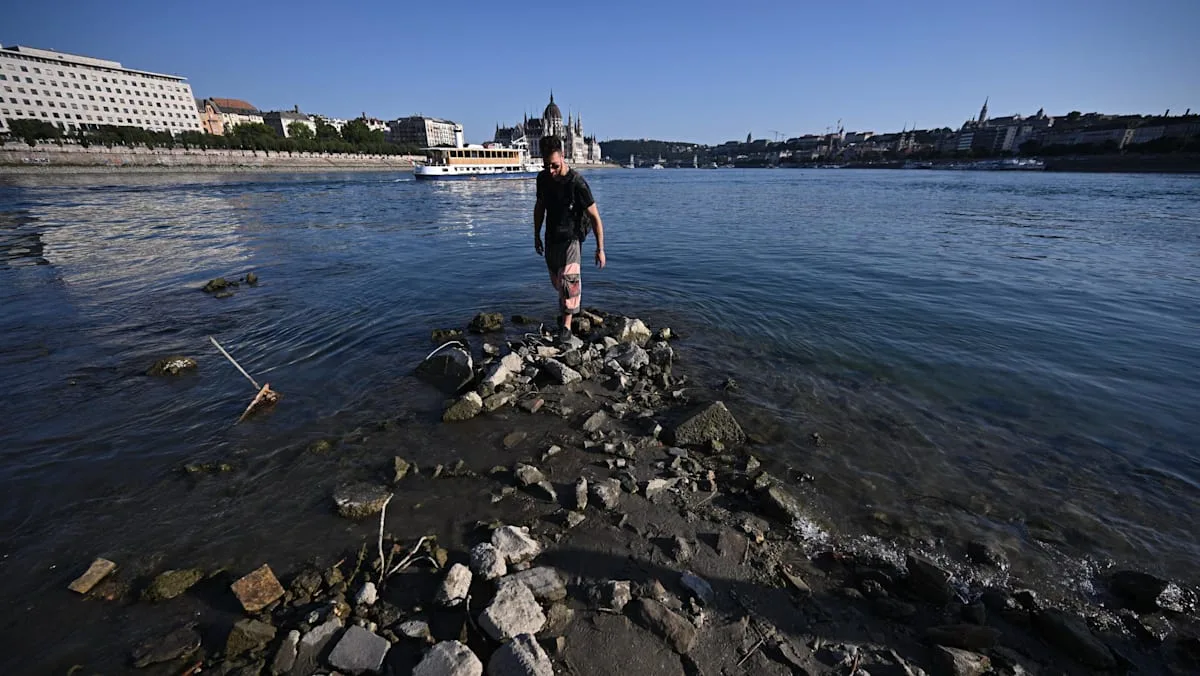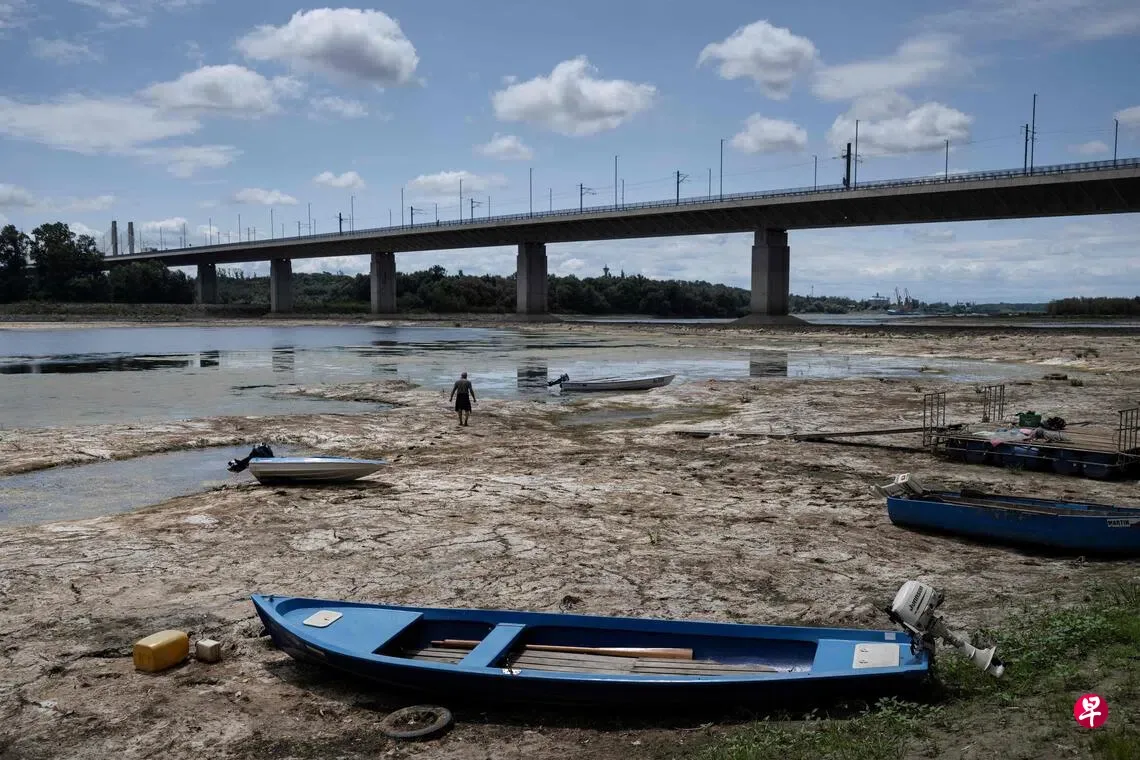
The Danube River reached historic low water levels in summer 2026 due to prolonged drought and heat waves, forcing major disruptions across Central Europe [1, 2, 3]. In late July, water levels in Budapest fell to between 23 and 24 centimeters, breaking the previous 2018 record of 33 centimeters [1, 2, 4]. Photographer Gábor Kertész described "naked rocks, dry sandbanks around the bridge piles," calling it "really shocking" and attributing the situation to climate change [4].
Hungary’s sole nuclear power plant, Paks, which generates about 40-50% of the country's electricity, has reduced reactor output sharply and will undergo a full shutdown for the first time in its 44-year history due to insufficient cooling water from the Danube [1, 3, 5]. On July 29, one reactor was reduced to around 60% capacity, dropping from roughly 2,000 megawatts to about 240 megawatts, with further output cuts following [1, 2, 3, 5]. The complete shutdown is scheduled between July 31 and August 3, with official sources giving varying dates within that range [3, 6, 5, 7, 8, 4]. Hungarian Prime Minister Peter Magyar said, "As a result, the plant's output will fall to just 240 megawatts, and tomorrow it will be completely shut down for the first time in 44 years" and noted the shutdown could occur "Tuesday or Wednesday" [6, 5].
Romania’s Cernavoda Nuclear Power Plant shut down one reactor on July 28 and plans to close its second reactor as low Danube flows—measured at 1,630 cubic meters per second near the plant—threaten cooling operations [1, 2, 7, 8, 4]. The closures in both countries highlight the critical role the Danube plays for energy infrastructure.
The low water levels have also severely affected river navigation and tourism along the Danube. In Bulgaria, the cruise ship "Viking Ullur" was stranded near Vidin from July 28 to August 1, forcing passenger evacuations [2, 4]. Similar disruptions have hit river traffic in Serbia. In response, Hungary imposed water use restrictions in over 100 cities and urged companies to reduce consumption [3]. Slovakia is monitoring energy circumstances and preparing potential assistance [3].
Beyond energy and transport, the exposed riverbeds have revealed archeological finds such as mammoth fossils in Bulgaria and ancient shipwrecks in Serbia, drawing attention to the severity of the drought [9, 4].
The full shutdown of the Paks plant remains the most significant immediate step, expected to complete between July 31 and August 3, as authorities manage the risks posed by the historic Danube lows [3, 6, 5, 7, 8].