SK Hynix overtook Samsung Electronics in market capitalization on June 22, 2026, becoming South Korea’s most valuable listed company for the first time since Samsung assumed the top spot in 2000 [1, 2, 3, 4, 5, 6, 7, 8, 9].
As of 0347 GMT that day, SK Hynix’s market cap reached about 2,082.5 trillion South Korean won (roughly US$1.35 trillion), surpassing Samsung Electronics’ approximately 2,081.3 trillion won when excluding preferred shares [1, 2, 4, 5, 6, 8, 9]. Some sources contest Samsung’s value including preferred shares, which it claims totals about 2,252 trillion won, but most market measures have SK Hynix slightly ahead when excluding those [4, 5, 7].
Shares of SK Hynix rose 5.6-5.7% intraday on June 22, while Samsung Electronics’ shares increased only around 0.4% or declined slightly depending on the share class [1, 2, 4, 5, 6, 7, 8, 9]. Year to date in 2026, SK Hynix shares gained over 340%, significantly outpacing Samsung’s roughly 200% rise [1, 2, 4, 5, 6, 7, 8].
SK Hynix is now the world’s most valuable memory chipmaker. It leads with a 61% global share of the high-bandwidth memory (HBM) sector used in AI systems by customers including Nvidia and Google’s parent Alphabet [4, 5]. Samsung holds just 17% of the HBM market, with US-based Micron Technology at 21% [4, 5]. SK Hynix’s focus on specialized memory chips contrasts with Samsung’s broader portfolio that includes logic chips, smartphones, televisions and other electronics [4, 5, 7, 8, 9].
The rise of AI-driven data centers operated by US tech giants like Microsoft, Google and Meta has sharply boosted demand for memory chips in recent years, fueling SK Hynix’s turnaround [1, 2, 6, 7, 8, 10]. The company recovered swiftly after a 7.73 trillion won operating loss in 2023 caused by a memory price downturn. By 2024, it posted record operating profit of 23.5 trillion won, driven by AI investments from major clients [4, 5, 7, 8].
SK Hynix’s turnaround is remarkable considering it nearly went broke in the early 2000s and was under creditor control for almost a decade before rebounding with advances in AI memory [4, 5, 7, 8]. Kim Sunwoo, senior analyst at Meritz Securities, said, "The emergence of customised AI memory fundamentally changed the industry’s economics and allowed SK Hynix to establish itself as the market leader" [7].
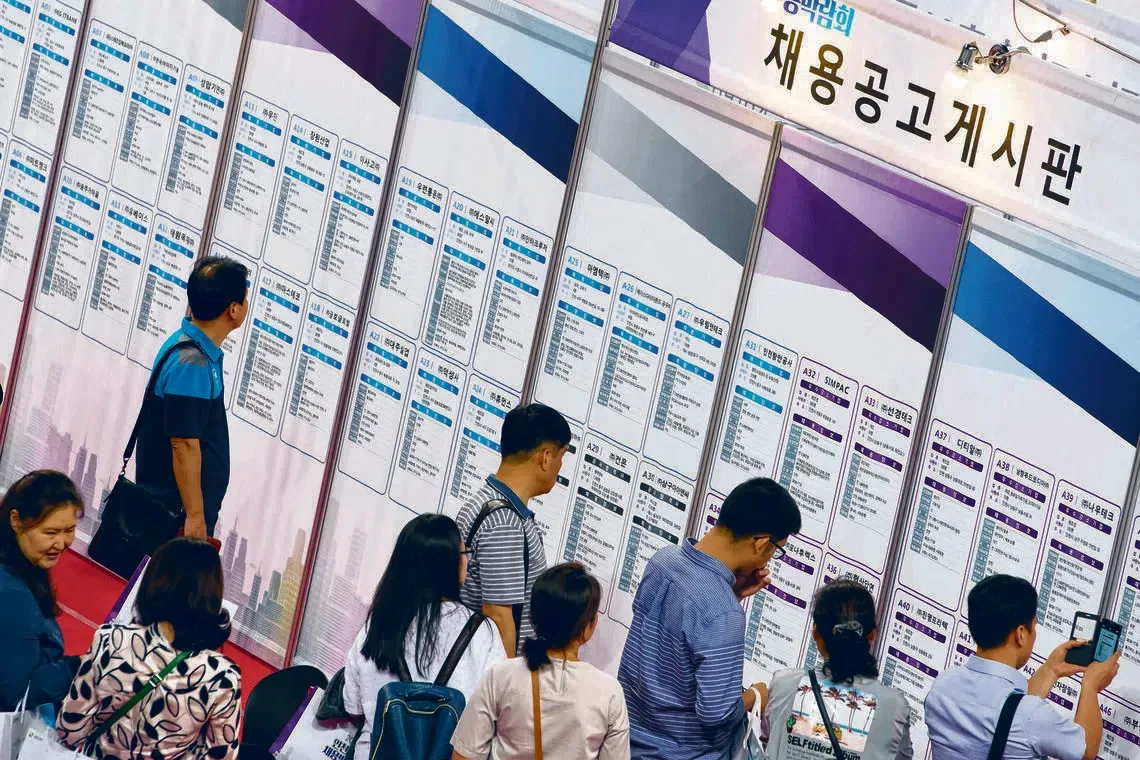
The company’s rise has also affected South Korea’s social scene. Son Dong-gyu, CEO of matchmaking agency Bien Aller, said SK Hynix and Samsung employees are now seen as closer to top-tier marriage candidates. Matchmaking consultant Lee Sung-mi added that workers at SK Hynix now garner surprising positive interest compared to traditional professions [10].
On June 24, the South Korean government announced it is in talks with SK Hynix and Samsung on the next phase of semiconductor investments. Plans may accelerate construction of new chip production facilities, potentially extending the country’s semiconductor build-out to 2034-35 [11].