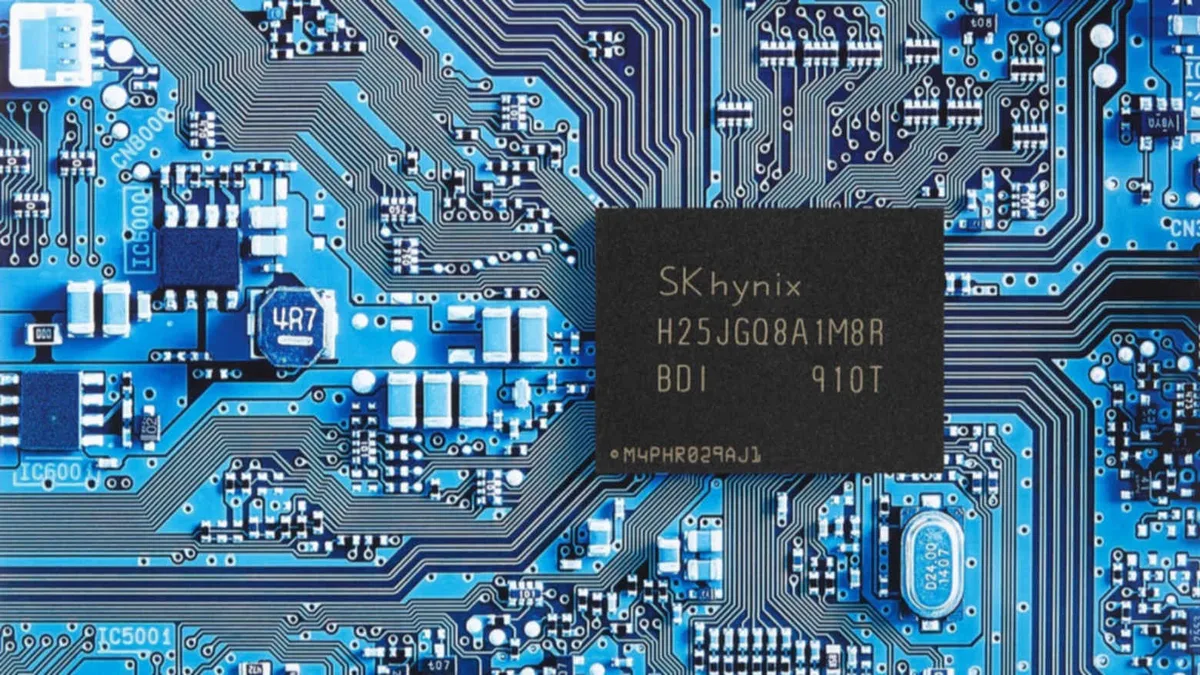
South Korea and Taiwan each surpassed Japan in total export values for the first half of 2026 for the first time, fueled primarily by rising demand for advanced AI semiconductors [1, 2, 3]. South Korea's exports reached $496.3 billion, Taiwan's totaled $416.6 billion, while Japan's stood at $384.4 billion during this period [2, 3].
Compared with the same period in 2025, Japan's exports grew about 10%, but South Korea and Taiwan posted nearly 50% growth, reflecting a rapid acceleration in their export activities [2, 3]. The explosive growth in AI semiconductor demand is widely credited as the driving factor behind this shift in export rankings [1, 2, 3].
South Korea's integrated circuit exports amounted to $149 billion in the first half of 2026, and Taiwan's were $133.2 billion, each representing roughly 30% of their total exports [2, 3]. In sharp contrast, Japan's integrated circuit exports were $21.2 billion, about 5% of its total export value [2, 3].
Japan continues to hold an edge in semiconductor manufacturing equipment and materials exports, generating $15 billion in the first half of 2026, substantially higher than South Korea's $5.2 billion and Taiwan's $3.5 billion in the same category [2, 3]. However, this advantage in equipment and materials was not enough to offset Taiwan and South Korea's dominance in the high-value advanced semiconductor segment [2, 3].
Currency depreciation impacted all three regions, so the changes in export rankings cannot be explained by exchange rates alone [2, 3]. Experts note challenges in expanding related components, materials, and manufacturing equipment exports at the same pace as semiconductor chip exports. Mitsubishi UFJ Research and Consulting's Kenta Maruyama said, "Even as semiconductor exports continue to grow, related components, materials, and manufacturing equipment exports struggle to expand as quickly" [2].
Japan’s decline in export competitiveness has been a longer-term trend. In 2025, Japan ranked sixth globally in total export values [2, 3].
The latest data covers exports through the first half of 2026. Further updates will follow as the year progresses to track whether these trends hold steady in the second half.