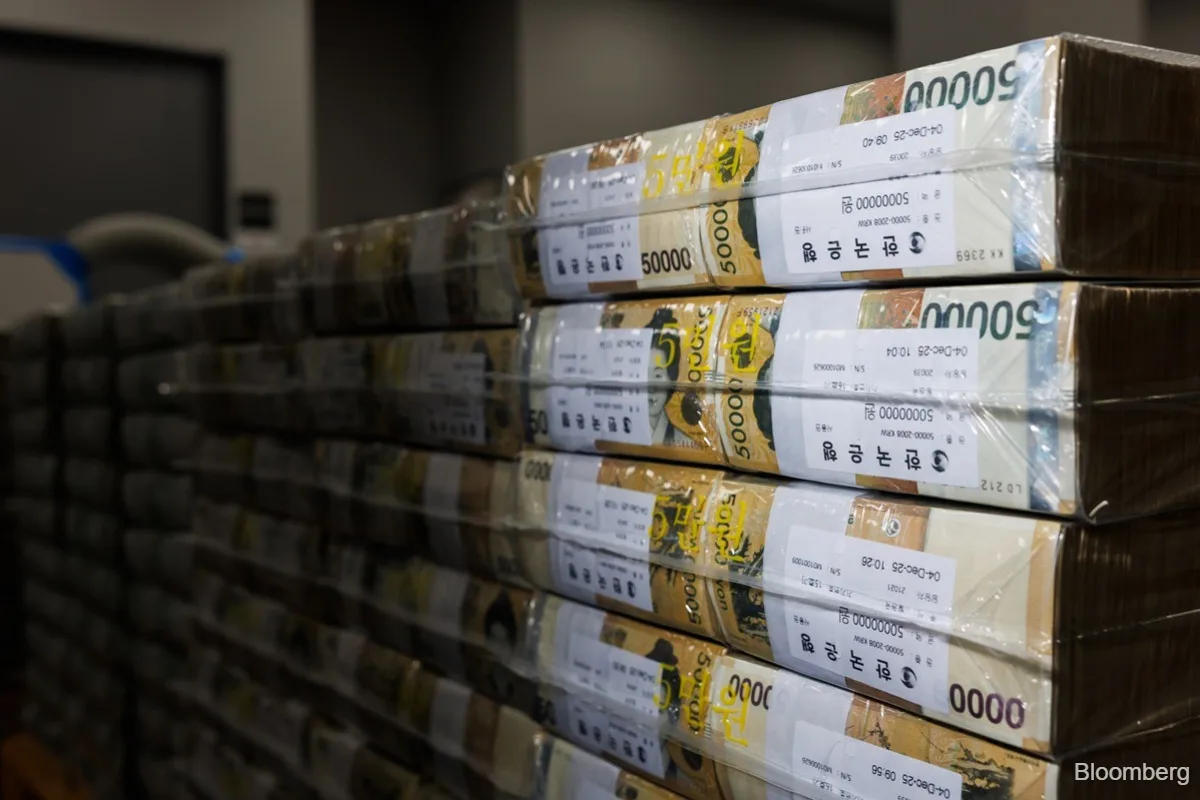
South Korea’s Deputy Finance Minister Moon Jisung met with U.S. Treasury officials in Washington last weekend to discuss recent currency market trends, focusing on the sharp depreciation of the Korean won [1, 2]. Moon emphasized that the won’s recent decline looks excessive relative to South Korea’s strong economic fundamentals, including favorable conditions in the semiconductor sector. "The won’s recent decline looks excessive relative to Korea’s economic fundamentals," he said [1].
The won fell to its weakest level since 2009 on June 5, triggering concern from South Korean authorities and prompting emergency measures [1]. In response, South Korea conducted its first inspection of major foreign exchange banks in 14 years and urged exporters to repatriate foreign earnings to support the currency amid recent volatility [1].
Following the meeting and news of an interim U.S.-Iran deal, the won rebounded to a two-week high on Monday, June 8, helped by improved market sentiment and closer U.S.-South Korea cooperation [1]. Both countries agreed to work together to stabilize the won and mitigate further weakening [1, 2].
Moon’s comments underscored the gap between the won’s weakness and South Korea’s underlying economic strength, highlighting the semiconductor industry's favorable outlook as a key factor [1, 2]. The collaboration between Seoul and Washington aims to address excessive currency movements through coordinated policy efforts.
The next key step will be monitoring the impact of joint actions and further currency market developments in the weeks following this agreement.