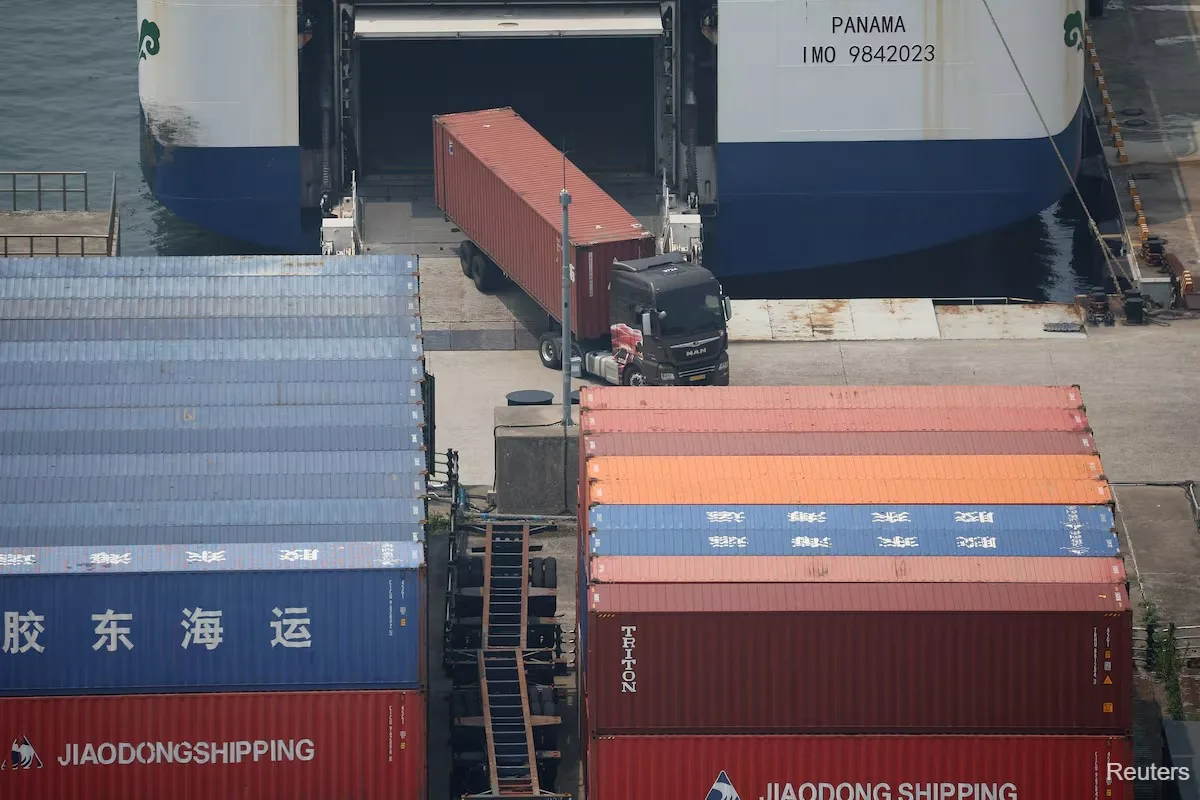
South Korea's exports climbed 53.2% year-on-year in May 2026 to a record $87.75 billion, marking the fastest growth rate since January 1984 [1, 2, 3, 4]. Semiconductor exports surged 169.4% to $37.16 billion, driven largely by AI investment and rising memory chip prices [1, 2, 3, 4]. AI server-related computer exports grew an even more striking 290.7% over the same period [1, 2, 3].
Petroleum product exports rose 46.6% on the back of high global oil prices [1, 2, 3]. Meanwhile, automobile exports declined 5.9% due partly to supply chain disruptions in the Middle East and ongoing U.S. tariffs [1, 2].
South Korea recorded a trade surplus of $26.95 billion in May, the highest monthly surplus on record [2, 3, 4]. Imports also rose 20.8% to $60.8 billion, the strongest rise since August 2022 [2, 3]. The manufacturing Purchasing Managers’ Index hit 54.8, its highest in over five years, fueled by rapid expansion and stock-building amid Middle East tensions [5]. However, new export orders fell for the first time in six months due to weakening demand from China and the U.S. [5].
South Korea’s central bank raised its 2026 GDP growth forecast to 2.6% from 2.0%, citing the strong export performance [1, 2, 3, 6]. "It is truly an unprecedented pace, raising market expectations again and again and exceeding them again and again," said Stephen Lee, economist at Meritz Securities [1].
The Korea Composite Stock Price Index (Kospi) has more than doubled in 2026, led by chipmakers Samsung Electronics and SK Hynix [1, 2, 3, 4]. South Korea’s semiconductor export market remains concentrated in China and the U.S., with China as the largest single market accounting for 45% of exports including Hong Kong, while U.S. demand has risen rapidly to 13.8% through April [7, 6].
New U.S. Commerce Department rules issued on May 31 banned Nvidia and AMD from selling advanced AI chips to Chinese firms abroad, closing a regulatory loophole that had allowed chip exports to China-related entities in Malaysia and elsewhere [2, 5].
Chang Sang-sik, director at the Korea Trade Association International Trade & Commerce Research Institute, said semiconductors have become core to AI data centers, cloud computing, and power grids. He noted the increasing importance of high-performance memory that governs data bandwidth and power efficiency as AI shifts from learning to inference [6].
Central bank governor Shin Hyun-sook said rate hikes are warranted given rising inflation pressures from higher oil prices, a weaker won, and resilient economic growth [3].