South Korea announced on July 31, 2026, plans to inject 20 trillion won (about US$14 billion) into a new sovereign wealth fund aimed at strategic investments in artificial intelligence, data centers, and infrastructure sectors [1, 2, 3].
The fund will be created as a strategic investment account within the Korea Investment Corporation (KIC) and is notable for including domestic Korean assets in its mandate for the first time, expanding beyond KIC's traditional focus on foreign assets [1, 2, 3]. The government described the decision as driven by the need to "act proactively" amid growing global investment interest in Korea, emphasizing the country's core competitiveness in building an AI ecosystem [1].
Funding will come from equity contributions by public institutions, including policy banks such as the Korea Development Bank (KDB), Export-Import Bank of Korea (KEXIM), and the Industrial Bank of Korea (IBK), with allocations reportedly including 16 trillion won from these sources and 4 trillion won from stocks derived from inheritance and gift taxes [4, 3].
The fund's management will operate independently and maintain full autonomy over investment decisions. It will remain strictly segregated from KIC's existing foreign exchange reserve portfolio to avoid conflicts [1, 4]. The aim is to support growth in strategic industries, generate revenue for future generations, and serve as a buffer for national economic security and asset market stability [1, 4].
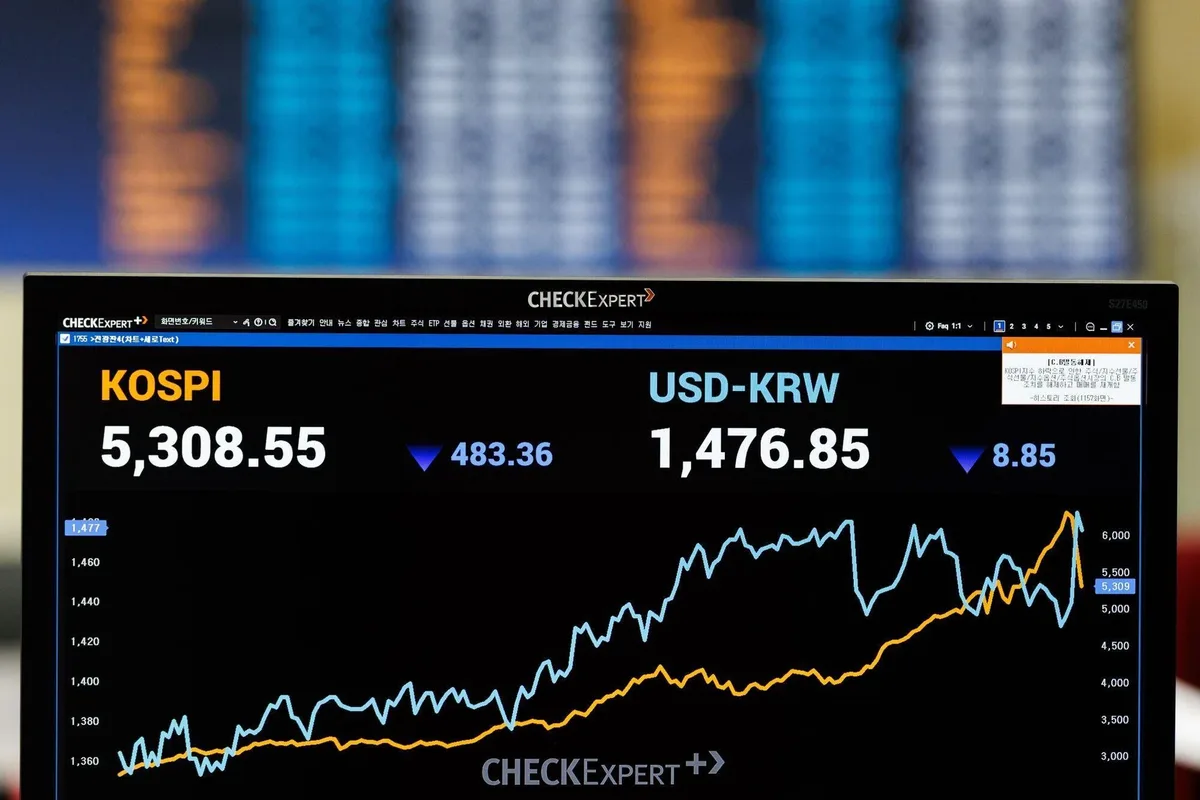
The announcement comes amid a sharp downturn in South Korea's equity markets. In July 2026, the KOSPI index tumbled 34%, marking its worst month on record and causing a US$2 trillion loss in market value [1, 3].
The government intends to submit a revision of the Korea Investment Corporation Act to the National Assembly in August 2026, enabling the creation of the fund. The sovereign wealth fund is expected to launch and commence operations in 2027 [1, 4].