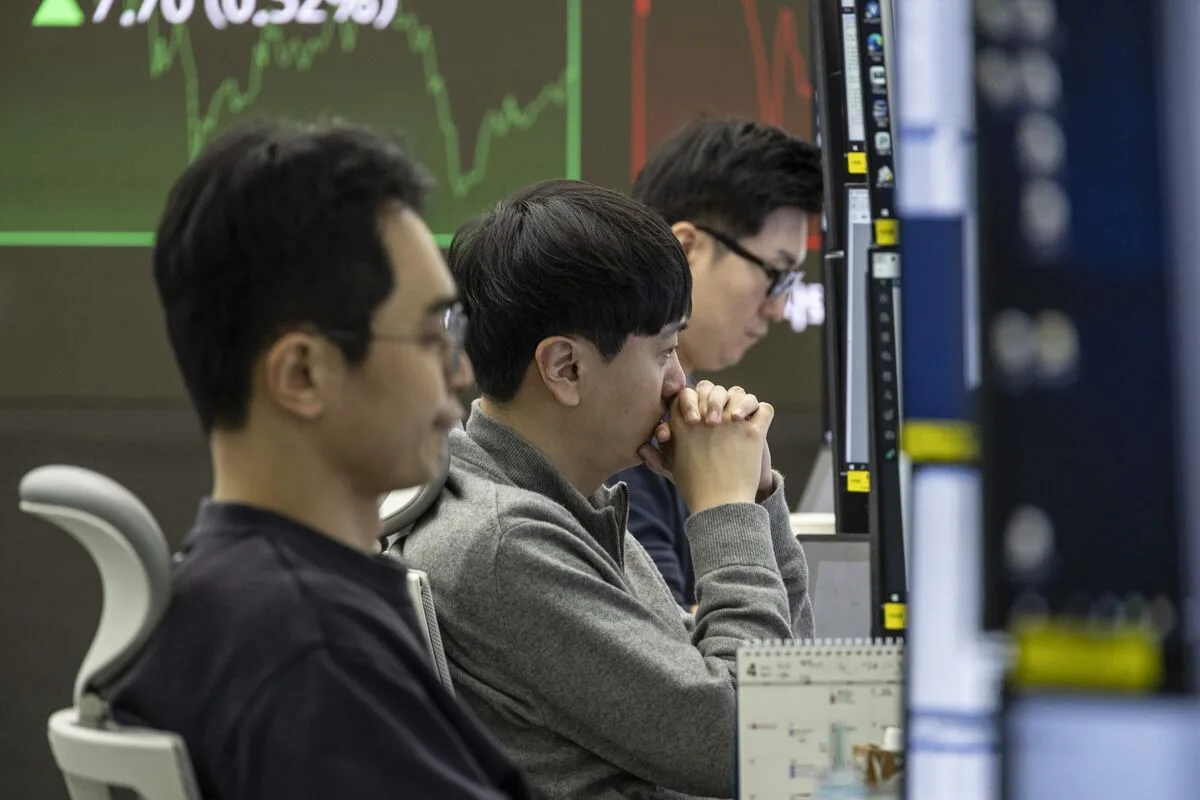
South Korean stocks plunged sharply on June 8 as investors rushed to sell AI-related technology shares, triggering trading halts on both the Kospi and Kosdaq indices [1, 2]. The Kospi index dropped more than 8% according to one source [1], or as much as 9% according to another, prompting a 20-minute market halt [1, 2].
Taiwan’s benchmark stock index also fell amid the tech selloff, with major chipmaker TSMC shares losing 5.7% on the day [2]. The selloff followed the release of strong U.S. jobs data on June 5, which raised market bets on further Federal Reserve interest rate hikes and weighed on global AI and technology rallies [2].
Alongside stock markets, emerging Asian currencies weakened against the U.S. dollar. The Indonesian rupiah fell to 18,170 per dollar with its 10-year bond yield reaching 7.142%. The Malaysian ringgit declined about 1%, while the South Korean won dropped to 1,547.93 per dollar [2]. South Korean foreign exchange authorities said they would respond firmly to currency swings caused by volatility rather than economic fundamentals [2].
Heightened geopolitical tensions in the Middle East also contributed to market caution. Israeli strikes on Lebanon and explosions in Tehran triggered risk aversion and lifted oil prices [2].
Ecaterina Bigos, chief investment officer at BN, said the market moves were "typical corrections after an extended run, serving as a pause before further advances, especially when underlying structural factors remain supportive" [2].
The next key event for markets will be upcoming Federal Reserve meetings where further interest rate decisions are expected amid persistent inflation concerns.