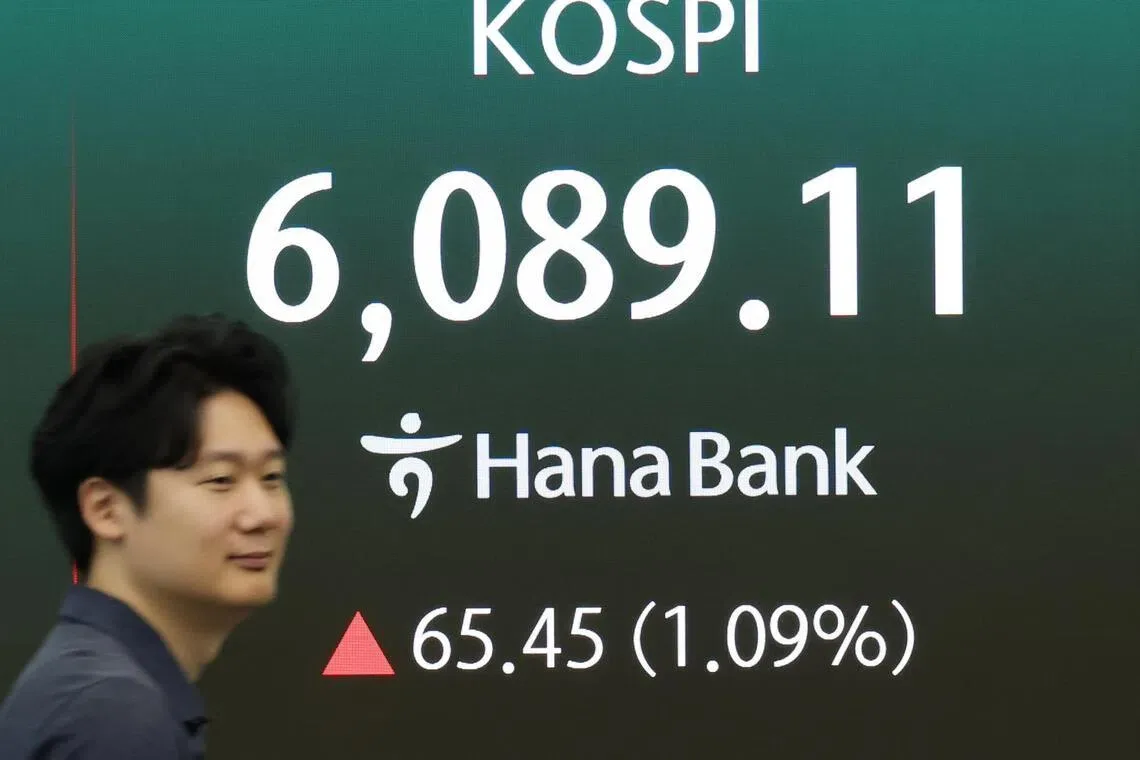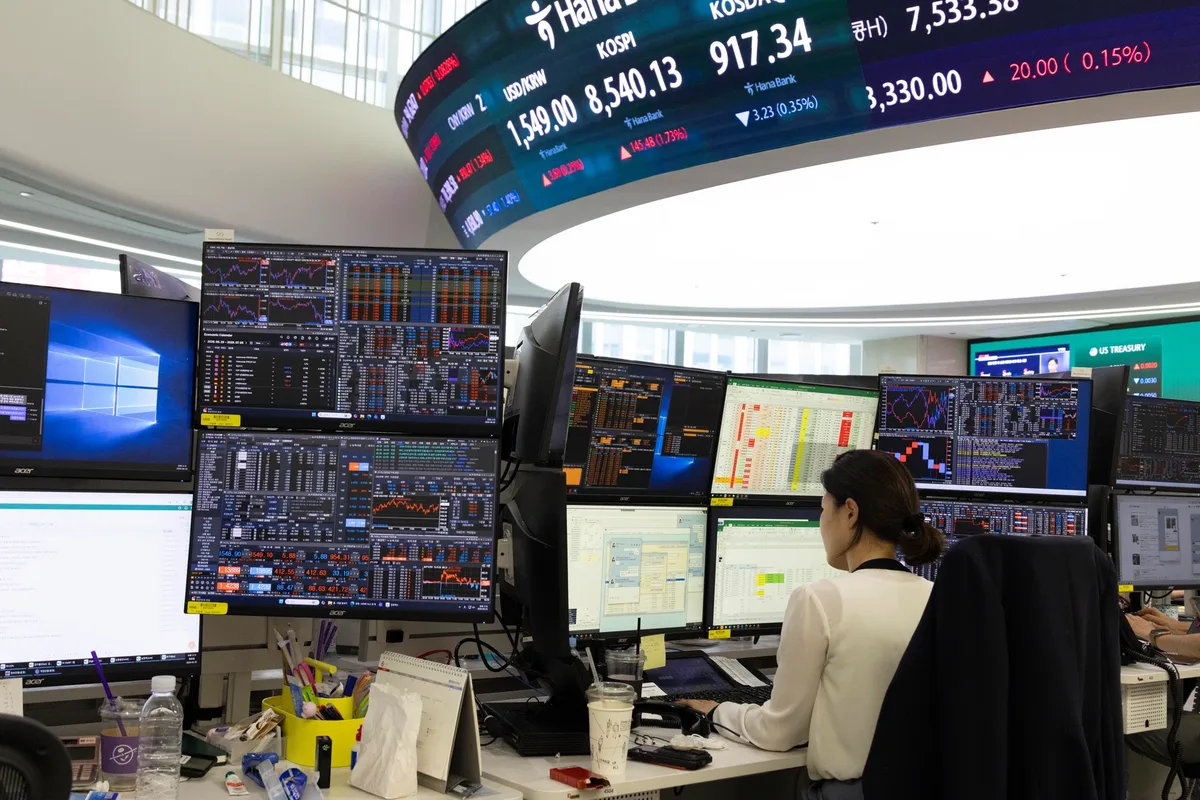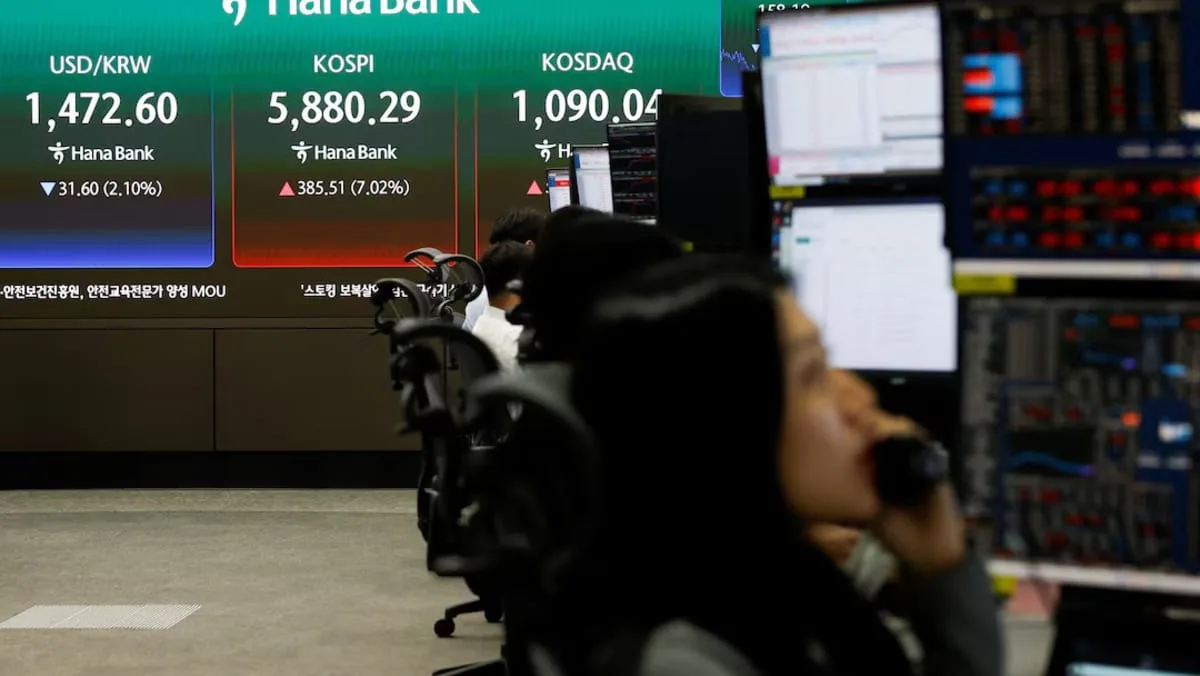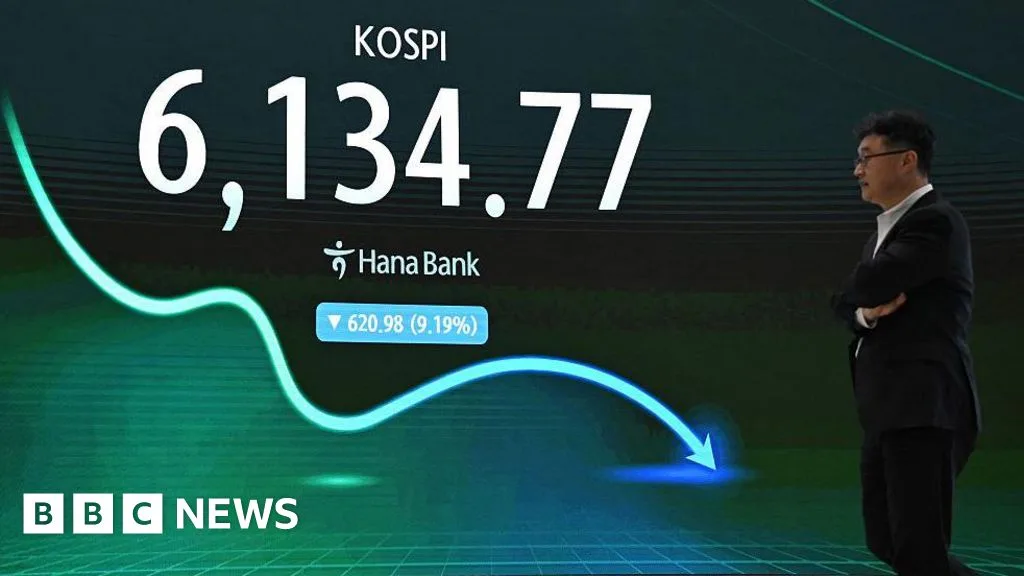
South Korea's Kospi Index plunged more than 18% over two days, sparking circuit breakers on July 28 and 29 as chipmaker shares tumbled sharply [1, 2]. On July 28, the Kospi posted its largest daily loss since March 2026, falling about 10.8% to close near 6,023 points and breaking below the 6,000 level for the first time since April 14 [3, 4, 2].
The selloff continued on July 29 with an intraday drop of 8.2%, triggering a second day of trading halts. By midday, the Kospi had plunged over 11% to approximately 5,339 points [1, 5]. This two-day decline puts the index on track for a record monthly loss exceeding that of 1997, with the market down more than 30% from its June peak [1, 4, 2].
The steep slide was led by major chipmakers SK Hynix and Samsung Electronics. SK Hynix's shares fell as much as 18% intraday, while Samsung declined over 12% [1, 3, 6]. SK Hynix's market capitalization dropped below $630 billion, down about 57% from its June high [7]. The chipmaker's share price lost roughly a quarter of its value in two days after an earnings call revealed little detail on shareholder returns despite a six-fold profit surge and plans to raise capital expenditure to $31 billion [1, 5]. Josh Gilbert, lead analyst at Etoro, said, "SK Hynix is lifting capex to the high 40 trillion won range, while staying silent on shareholder returns and the pricing inside its long-term contracts, and that’s left investors feeling uneasy. Given the weight of SK Hynix and Samsung on the Kospi, there’s nowhere to hide when they fall together" [1].
The market's heavy concentration on these two companies, which account for over half of Kospi’s index weight, amplified the selloff’s impact [1, 3, 2]. Jane Sydenham, investment director at Rathbones, noted, "The Korean market in particular is very concentrated with a lot of investment in Samsung and SK Hynix, both of which fell sharply. In addition, a lot of Korean investors buy stocks with debt, which exaggerates the movements when we get a correction like this" [3].
South Korean retail investors sold shares aggressively during the downturn, cutting holdings by about 1.7 trillion won (S$1.5 billion) on July 29 alone [1]. Foreign investors were net sellers of roughly 5 trillion won (US$3.42 billion), while retail investors bought 4 trillion won, reflecting mixed investor behavior amid volatility [2].
The selloff coincided with jitters around AI-related chip stocks worldwide, including sharp US share drops by Nvidia and concerns over massive AI data center spending [3]. Meanwhile, South Korean financial regulators are reviewing rules for single-stock leveraged ETFs introduced in May, which have intensified recent market swings [2, 7, 5]. Finance Minister Koo Yun-cheol apologized for permitting these ETFs without fully prudent assessment amid the turbulence [7].
The Kospi remained under pressure as of July 29 midday and faces continued volatility. Authorities are expected to announce regulatory measures on leveraged ETFs soon to stabilize the market.