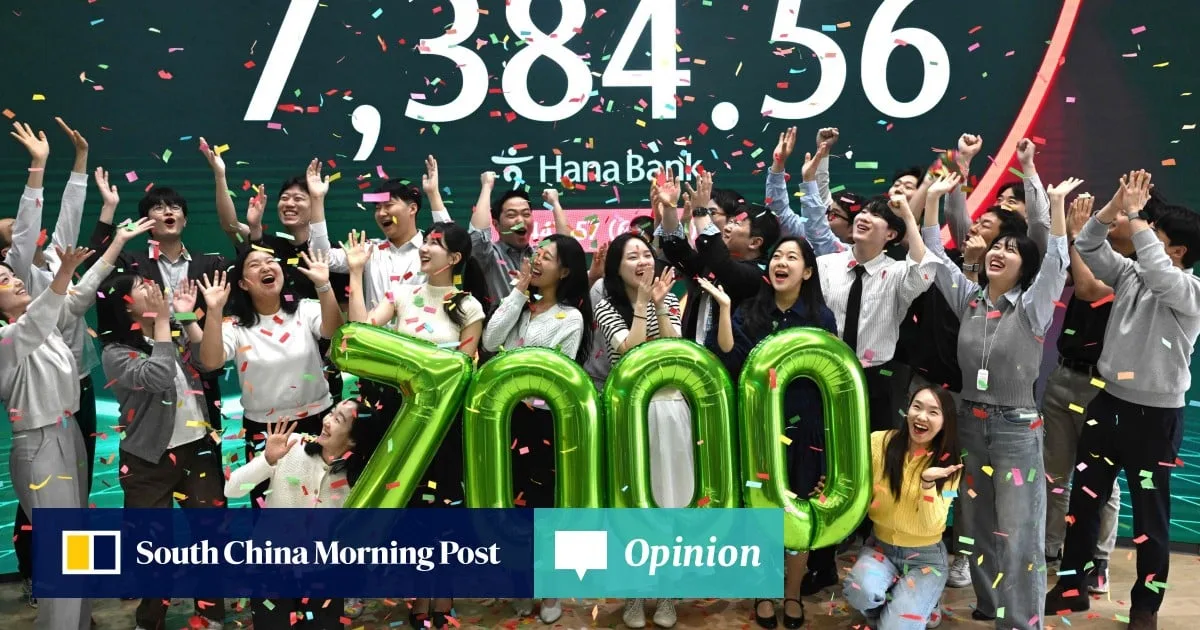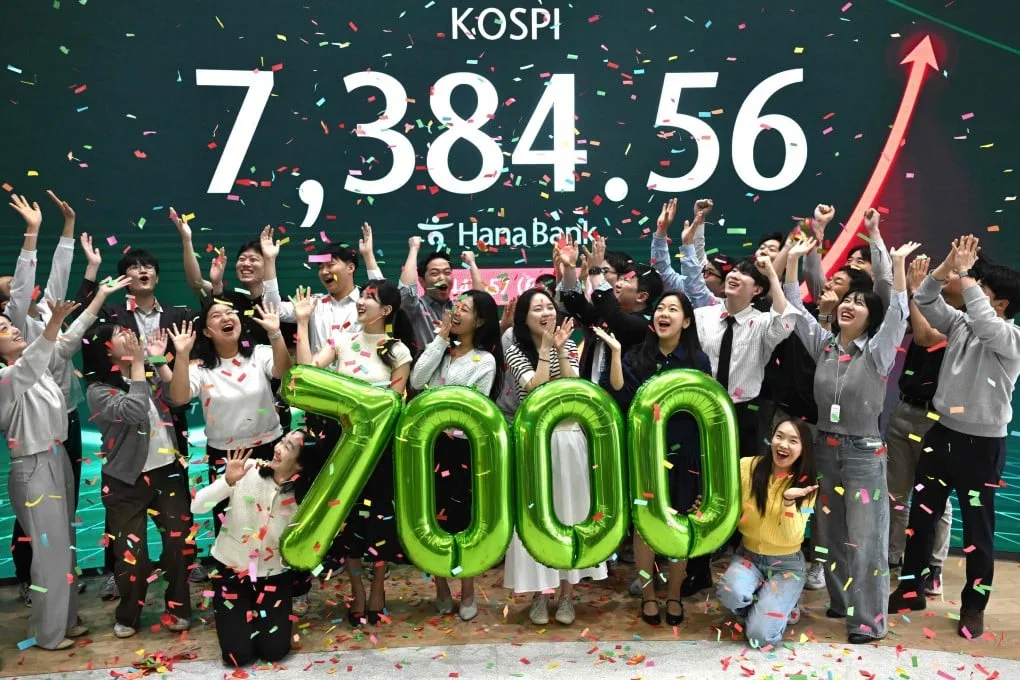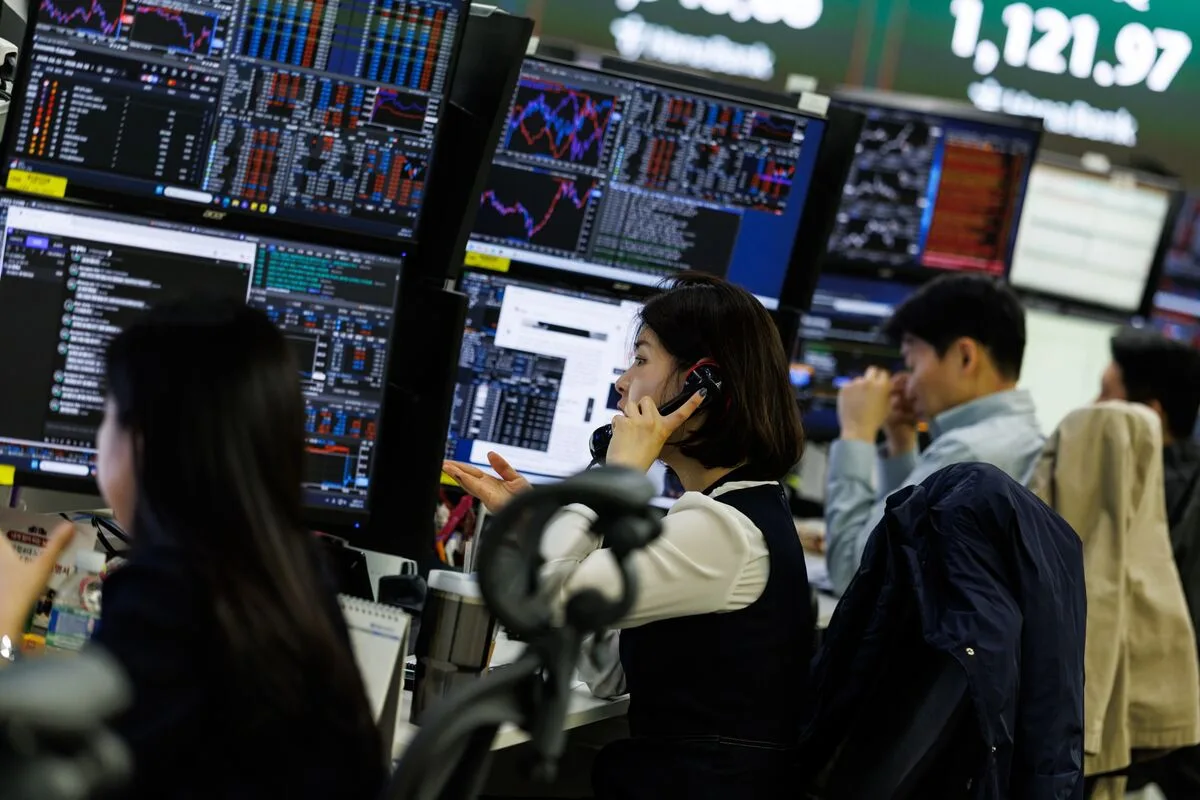
South Korea’s $4.7 trillion Kospi stock market fell 5.5% on June 4, 2026, signaling strain after soaring 109% since the start of the year [1, 2]. Foreign investors sold more than $10 billion worth of Kospi shares in the week ending June 4, including 3.5 trillion won ($2.3 billion) on the last day alone [1]. This selling pressure hit major chipmakers hard, with Samsung Electronics and SK Hynix drops of at least 6% each on June 4 [1].
The market value of Samsung Electronics and SK Hynix had surpassed $1 trillion in May, buoyed by a booming semiconductor cycle and strong AI chip demand [2]. South Korea's exports grew at an annualized rate of 53% in May, led by semiconductor shipments that surged nearly 170% to a record $37.1 billion that month [2]. Barclays named South Korea among the best-performing major markets globally this year through early June, driven by semiconductor growth for AI applications [2].
Despite the export and tech strength, South Korea’s won weakened to its lowest level since March 2009, falling about 11% against the U.S. dollar over the past year [1, 2]. The currency decline reflects the country’s heavy reliance on oil and gas imports amid a global energy shock increasing demand for dollars [2].
Bank of America raised its forecast for South Korea’s current account surplus to 15% of GDP in 2026, supported by strong trade surplus from the semiconductor industry [2]. The Kospi’s sharp drop June 4 came just days after receiving bullish market performance reports, highlighting tension between strong economic fundamentals and foreign investor caution [1, 2].
As of August 25, 2026, market watchers are closely monitoring foreign investor flows and currency movements for signs of further volatility in South Korea’s key technology-driven market.