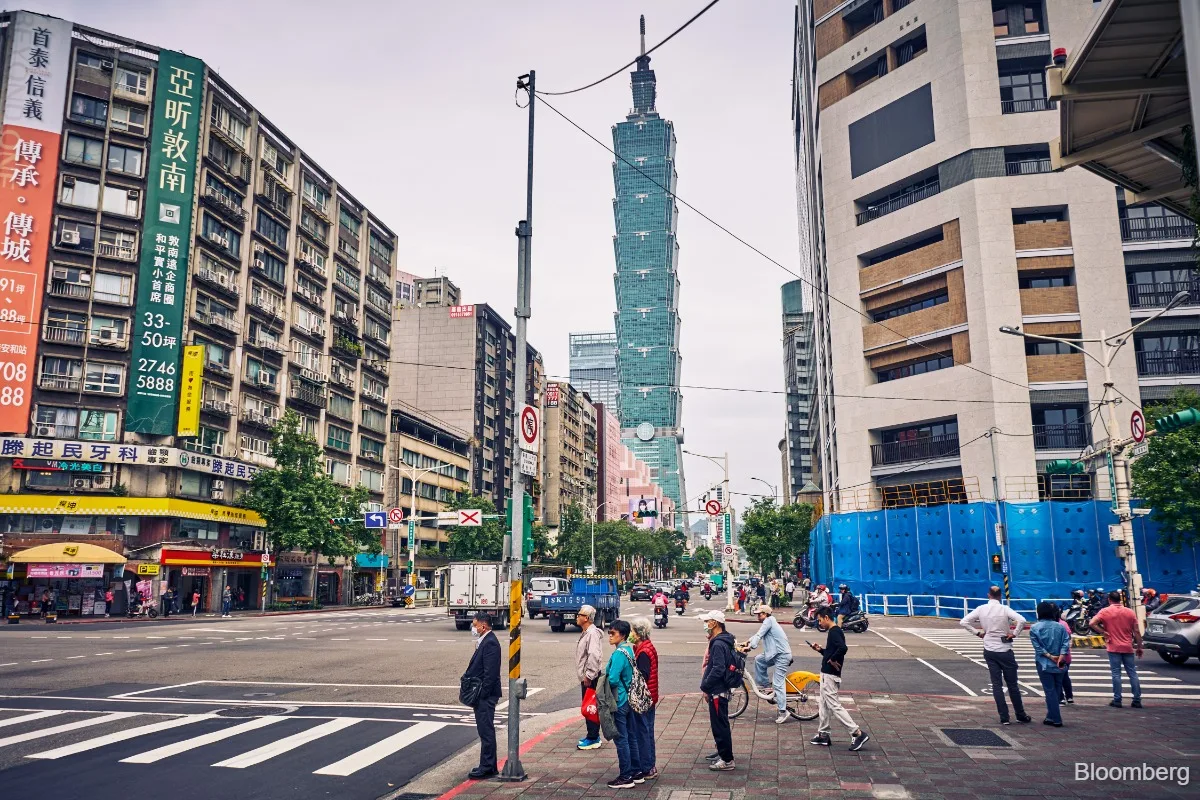
Taiwan's government statistics agency revised its 2026 GDP growth forecast up to 9.64%, marking the fastest pace in 16 years and surpassing the previous estimate of 7.71% [1, 2]. Exports are expected to rise 39.77% year-on-year, the fastest growth rate in five decades [1, 2].
Taiwanese technology companies have tapped record debt markets, raising US$14.5 billion in financing so far in 2026, nearly double last year's US$7.5 billion in the same period [3, 4, 5, 6, 7, 8]. This debt includes US$6.2 billion in loans, US$5.9 billion in convertible bonds, and US$2.4 billion in corporate notes [3, 4, 5, 6, 7, 8].
Among the largest borrowers, Hon Hai (Foxconn) completed a US$1.1 billion-equivalent loan in February and plans to issue up to US$1.5 billion more in convertible bonds to fund overseas materials procurement [3, 4, 5, 6, 7, 8]. Taiwan Semiconductor Manufacturing Co (TSMC), the world's largest chipmaker, funds most capital spending from its operating cash flow rather than external debt [3, 4, 5, 6, 8].
Smaller tech firms face more immediate funding needs and are actively seeking fast financing sources to support growth [3, 5, 6, 7, 8]. The surge in AI demand has increased the value and complexity of server hardware, prompting Taiwanese manufacturers to upgrade production lines and invest in facilities across North America and Southeast Asia. Randy Abrams, head of research at UBS Taiwan, said, "AI has substantially scaled up the value and complexity of traditional server hardware. Manufacturers need more working capital as they upgrade production lines and invest in new facilities in North America and Southeast Asia to meet demand." [3]
Taiwan’s stock market has risen to become the fifth largest globally, bolstered by AI-related technology stocks including TSMC and Hon Hai [3, 4, 5, 6, 7]. Brokerage firms such as KGI Securities are also seeking more loans to meet rising demand amid the market boom [9].
Kevin Wang, analyst at Masterlink Investment Advisory, noted that "there is no inflation pressure...the central bank does not need to use its monetary policy. Raising or cutting interest rates will not happen this year." [2]
On May 29, Taiwan’s statistics bureau confirmed the revised GDP forecast at 9.64%, reflecting strong export and tech sector momentum [1, 2].