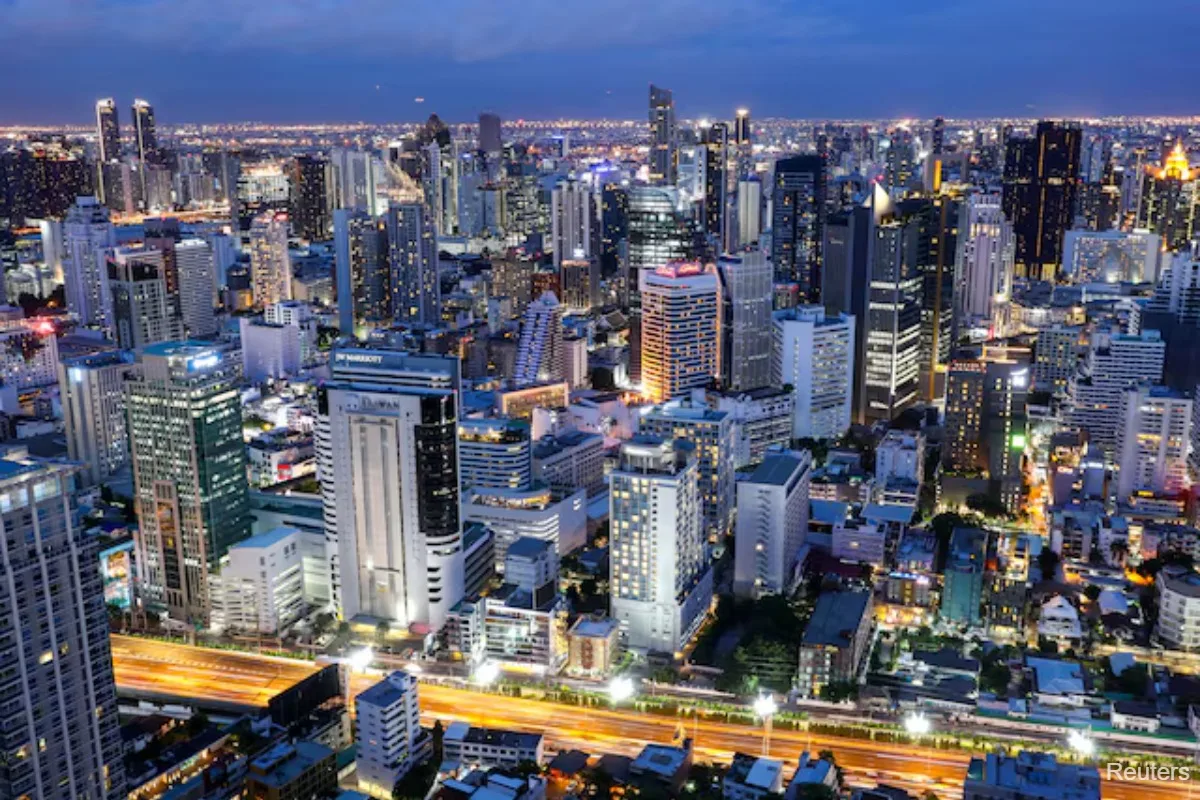
Thailand plans to increase its economic growth potential from 2.7% to 3.0% by 2030, Finance Minister Ekniti Nitithanprapas announced on June 22, 2026 [1, 2, 3]. "Thailand plans to lift its economic growth potential to 3.0% from 2.7% by 2030," Ekniti said [1].
The government will promote growth through four main pillars: attracting new investment, expanding foreign trade, boosting tourism, and developing agriculture-related services [1, 2, 3]. Alongside these sectors, officials intend to develop human capital by focusing on strategic research and development, while simplifying the business environment to encourage entrepreneurship and investment [1, 3].
Thailand's economic growth rate in 2025 was 2.4% [1, 3]. Despite a stronger-than-expected first quarter in 2026, the state planning agency maintained its annual growth forecast at between 1.5% and 2.5%, citing challenges from the ongoing Middle East war [1, 3]. A leading joint business group raised its 2026 forecast slightly to 1.6% to 2.0%, supported by government stimulus measures including a 176 billion baht (US$5.4 billion) consumer subsidy scheme aimed at easing the cost of living [1, 3].
Finance Minister Ekniti indicated in May 2026 that Thailand's growth could surpass 3% within one to two years, fueled by new investments [1, 3]. This projection predates the formal announcement of the government’s 2030 goal.
The government is expected to pursue these growth targets through policies encouraging investment inflows and improving trade and tourism frameworks. The next major economic update will come as 2026 data is fully reported and further progress on these goals is assessed.