Unitree Robotics completed its initial public offering on August 19, 2026, on the Shanghai Stock Exchange STAR Market, issuing shares at 150.8 RMB each [1, 2, 3, 4, 5, 6]. The stock opened at 1100 RMB, surging 629.44% above its issue price, with intraday highs near that level. This pushed the company’s market capitalization above 4400 billion RMB according to some sources, though other estimates placed it between 3600 and 5000 billion RMB [1, 2, 3, 4, 5, 7, 8, 6].
By the close of its first trading day, the share price settled around 845 RMB, still up 460% from the IPO price [4, 9, 10, 8]. On August 20, Unitree’s stock price dropped about 18.7% to close near 687 RMB, reflecting a sharp correction [9, 10].
The IPO raised approximately 6.1 billion RMB (around 900 million to 1.1 billion USD/SGD), giving Unitree an initial market valuation of about 610 billion RMB [2, 3, 6]. Founder Wang Xingxing owns roughly 31.3% of the company, including 21.4% direct shares and 9.8% held via an employee platform. His net worth is estimated at over 130 billion RMB after the IPO [1, 5, 7].
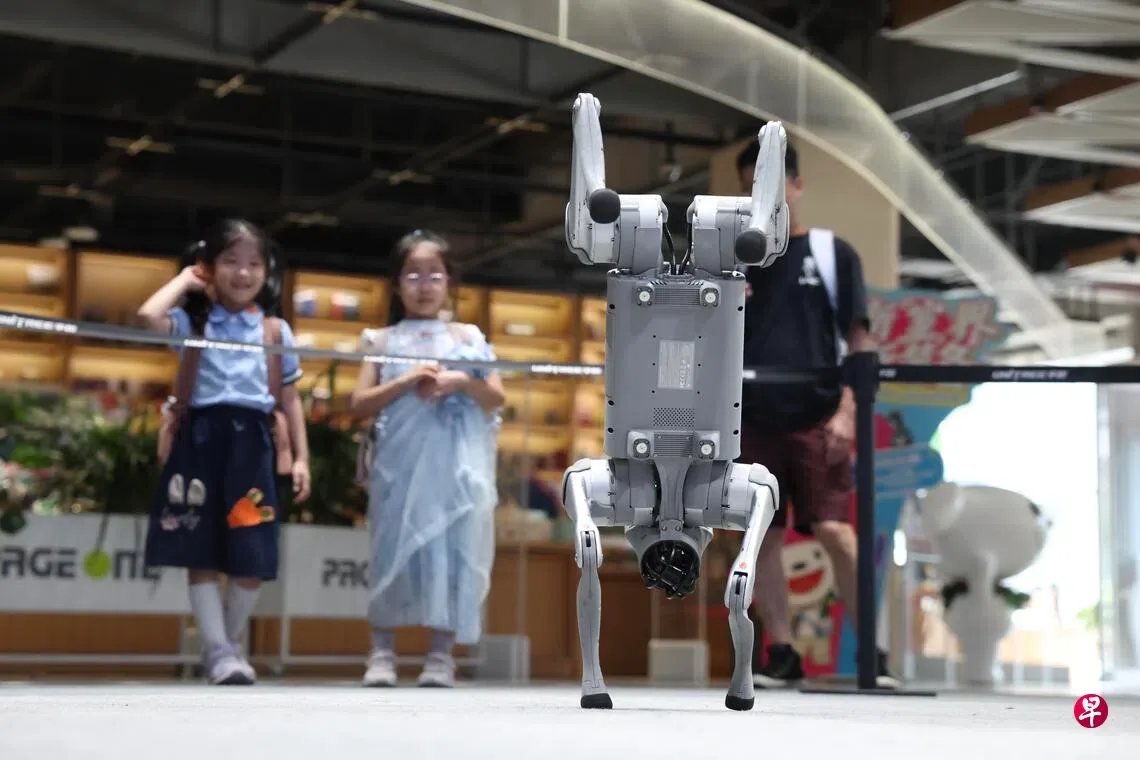
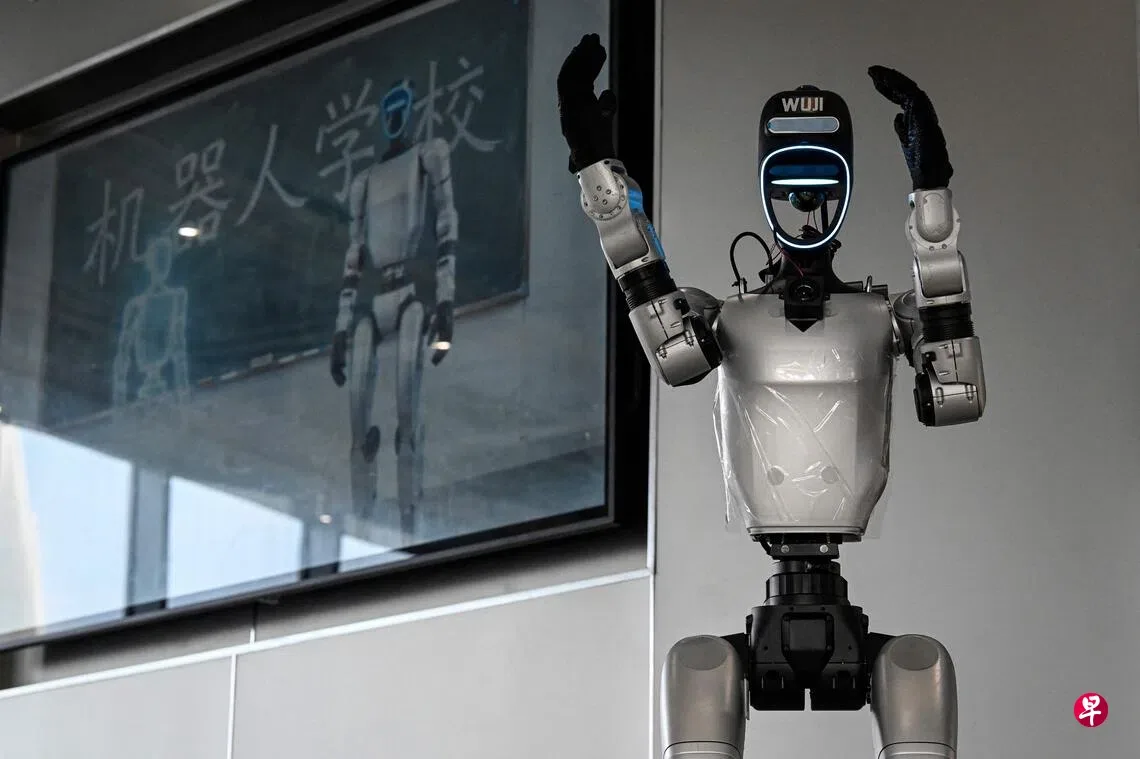
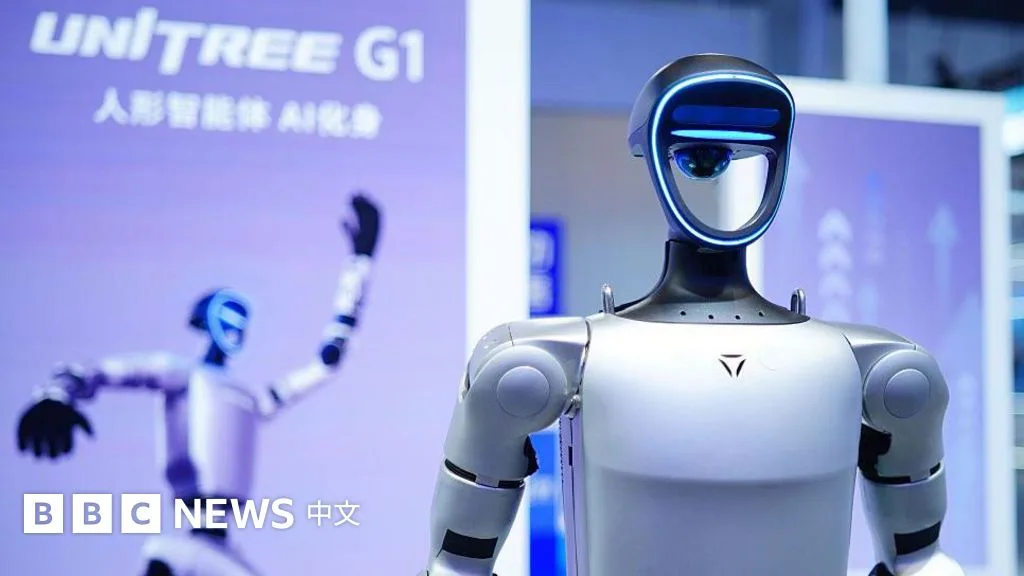
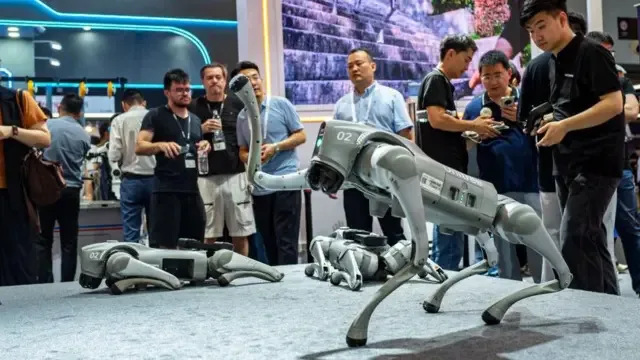
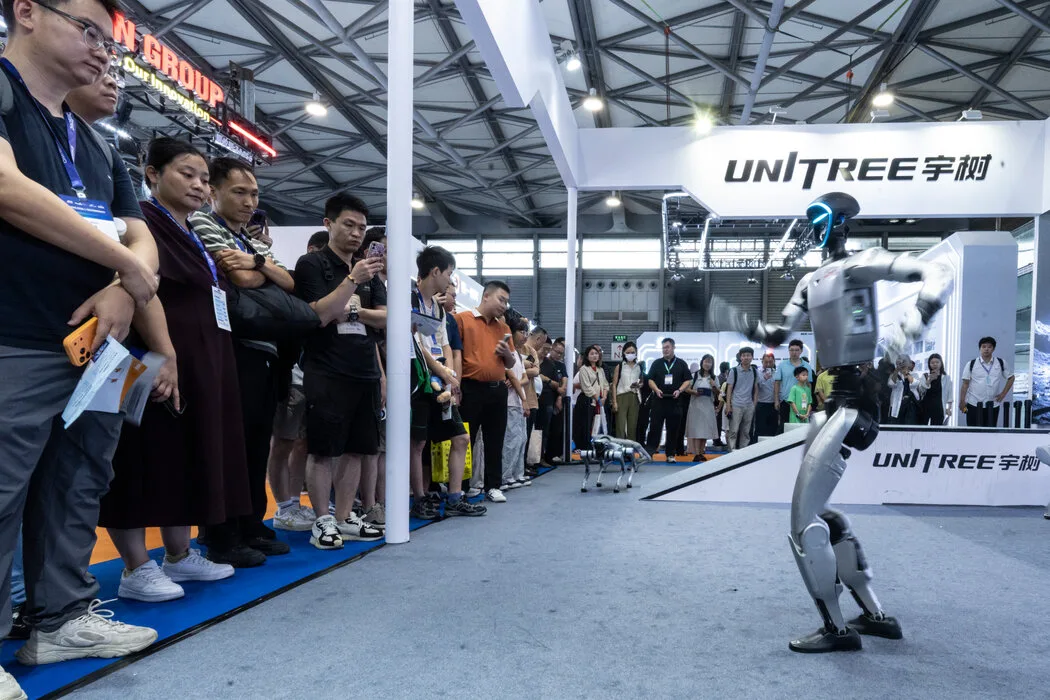
Founded in 2016 and headquartered in Hangzhou, Unitree specializes in humanoid and quadruped robots, as well as robotic components and embodied intelligence models [2, 4, 5, 7]. The company restructured to its current corporate form in May 2025 [5]. Unitree reported revenue growth from 393 million RMB in 2024 to 1.7 billion RMB in 2025, with net profits reaching 278 million RMB and gross margins exceeding 60%. Revenue for the first half of 2026 was 1.15 billion RMB with 274 million RMB net profit [2, 5, 9, 10].
Unitree shipped over 5,500 humanoid robots in 2025, ranking first globally. It has cumulatively sold more than 33,000 quadruped robots [2, 4, 5, 7]. The company’s IPO attracted 9.78 million retail investors, representing a historical low lottery winning rate of 0.018% for A-share IPO subscriptions [5, 7, 9, 6]. The IPO was priced at a high price-to-earnings ratio of about 219x compared to the industry average of 38x [2, 10].
Analysts have noted strong retail investor enthusiasm. Omdia analyst Su Lianjie said part of the price surge was because Chinese retail investors are willing to buy at almost any price [3]. RoboStrategy’s Jack Pearson said the IPO “gave the public a rare chance to invest in a humanoid robot firm, possibly setting valuation benchmarks for others.” [4]. University of Bath associate professor Qin Fei highlighted that robots bring artificial intelligence into economic activity beyond screens [4].
Despite strong interest, concerns remain about how soon humanoid robots will be commercialized and deployed at scale. Engineer Zhu Tianle said, “Training a robot’s ‘brain’ is extremely difficult; understanding the world remains a global challenge.” Omdia’s Su Lianjie also warned that the high valuations assume robots will become general-purpose devices and failure to meet this would badly hit the sector [8].
Unitree’s competitive advantages include its global leadership in humanoid robot shipments and its ability to offer products at lower prices than major US rivals such as Boston Dynamics and Tesla. Tesla’s deliveries have not yet scaled while Unitree holds cost and scale advantages [4, 11, 5].
However, the US government has restricted imports of some Chinese humanoid and quadruped robots over national security concerns, naming Unitree on related entity lists [3, 4, 8, 12]. In contrast, Chinese domestic policy strongly supports robotics development to address labor shortages and advance AI technologies [4, 8, 12].
Unitree was originally incorporated as Unitree Ltd. in August 2023 and restructured in May 2025. Its IPO subscription ran from July 10 to August 19 with record retail participation [5, 9, 6]. The company’s shares will continue trading on the STAR Market following the second-day price correction [9, 10].