UOB announced plans to grow its Hong Kong private bank's assets under management (AUM) and revenue by five times by 2030, while increasing its client adviser staff from about 20 to 60 people by that year [1, 2, 3]. The bank’s Hong Kong private banking business has expanded at a pace similar to the group-level AUM growth, which has risen at more than 12% compound annual growth rate since 2022 [1, 2, 3].
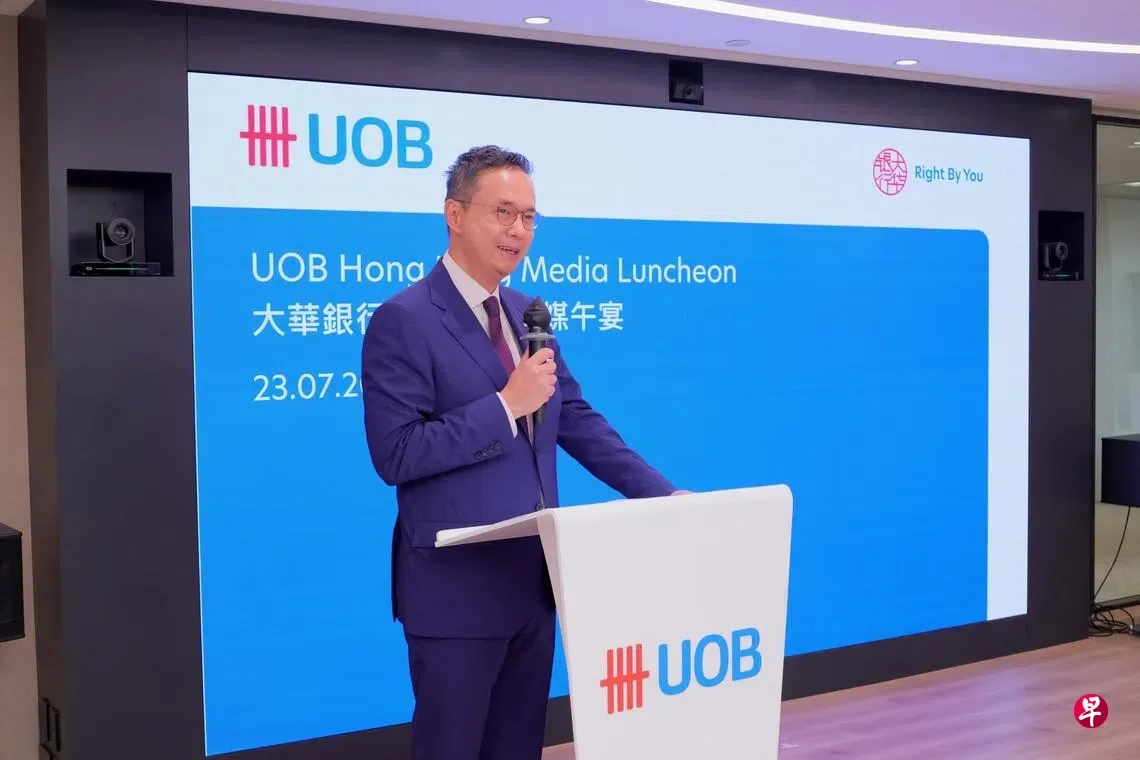
George Tung became CEO of UOB Hong Kong on July 1, 2026, and outlined a strategic shift from a "China+1" to a "Growth+1" approach. He said, "As clients expand across Asean, their priorities are evolving beyond manufacturing and supply chain diversification to encompass treasury optimisation, financing, risk management, wealth creation and succession planning" [2]. Tung described the region as "a powerful growth corridor connecting (the) Chinese mainland, Hong Kong and Asean, where trade, investment and wealth flows are increasingly intertwined" [3]. He noted that wealth management will be the bank’s future growth engine, stating UOB will capture "the growing wealth flow opportunities between China and ASEAN" [1].
Hong Kong serves as a strategic bridge for UOB linking China and ASEAN markets rather than an isolated location [2, 3]. The bank has supported about 5,000 companies expanding into ASEAN and 2,400 Chinese enterprises venturing overseas since 2011 [2, 3]. Currently, more than 70% of UOB private banking clients are business owners who seek investments, financing, succession planning and cross-border wealth structuring services [1, 2, 3].
The Asian private wealth pool is expected to reach US$99 trillion by 2029, with wealth flows from China including Hong Kong into ASEAN projected to approach US$100 billion, growing at about 9% annually [1, 2, 3].
The region’s private banking sector faces competition, as OCBC announced plans in May to add 30 to 50 wealth management client relationship managers in Hong Kong by 2026. OCBC’s Hong Kong wealth management revenue increased 1.5 times year-on-year in the first quarter of 2026 [1].
UOB will seek to achieve its targets through expanding its adviser team and enhancing services to meet evolving client needs as businesses deepen their presence across ASEAN markets. The bank’s progress will be monitored through 2030 as it executes its growth strategy in Hong Kong’s competitive wealth management sector.