The US consumer confidence index declined to 89.4 in August 2026, marking its lowest point since January and a seven-month low, according to the Conference Board's survey conducted from August 3 to 16 [1, 2, 3, 4, 5]. This was a 0.8-point drop from a revised July reading of 90.2.
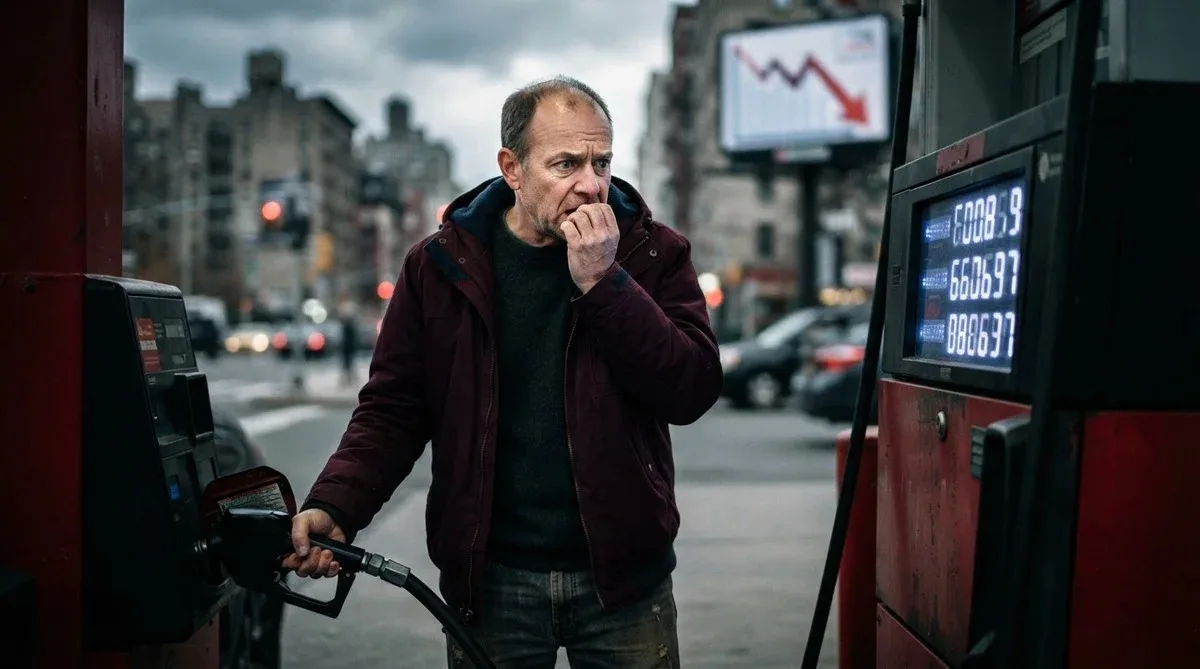
The decline largely stemmed from sustained gasoline prices above $4 per gallon and ongoing geopolitical tensions involving Iran, which fueled economic uncertainty [1, 2, 3, 4, 5]. Despite this, consumers’ views on the current economic situation showed some improvement, but their short-term expectations for business conditions and the labor market worsened significantly [1, 2, 3, 5].
In August, 27% of consumers said jobs were plentiful, up from 24.4% in July. However, expectations for more jobs in the next six months dropped to 14.6% from 16.4% [1, 2, 3, 4, 5]. This coincides with recent labor market data showing the US job market stalled in July with a loss of 23,000 jobs. Revisions to May and June payrolls also removed 103,000 previously reported jobs, signaling weaker labor market growth [1, 4]. The unemployment rate fell to 4.1%, but this reflected more people leaving the labor force than employment gains [1, 4].
Inflation remains a major frustration for consumers. The personal consumption expenditures (PCE) price index rose 3.7% year-over-year in June 2026, down from 4.1% in May but still above pre-Iran conflict levels of 2.8% [1, 4]. The Conference Board noted that anticipated spending on services declined in August as the boost from lower gas prices and summer events faded, yet consumers still expect to spend more overall on services in the coming six months [2].
Dana M. Peterson, the Conference Board’s chief economist, warned that the drop in the expectations index below 80—its lowest since January—signals growing consumer pessimism about the business environment and labor market. She said, "Generally, when the expectations index falls below 80, it is considered a warning signal for a potential economic recession within the next year" [5].
Meanwhile, the University of Michigan’s consumer sentiment index also fell in August for the first time in three months, driven by worsening business conditions and inflation concerns [2]. Despite the economic gloom, vacation plans rose to the highest level since January 2026, suggesting some consumer resilience [2, 3].
On August 24, the US announced plans to increase economic pressure on Tehran amidst the ongoing Iran conflict, which continues to add uncertainty to the economic outlook [2, 3]. The Consumer Confidence Index results reflect data collected just prior to this announcement.
The next consumer confidence report is expected in September, providing a closely watched gauge of how ongoing geopolitical and economic factors continue to influence US consumer sentiment.