US electricity use hit a record 4.195 trillion kilowatt-hours (kWh) in 2025. It is forecast to grow to 4.269 trillion kWh in 2026 and 4.399 trillion kWh in 2027, driven largely by the fast expansion of AI and cryptocurrency data centers, along with increased electrification of heating and transportation sectors [1, 2, 3].
For the first time in 2026, commercial electricity demand is expected to surpass residential needs, with commercial sectors projected to consume 1.550 trillion kWh while residential demand declines slightly to 1.508 trillion kWh [1, 2, 3]. Industrial demand will total about 1.065 trillion kWh that year [1, 2, 3].
The fuel mix is shifting as coal’s share declines from 17% in 2025 to 15% in 2026 and 2027. Natural gas remains steady at around 40%. Renewable energy generation increases from 24% in 2025 to 27% by 2027, while nuclear power holds steady at 18% [1, 2, 3].
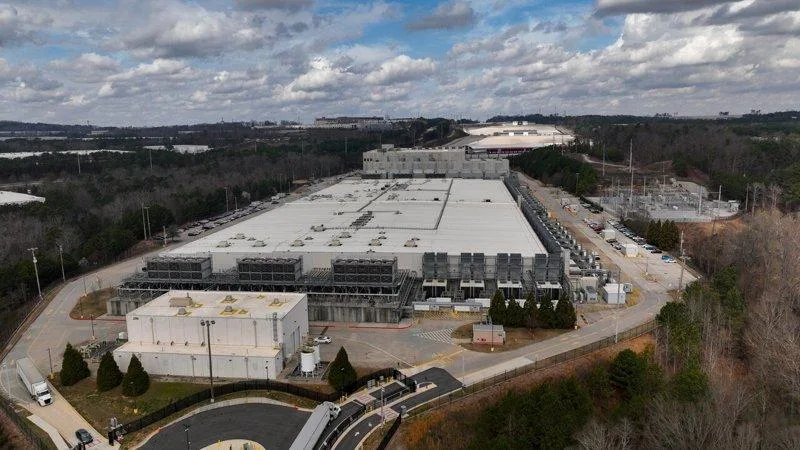
US AI data centers alone consumed nearly 312.6 terawatt-hours (TWh) in 2025, accounting for almost 40% of global AI data center electricity use—equivalent to powering 29 million US homes [4]. Capital spending for AI infrastructure soared over 175% from $162 billion in 2022 to $448 billion in 2025 [4]. Top US tech companies are expected to invest about $1.1 trillion in AI infrastructure by 2027, equal to roughly 3.2% of US GDP [5].
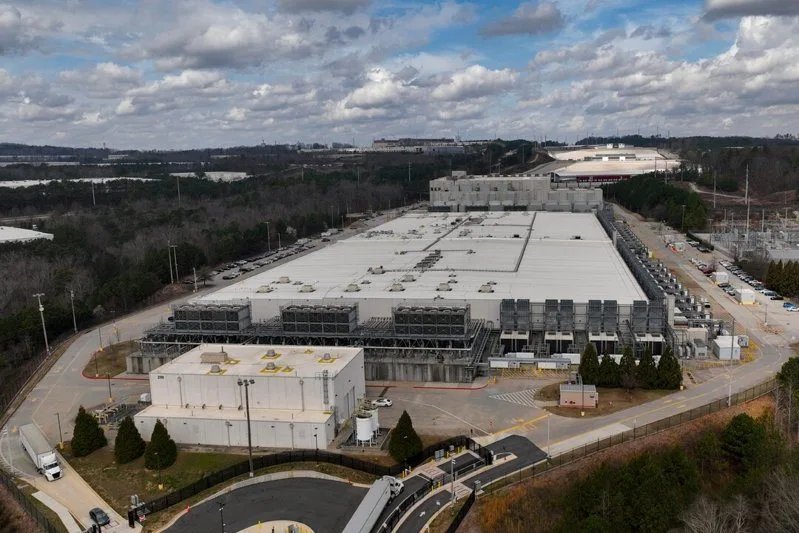
The AI data center boom is creating business opportunities for industrial and electrical equipment manufacturers, but also placing strain on the power grid [5, 4]. Some communities have raised environmental concerns over water and electricity use and pollution from diesel generators in data centers [5]. US Energy Secretary Chris Wright stated, "Many people do not understand the scale of data centers, and multiple studies show up to 70% of Americans oppose building AI data centers near where they live. However, data centers help lower electricity prices," emphasizing their economic role [5].
Investor Kevin O’Leary said the US needs to sustain leadership in technology and economy, noting data centers are key to that advantage [5]. Panasonic CEO Yuki Kusumi noted, "The US has become our priority market due to the rapid growth of AI infrastructure there," underscoring the importance of battery solutions for grid stability [5].
The next major milestone will be the 2027 electricity consumption estimate of 4.399 trillion kWh and further AI capital investment reaching $1.1 trillion, to be monitored as infrastructure and energy demand evolve [1, 2, 5].