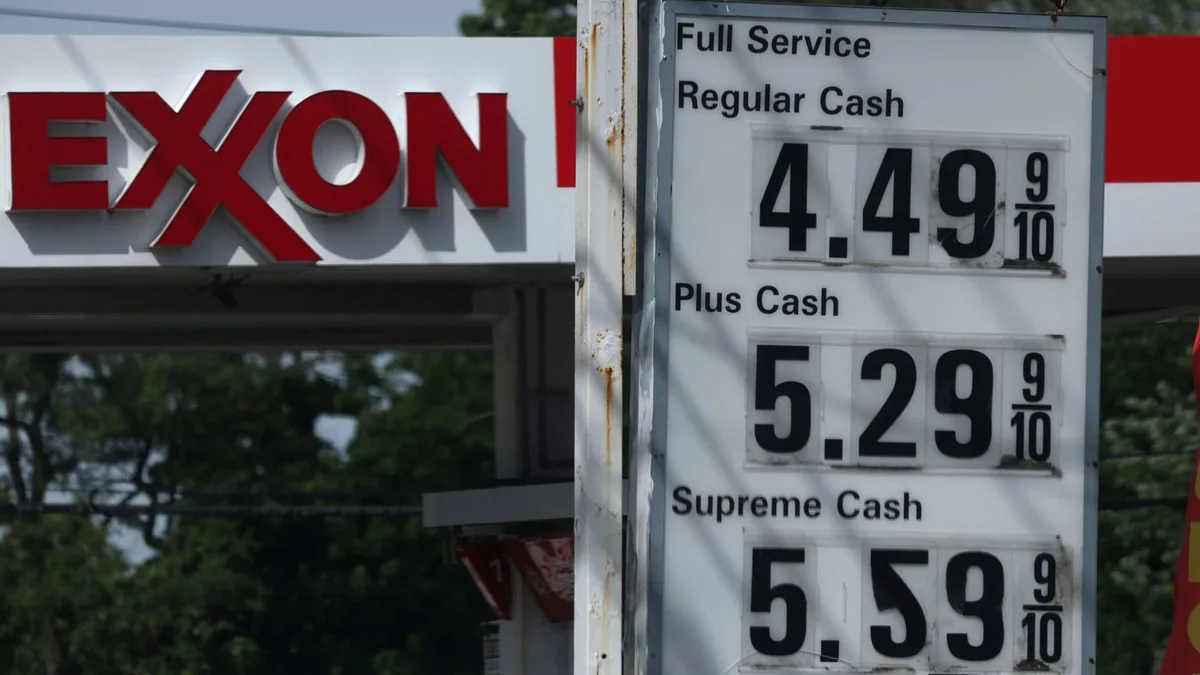
ExxonMobil Senior Vice President Neil Chapman warned on May 28 that global oil inventories will fall to "really, really low levels" within weeks, potentially causing oil prices to spike sharply. "We're approaching unheard of inventory levels," Chapman said at the Bernstein conference, adding the stocks are "extremely, extremely low" [1, 2].
Chevron CEO Mike Wirth similarly cautioned on May 27 that the oil market's buffer and adjustment capacity is rapidly dwindling. "緩衝和調節能力正在節節消耗,如今市場吸收這種失衡的能力,已遠不如開戰之初," Wirth said, noting price pressure was expected to increase through June and July [3]. He added, "未來幾周,這些壓力很可能直接反映在實體油價上,進入6月乃至7月,我預期還有更多上漲壓力."
The risks come amid the ongoing Iran war and closure of the Strait of Hormuz, which has cut global oil supply by roughly 12 to 13 million barrels per day—the largest disruption in history [3, 1]. This has rapidly depleted inventories worldwide and forced the release of about 172 million barrels from the US Strategic Petroleum Reserve, pushing it near a 40-year low [4].
Despite Brent crude prices falling about 10-16%, trading around $93-$94 per barrel as of late May, Exxon executives predict physical Brent prices could spike to $150-$160 per barrel if inventories hit record lows in the coming weeks [3, 1, 4]. Chapman said that when prices reach a certain level, "demand destruction" could bring the market back into balance [1].
The low inventories also constrain US crude oil exports, which face possible reduction if relative price levels stay strong [5]. Energy experts warn that even if a ceasefire or peace deal occurs, the effects on oil supply and prices will likely persist for months or longer [3, 1].
East Asian countries heavily dependent on Gulf oil face potential shortages, with some already experiencing extreme price spikes—Sri Lanka saw crude rise as high as $286 per barrel [4].
The Bernstein conference highlighted the urgency of the situation amid the ongoing conflict. The coming weeks will be critical to monitor inventory levels and price movements as markets absorb the continuing supply disruption and diminished reserves.