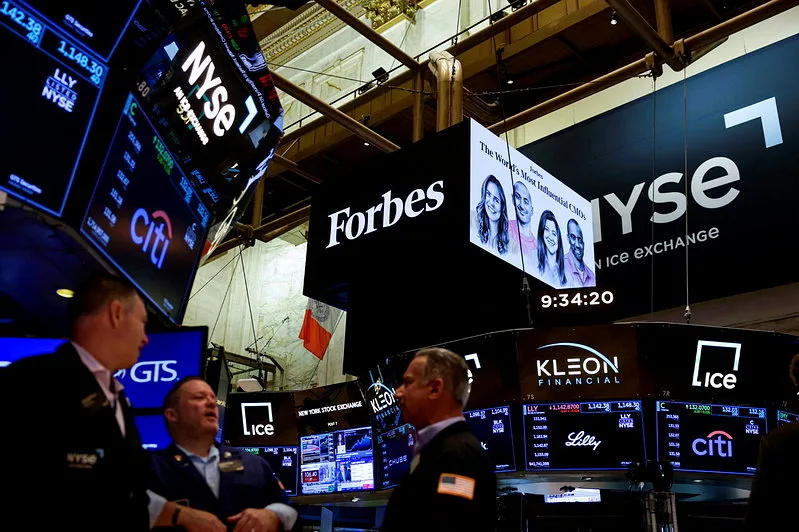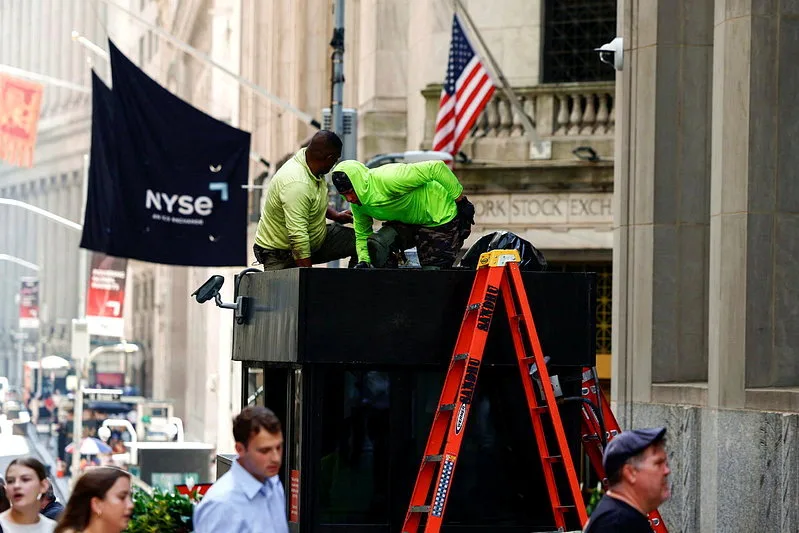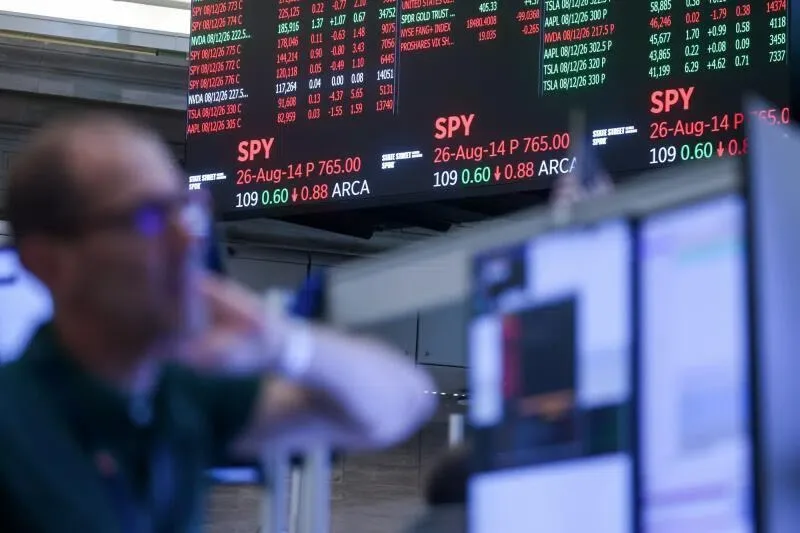
The S&P 500 rose 0.26% to close at 7,748.50 points on August 12, 2026, while the Nasdaq advanced 0.54% to 26,588.49 points, driven by strong earnings from CoreWeave and easing inflation concerns. The Dow Jones Industrial Average slipped 0.04%, ending at 53,770.27 points [1, 2, 3].
Shares of CoreWeave surged about 19% after the company reported upbeat second-quarter earnings and raised its annual capital spending forecast, fueling optimism in AI infrastructure stocks [1, 2, 4, 3]. Other AI-related stocks also rallied strongly with Nebius Group jumping 34%, Super Micro Computer up 19%, Nvidia gaining 3%, and Micron Technology rising 4.9% [1, 2, 4, 3].
US consumer prices rose only slightly in July 2026, with gasoline prices falling for a second month and core inflation remaining subdued. The modest increase in prices eased expectations for a Federal Reserve interest rate hike in September. Traders currently price a 62-65% chance the Fed will hold rates steady based on this inflation data and slower producer price increases [1, 2, 4, 5, 6].
Wall Street's volatility index (Cboe VIX) dropped to 14.45 points, the lowest level since January 2026, reflecting reduced market uncertainty [1, 2, 3]. The Philadelphia Semiconductor Index advanced about 2.5% but remains about 15% below its June 22 record high [1, 2, 3].
On August 13, US producer price inflation slowed with the annual growth rate at 4.7%, down from 5.5% in June and below forecasts. Major indexes rose modestly: Nasdaq up 0.3%, S&P 500 up 0.3%, Philadelphia Semiconductor Index up 0.3%, and Dow Jones up 0.2% [5, 6]. However, Cisco Systems shares dropped about 9% after issuing disappointing AI data center sales guidance of $7.5 billion for 2026. AI chip startup Cerebras Systems shares also fell roughly 13% on weaker growth estimates [5, 6].
Market watchers pointed to the US July non-farm payroll data, which unexpectedly declined earlier in August. This lowered expectations for further Fed rate hikes and strengthened confidence that rates may remain steady through the end of the year. Robert Pavlik, senior portfolio manager at Dakota Wealth, said, "The numbers came in right in line. The market’s reaction is slightly positive because the market was fearful it was going to come in worse than it did. You’re seeing a market thinking that the Fed is not being pushed toward a rate hike" [1]. Glen Smith of GDS Wealth Management added, "PPI is still well above the Fed’s 2% target, but inflation shows signs of stabilizing. I expect the Fed may hold rates steady through the end of this year" [5].
In Asian markets on August 10, Taiwan’s stock market surged with the weighted index rising over 600 points to above 44,800. Key tech stocks saw strong gains including TSMC (up 25-40 New Taiwan dollars to 2395-2410 NT), Delta Electronics up about 6%, and ASE Technology Holding rising around 4%. Analysts linked the move to US market optimism and expectations for AI demand driving growth in Taiwan’s stock market sectors like robot sensing and system integration [7, 8, 9, 10, 11].
Looking ahead, the market will closely watch the US Federal Reserve’s September meeting, where the probability of holding interest rates steady remains above 60-65% following July inflation and producer price data [1, 2, 4, 5, 6].