Volkswagen reported a nearly 10% decline in its Q2 2026 operating profit to about €3.5 billion, missing analyst estimates and citing a sharp drop in China sales as a key factor [1, 2, 3]. The company’s global vehicle deliveries fell 6.3% in the first half of 2026 to approximately 4.1 million units, mainly due to a 31-37% plunge in China deliveries driven by strong local competitors and weakening consumer confidence [4, 1].
As a result, Volkswagen lowered its 2026 sales revenue forecast from a projected growth of up to 3% to an expected decline of as much as 3% [4, 1, 2, 3]. CEO Oliver Blume acknowledged that while Volkswagen has “great products, but the costs are too high,” making extensive restructuring necessary. He described the programme as essential to make the company "more innovative, faster, more attractive and robust" [4, 1].
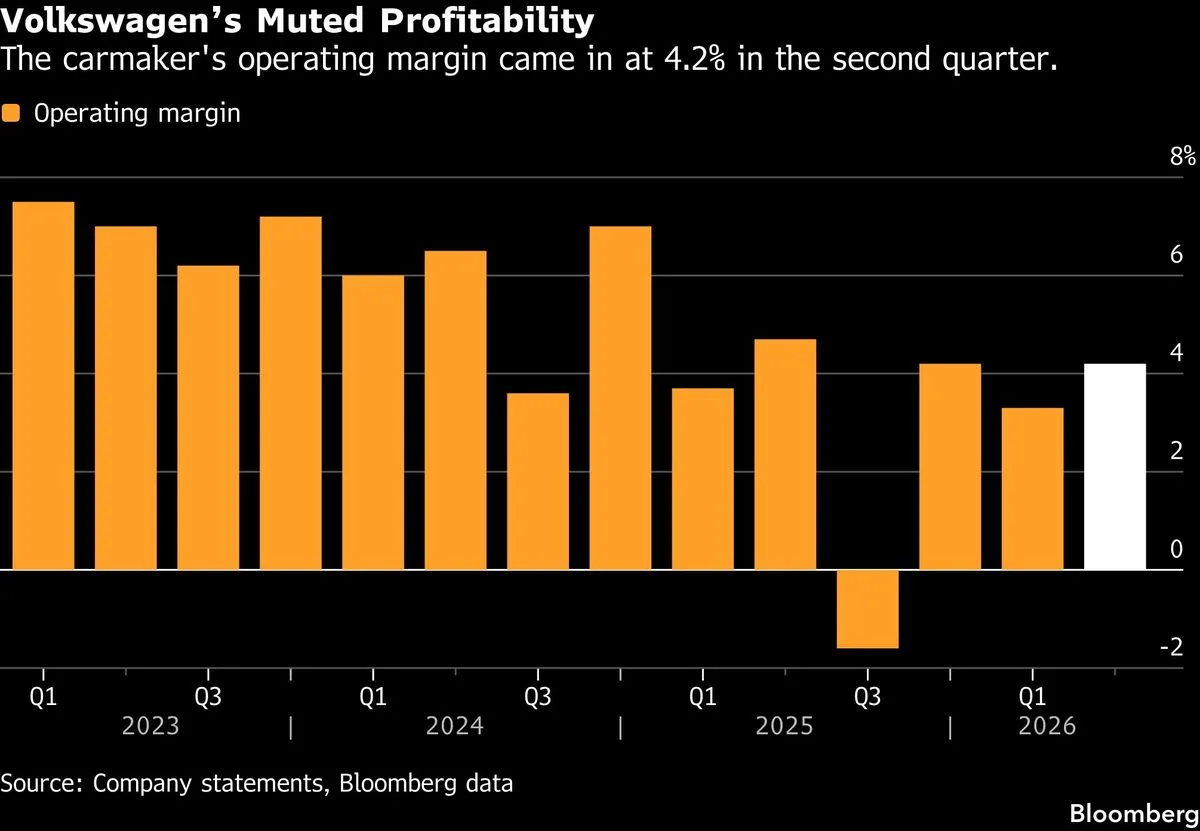
Volkswagen plans to cut up to 100,000 jobs globally, doubling earlier targets, with the job reductions focusing mainly on administrative roles. This proposed cut affects a workforce of over 650,000 employees worldwide [4, 1, 2, 3]. Volkswagen’s cost base remains 20-30% higher than some competitors, prompting a target to reduce overheads by at least €10 billion [4, 2, 3]. CFO Arno Antlitz highlighted the need for “a second phase of restructuring focused on reducing costs, improving productivity and increasing plant capacity utilization” after the group’s operating margin hovered around 4% [3].
Intensifying competitive pressures stem from Chinese car manufacturers exporting competitively priced electric and hybrid vehicles to Europe, which Volkswagen’s CFO said means “China’s automakers are exporting not only cars, but also competitive pressures to Europe” [4, 1].
Volkswagen has faced underused factories in Germany but reached an agreement with labor unions in December 2024 to avoid factory closures and compulsory redundancies until at least the end of 2030 [1, 2, 3]. In early July 2026, Volkswagen’s management proposed cutting up to 100,000 jobs and closing four factories, but the supervisory board rejected the factory closures [4, 1, 2, 3].
In April 2026, Volkswagen ended production of the ID.4 electric SUV at its U.S. Tennessee plant as part of its ongoing restructuring efforts [2].
Volkswagen’s next major update on restructuring progress and financial outlook will follow its forthcoming earnings reports and ongoing negotiations with unions on implementing cost reductions.