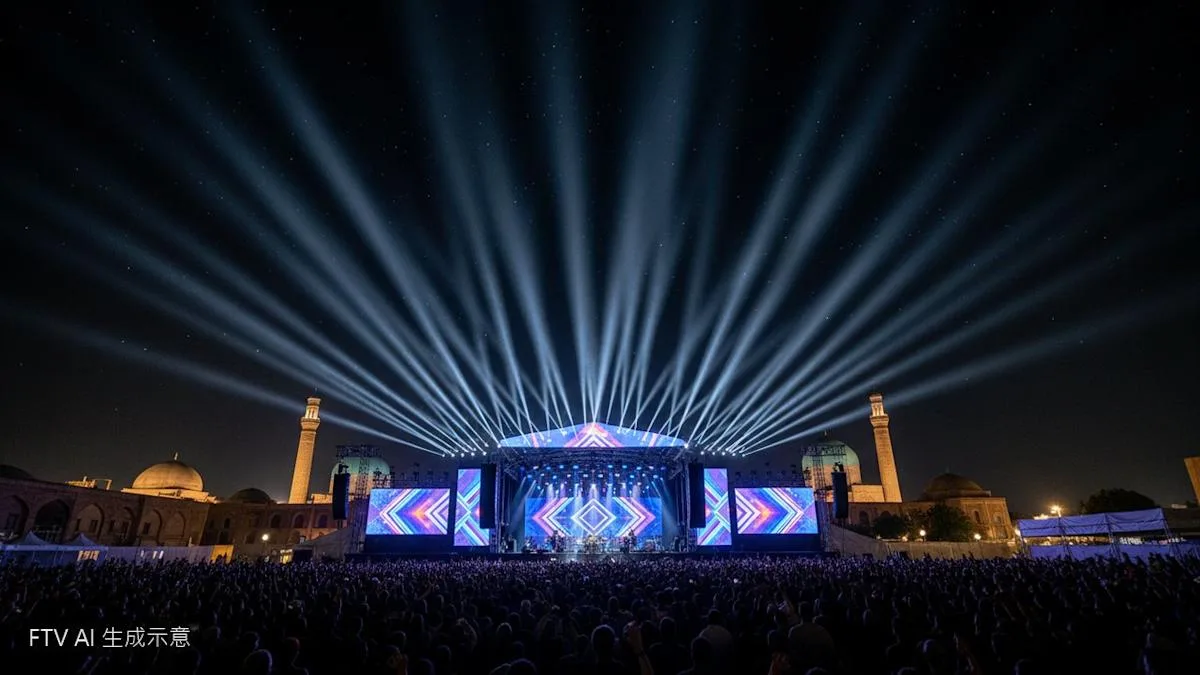
Kanye West held a concert in Istanbul, Turkey, attended by nearly 120,000 fans over the weekend before June 3, 2026 [1]. The event drew sharp criticism from the Turkish government for including lyrics and symbols deemed offensive to Turkish religious beliefs and cultural values, particularly fans chanting “I am a God” during the show [2, 1].
Oktay Saral, chief advisor to President Recep Tayyip Erdogan, publicly condemned the concert on social media platform X around June 2, calling the chanting a “serious matter that demands close examination” [2, 1]. Saral’s remarks underscored official concerns about the event’s impact on Turkey’s cultural sensitivities.
French designer Michele Lamy, 82, participated in the concert and also sparked criticism for her gothic appearance and association with occult and dark symbols [2, 1]. Lamy is known for tattoos and gothic style, which some viewed as controversial in the conservative context.
Kanye has faced bans in several European countries over previous antisemitic remarks and his glorification of Nazi symbolism. In 2025, he released a song titled "Heil Hitler" featuring Nazi imagery, which led to international backlash [2, 1]. Despite the controversies, Kanye has attributed his statements to bipolar disorder and denied being a Nazi or antisemite [2, 1].
He has upcoming concerts scheduled in the Netherlands on June 6 and 8, a show in Tirana, Albania, on July 11, and a Prague performance on July 25, 2026 [1]. These dates indicate his continued touring schedule amid ongoing controversy.
The Istanbul concert and subsequent criticism highlight tensions around artistic expression and cultural respect in Turkey and beyond.