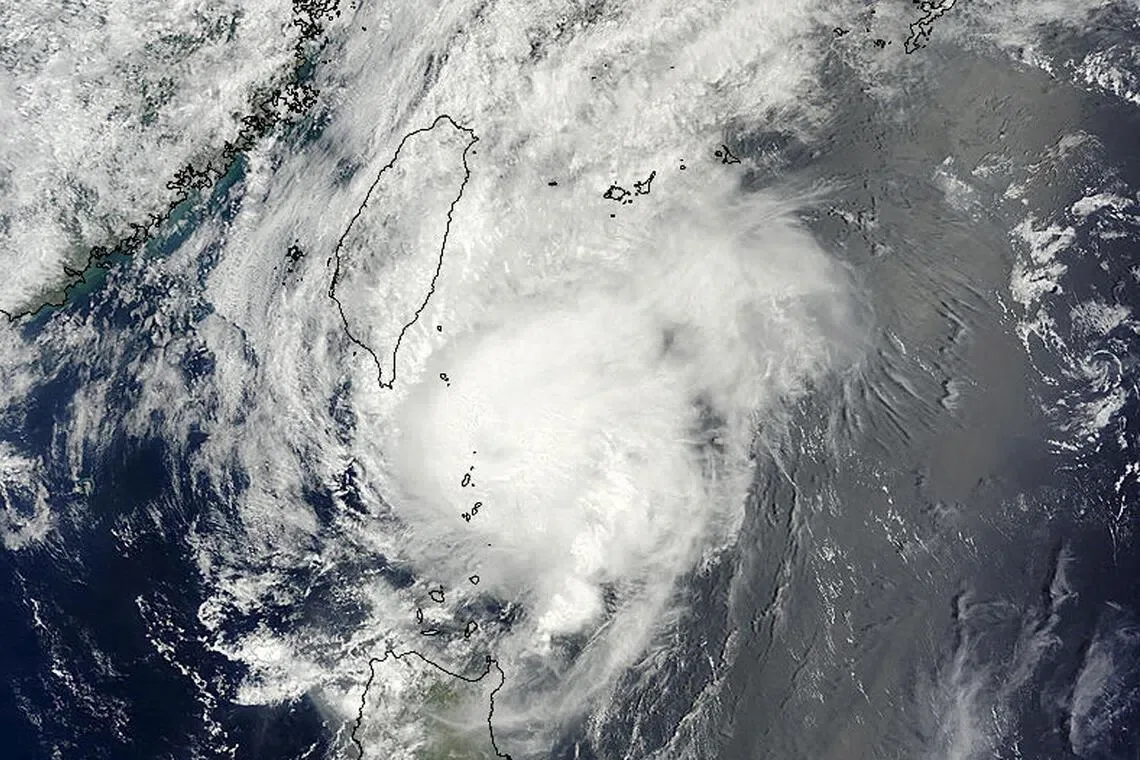
Typhoon Noul, the strongest typhoon to strike China in 2026, made landfall near Huizhou city in Guangdong province early on July 26 with maximum sustained winds reaching 162 km/h [1, 2, 3, 4]. The typhoon passed within 80 km of Hong Kong, marking the third-closest major typhoon to the city since 2000 [2].
Authorities evacuated between 340,000 and over 715,000 residents in Guangdong as a precaution against the storm’s impact, prompting large-scale safety measures across the province [5, 3, 4]. Guangdong provincial officials raised emergency response levels for flood and typhoon control during the event [6, 1, 4]. More than 20,000 people had been evacuated as early as July 24, along with fishing vessels returning to port to shelter from the storm [7, 8, 6].
Transportation was severely disrupted in the region. Railway services in Guangdong were suspended starting the morning of July 25 and remained halted on July 26 [9, 7, 8, 6, 3, 4]. Over 190 cross-border high-speed rail services were canceled across the Guangdong-Hong Kong area on July 26 [10, 2, 3, 4]. Hong Kong International Airport canceled about 350 flights that day, with some flights resuming after 6 p.m. [6, 5, 2, 3, 4]. Cathay Pacific said a small number of flights would be delayed as it adjusted its plans to resume operations after the typhoon passed [6].
In Hong Kong, the observatory issued Typhoon Signal No. 9 in the early morning of July 26, before downgrading it to No. 8 by 7:10 a.m. and then to No. 3 around 12:40 p.m. [5, 10, 2]. The storm caused minor damage in the city with reports of fallen trees, some infrastructure damage, and nine injuries [2, 3, 4]. Residents were advised to stay away from shorelines and avoid water sports during the severe weather [11].
Schools in Chaozhou city, Guangdong, suspended on-campus activities during the typhoon for safety reasons [7, 8, 6]. The National Meteorological Centre described Typhoon Noul as having deep inland penetration, prolonged duration, heavy cumulative rainfall, and a high risk of causing disasters, particularly as it traversed complex terrain [6].
After landfall, Noul weakened but continued to bring flooding risks and heavy rains across several southern and central Chinese provinces, including Fujian, Jiangxi, Hunan, Hubei, and Taiwan until July 30 [9, 7, 1, 12, 3, 4].
The Hong Kong Observatory noted that "Noul is moving steadily into inland Guangdong and weakening progressively, but gales are still affecting many places over Hong Kong, with occasional storm-force winds offshore and over high ground" [10]. Efforts remain focused on managing the residual impacts of the storm and mitigating flood threats in affected areas.
Authorities continue assessments as they monitor weather conditions and recovery progress after the widespread evacuations and transportation shutdowns caused by Typhoon Noul.