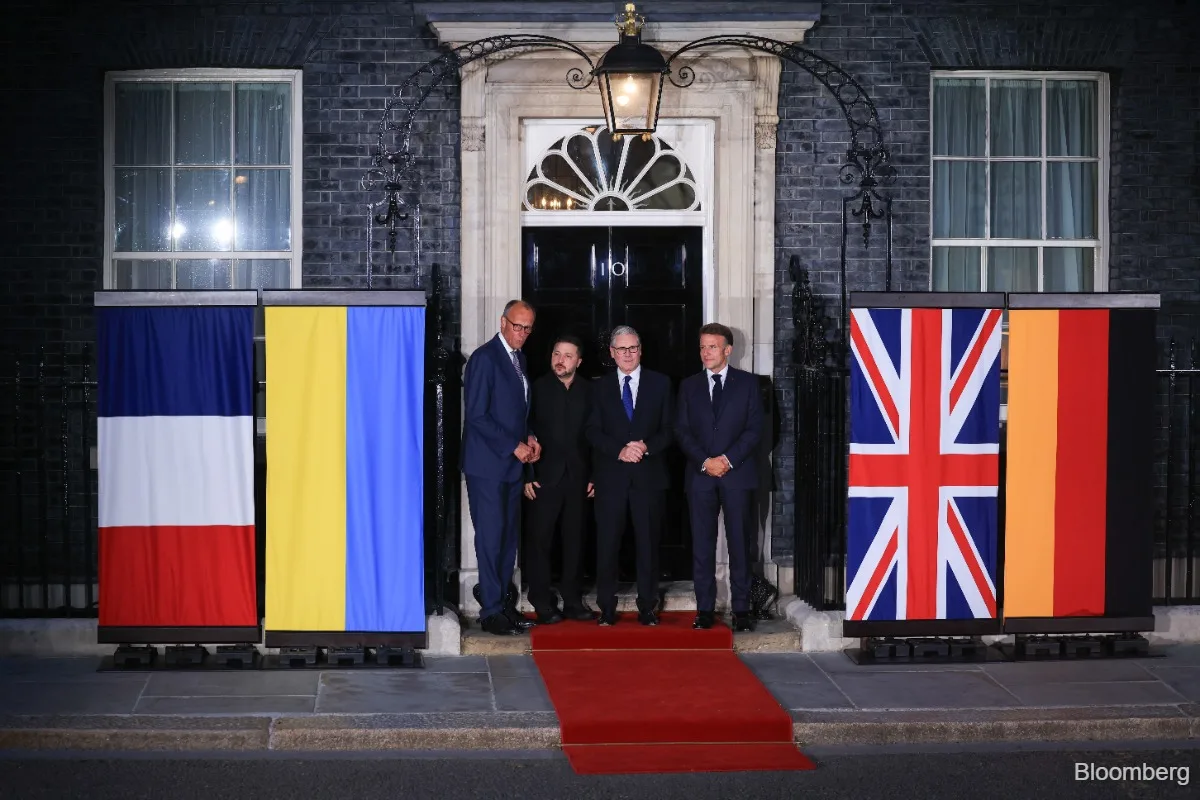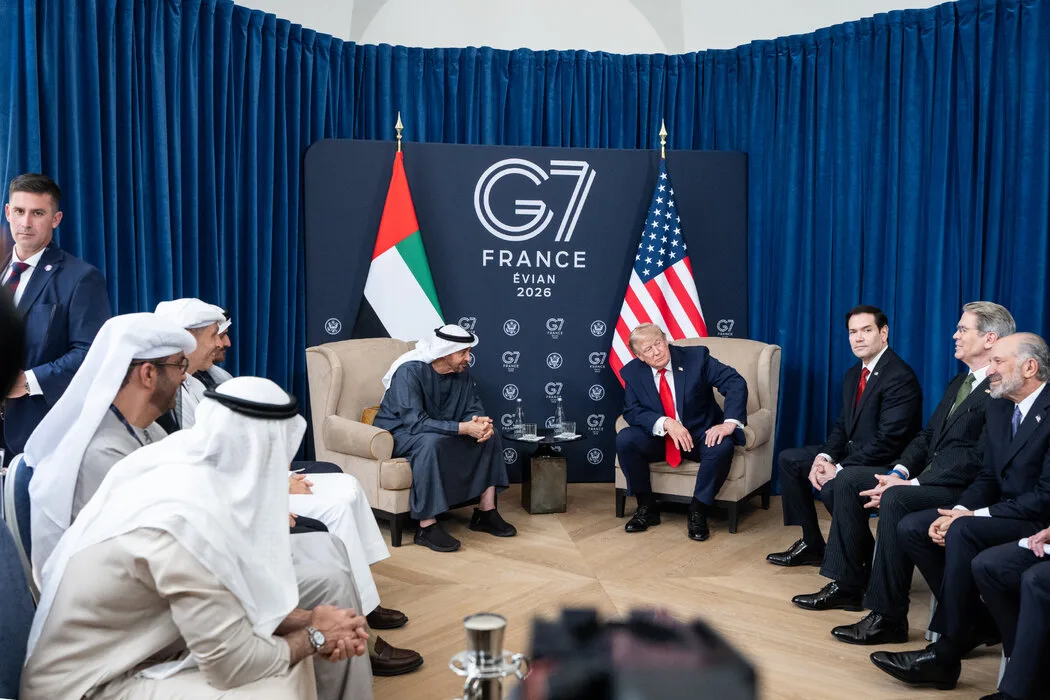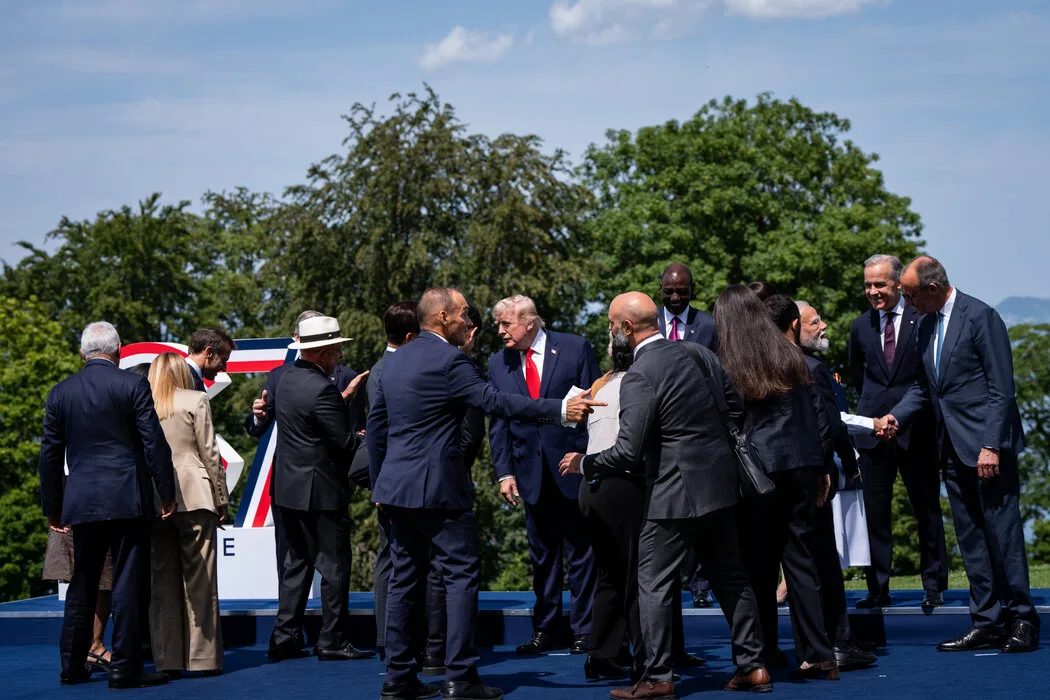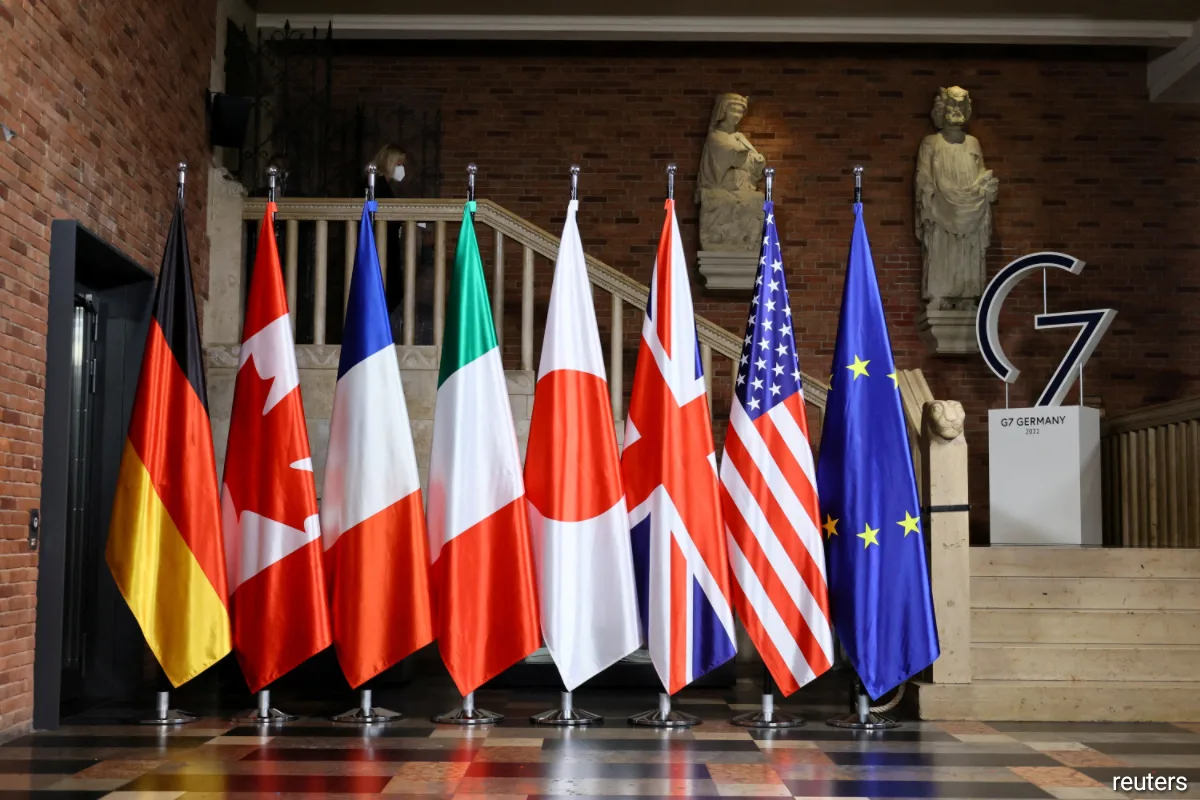
The G7 summit took place June 15 to 17 in Evian, France, bringing together leaders from the seven member countries and the European Union to address pressing global issues [1, 2, 3, 4, 5]. Ukrainian President Volodymyr Zelenskiy attended at the invitation of French President Emmanuel Macron to renew international support amid the war with Russia that has lasted more than four years since February 2022 [3, 6, 7].
The conflict in Ukraine remained the summit’s central focus. Discussions included peace talks involving Zelenskiy, former US President Donald Trump, and European leaders. Trump held a 55-minute phone call June 14 with Russian President Vladimir Putin, where he reiterated his readiness to help end the war and called for a ceasefire, seen as crucial by all parties [8, 7]. Kremlin adviser Yuri Ushakov confirmed Trump’s emphasis on halting hostilities and his willingness to act alongside European partners and Kyiv during the summit [8]. Putin congratulated Trump on his 80th birthday during the call, praising him as a "bright, remarkable person and politician" [9, 7]. German Chancellor Friedrich Merz said support for Ukraine continues alongside efforts to negotiate peace, stating, "A lasting peace can only be achieved through negotiations involving Ukraine, Russia, the USA, and Europe. There is no other way" [1].
Global economic imbalances formed another key agenda item. China’s record current account surplus has contributed to tensions, especially between Beijing and the EU [10, 2, 11, 12, 4]. Chinese Vice Premier Zhang Guoqing took part in a video conference hosted by Macron June 11, focusing on trade and economic issues [11, 12]. Recent data showed China’s imports from the EU dropped 1.3% in May after two months of growth, while exports to the EU slowed to 7.6%, the lowest level since October 2025. Despite slower trade, China’s surplus with the EU remains above $30 billion [10]. Macron said, "Our common goal should be clear. It is to put the global economy back on a stronger growth path. I think we all share this objective" [11].
However, the summit fell short of breakthrough agreements on economic imbalances or trade friction with China. Sources indicated internal divisions and complex issues limited consensus [3, 5]. While some participants highlighted ongoing efforts and dialogue including China’s involvement, others doubted major progress would be made [11, 3, 12, 4, 5].
Middle East tensions, including the Iran conflict and the security of the Strait of Hormuz, also featured on the summit agenda. Regional leaders were invited to join discussions organized by France [3, 5].
US President Trump planned bilateral meetings during the summit with Middle Eastern and South Asian leaders from Egypt, Qatar, the UAE, and India, despite those countries not being G7 members [5].
The summit concluded June 17 after three days of talks with officials preparing next steps on the Ukraine conflict, global economic coordination, China-EU trade relations, and regional security issues in the Middle East.