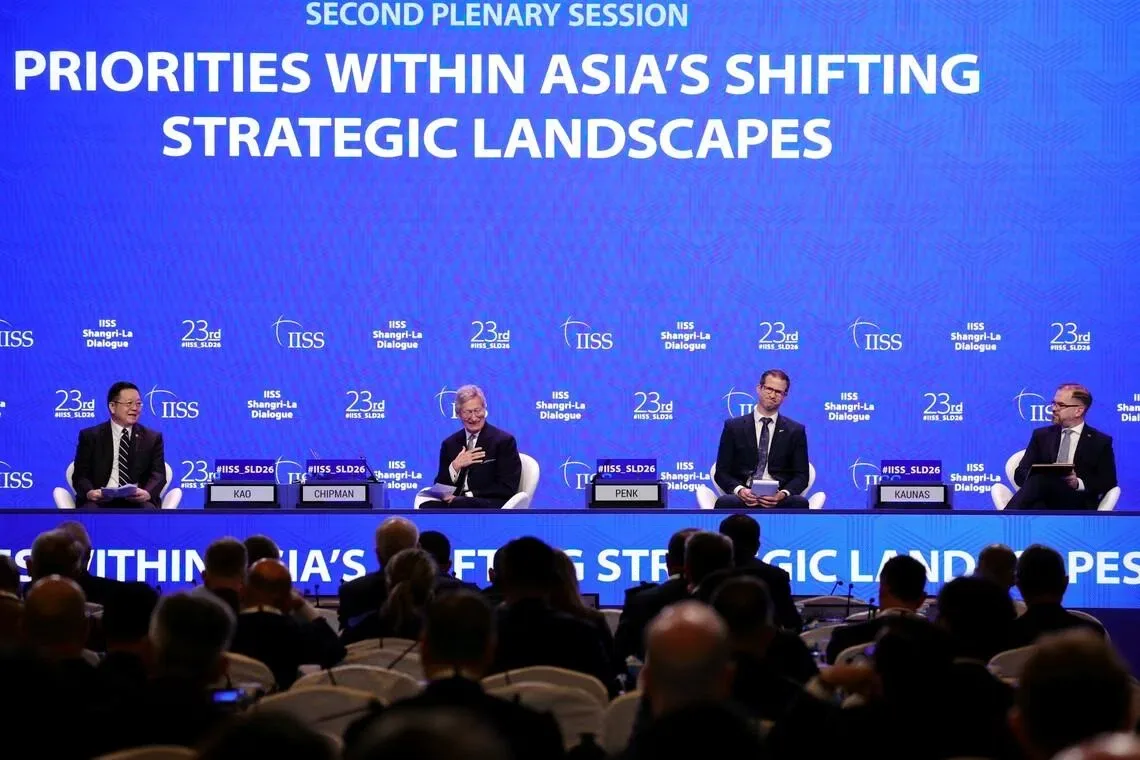
ASEAN Secretary-General Kao Kim Hourn highlighted that recent moves by the US and China to ease their tensions are vital for the stability and development of South-east Asia. He spoke on May 30 at the Shangri-La Dialogue plenary session titled "Priorities within Asia’s shifting strategic landscapes" in Singapore [1, 2, 3].
Kao noted, "For ASEAN, this really matters. The US and China are our two most consequential security and economic partners." He added that ASEAN member states are committed to "pursuing security and economic prosperity, without fear of coercion and without being forced to choose sides" [1, 3].
The framework for constructive strategic stability between Washington and Beijing was introduced following meetings between US President Donald Trump and Chinese President Xi Jinping in May 2026, resulting in some normalization of relations [1, 2, 3]. This came after a period of escalating tensions beginning in April 2025, when President Trump restarted the trade war by imposing sweeping tariffs on Chinese goods—reaching as high as 145%—including duties related to fentanyl [1, 2, 3]. In retaliation, China imposed reciprocal tariffs and export restrictions.
In October 2025, the US cut some tariffs on China. China responded by resuming exports of rare earth elements and restarting purchases of US agricultural products, further easing tensions before the May talks [1, 2, 3].
At the dialogue session, panellists such as New Zealand Defence Minister Chris Penk and Lithuania’s Minister of National Defence Robertas Kaunas underscored the significant geopolitical pressure smaller nations face amidst shifting regional dynamics [1, 2, 3].
Kao cautioned against aggressive military spending in the region and urged preventive diplomacy. He said he hopes the new US-China framework "will translate into policy and behaviour that tangibly contribute to regional peace, stability and development" [2].
The next major regional security discussions are expected to continue at upcoming ASEAN meetings scheduled later this year, where member states will further address security and economic cooperation amid rising global challenges.